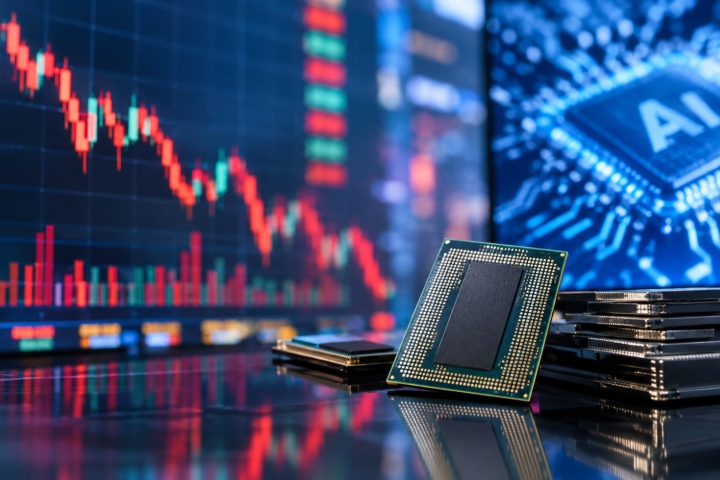
AI-related volatility shakes tech stocks even as foundational innovation and new platforms underscore long-term technological transformation.
The technology sector is navigating a period of stark contrasts as investor sentiment toward high-growth tech stocks shifts amid market rotations and sector-specific developments. Major AI infrastructure names have faced pressure this week, exemplified by CoreWeave (CRWV) shares sliding more than 5% on December 16 and extending a multi-day sell-off, driven by concerns about scaling challenges, debt burdens, and broader skepticism about the sustainability of the AI boom. Investors.com
Market breadth in technology remains uneven. Semiconductor and AI supply chains are under scrutiny after recent earnings headwinds from chipmakers such as Broadcom, which saw one of its sharpest multi-day declines in years even as analysts maintain bullish longer-term forecasts on AI chip demand. Barron’s Meanwhile, memory specialist Micron Technology (MU) has been buoyed by rising memory prices and tight DRAM supply conditions tied to data-center demand, indicating pockets of strength within hardware supply segments. Investors.com
The backdrop of market rotation—where capital has shifted from elevated AI growth names into other equities and more traditional sectors—has been evident in broader indexes such as the Nasdaq, which has lagged relative to benchmarks like the Dow Jones as investors reassess valuations and risk premia. FinancialContent
Innovation continues, however, at both the platform and systems levels. Drako Tech announced DriveOS with HyperSafety™, a first-of-its-kind single-ECU automotive operating system aimed at simplifying and accelerating connected and autonomous vehicle architectures, pointing to ongoing diversification of technology into automotive electronics and real-time systems. markets.businessinsider.com
Government and institutional initiatives may also influence tech labor pools and adoption curves: the newly launched United States Tech Force aims to pull private-sector talent into government tech modernization roles, potentially expanding institutional capacity to work with AI and other emerging technologies. Wikipedia
The current moment reflects a sector grappling with short-term risk repricing—especially around AI infrastructure execution and capital intensity—while foundational technological shifts in automotive computing, memory markets, and institutional tech policy continue to underpin long-term growth narratives. In this environment, selective exposure to resilient growth areas and companies with demonstrable earnings trends or differentiated innovation may reward patient investors as the tech cycle evolves into 2026 and beyond.