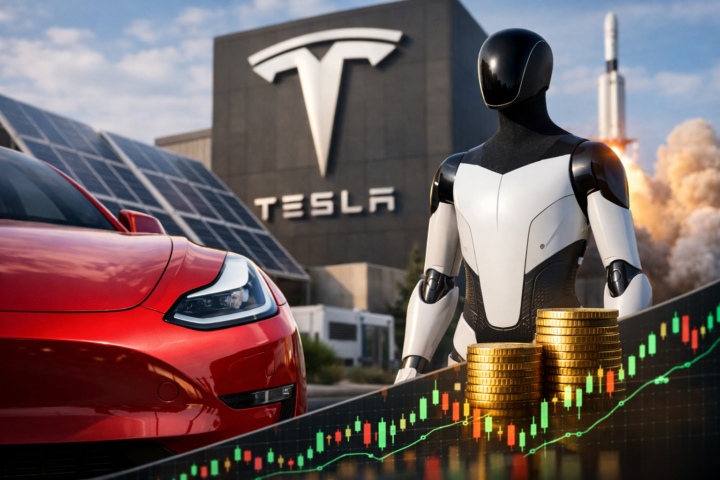
Tesla’s latest quarterly results showed solid revenue growth but continued pressures on profitability and future guidance that have investors parsing what it means for the automaker’s trajectory.
Tesla Inc. (TSLA) reported its Q3 2025 earnings after the market closed on October 22, delivering a **total revenue of about $28.1 billion, up roughly *11–12 % year-over-year and ahead of consensus estimates, driven by strong global deliveries and expanding energy storage deployments.
However, the company’s earnings per share of roughly $0.50 came in slightly below some analyst expectations and represented a decline from the prior year, highlighting ongoing margin pressures amid competitive pricing and elevated costs. Tesla’s operating profitability compressed even as revenue beat forecasts, underscoring the tension between growth and cost discipline that has defined recent results.
Tesla’s vehicle production and deliveries remained robust—with hundreds of thousands of units produced and deployed globally, and record energy storage installations reported—but the contrast between top-line momentum and profit challenges was a key theme from the earnings call. Management emphasized strategic investments in future technologies, including robotaxi development and energy solutions, while also preparing investors for potential softness in coming quarters.
The market’s reaction to the earnings release has been nuanced. While Tesla stock (TSLA) has traded in a range reflecting both the revenue beat and the earnings miss, investor focus has shifted to broader structural trends affecting the company’s performance. European EV competition is intensifying, and recent data highlighted a notable slump in Tesla’s EU sales share, amplifying concerns about competitive pressures abroad.
Looking ahead, Wall Street is expecting Tesla’s next earnings report in early February 2026, with analysts forecasting continued earnings growth yet tempered by global EV market conditions and cost dynamics. Zacks
For corporate leadership, the broader narrative around Tesla includes not just quarterly financial results but executive compensation and strategic positioning. High-profile developments around CEO Elon Musk’s pay package and legal rulings have reinforced his influence and the company’s long-term vision, even as operational challenges mount.