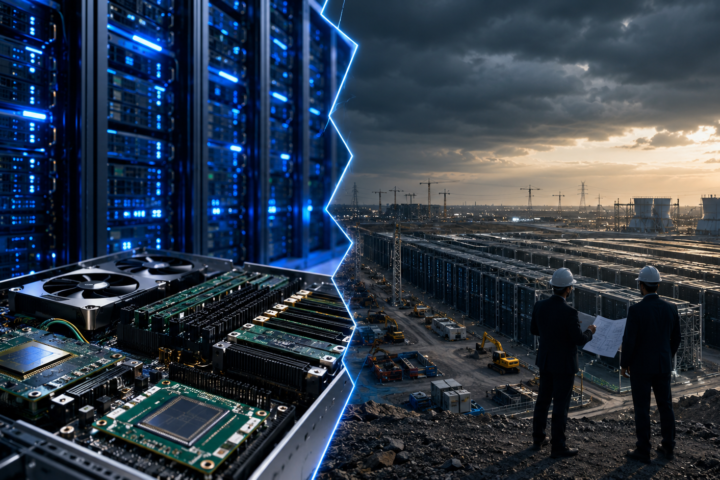
Global technology leaders are pivoting from hype to real-world deployment as AI, robotics, and infrastructure challenges shape 2026’s tech landscape.
At the World Economic Forum in Davos this week, Elon Musk outlined an aggressive timeline for Tesla’s robotaxi rollout across the U.S. and hinted at broader humanoid robotics deployment and AI systems that could rival human intelligence within the next year — underscoring how physical and intelligent machines are moving toward commercialization at scale.
That vision mirrors broader industry trends: enterprises and strategists increasingly focus on practical adoption of AI and workflow automation rather than frontier model benchmarks, with leaders like OpenAI signaling a push to embed advanced intelligence across health, science, and enterprise applications. Meanwhile, supply-chain geopolitics are reshaping core infrastructure — Taiwan and the U.S. are deepening cooperation on semiconductor production and trusted supply chains, and legacy exchanges like ICE are building platforms for around-the-clock tokenized securities trading that could redefine market plumbing.
But the transition isn’t without friction. AI hardware remains constrained by memory shortages and trade policy headwinds for chips, illustrating how geopolitical pressures can ripple directly into tech delivery timelines and enterprise planning.
Looking beyond headline announcements, several strategic technology trends are accelerating this year: from post-quantum cryptography and neuromorphic computing to multi-agent AI systems and physical robotics expected to see meaningful commercial progress; these developments are moving out of labs and into real deployment decisions by business and government alike.
For consumers and enterprises alike, 2026 is shaping up to be the year in which AI, robotics, and digital infrastructure transition from conceptual breakthroughs to foundational platforms that will reshape workflows, markets, and everyday life.