Tesla (TSLA) beat quarterly expectations on adjusted profit, but shrinking auto revenue and heavier spending underscored a business in transition toward software, autonomy and energy.
Tesla’s fourth-quarter results highlighted a widening gap between the company’s fast-growing adjacent businesses and a core vehicle franchise facing tougher pricing and demand conditions. Revenue slipped 3% from a year earlier to $24.9 billion, as automotive revenue fell 11% to $17.7 billion, offset partly by a 25% jump in energy generation and storage revenue to $3.8 billion and an 18% rise in services and other revenue to $3.4 billion.
Profitability, however, was pressured by higher costs even as gross margin improved. Operating expenses rose to $3.6 billion, and operating income declined to $1.4 billion, leaving operating margin at 5.7%. GAAP net income dropped 61% to $840 million. On a non-GAAP basis, Tesla reported diluted earnings per share of $0.50 for the quarter, while GAAP EPS was $0.24.
The quarter’s cash picture was steadier than the income statement implied. Tesla generated $3.8 billion of operating cash flow and $1.4 billion of free cash flow in the period, even after $2.4 billion of capital expenditures. For full-year 2025, Tesla reported $94.8 billion in revenue and ended with $44.1 billion in cash, cash equivalents and investments.
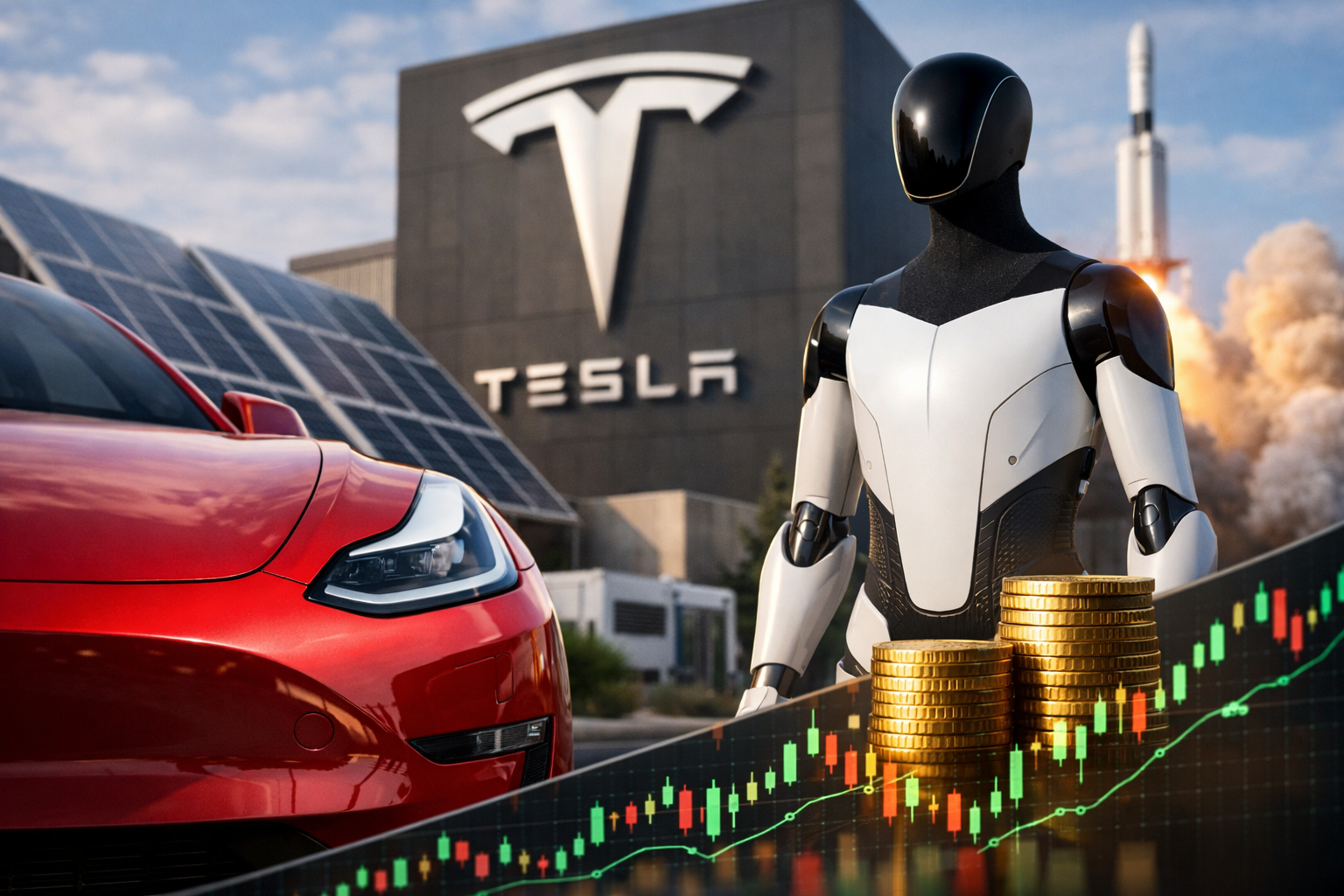
Management framed the year as a pivot from a hardware-centric automaker toward what it calls a “physical AI” company, leaning into autonomy, robotaxi operations and robotics. Tesla said it began testing driverless robotaxis in Austin in December and started removing the safety monitor from some customer rides in January on a limited basis, with plans to expand coverage pending permitting.
Investors are weighing whether that shift can offset a maturing EV market and intensifying competition, particularly in China and Europe. Tesla disclosed an agreement to invest about $2 billion in xAI as part of a broader AI strategy, while outside reports have pointed to sharply higher planned 2026 capital spending tied to autonomy, compute and new product ramps—moves that could amplify both upside and execution risk.