Investors are treating AI spending like essential infrastructure, but the trade-off between growth and returns is getting harder to ignore.
Wall Street’s enthusiasm for artificial intelligence has taken on the feel of a long-duration wager: spend aggressively now, monetize later, and let scale do the rest. That logic is not crazy. When a technology shift reshapes productivity, the early winners tend to look expensive right up until they don’t—because the addressable market grows faster than skeptics expect.
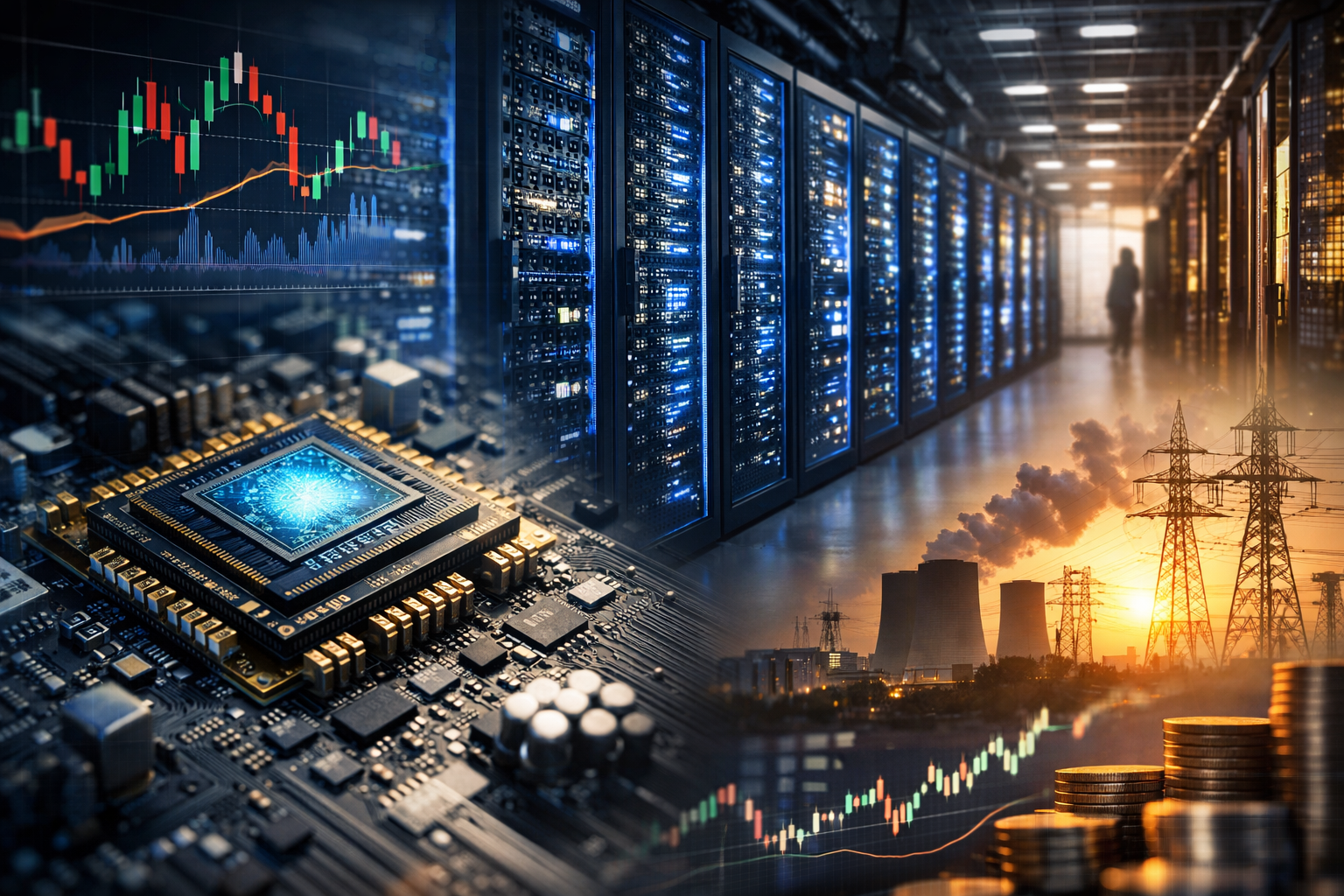
The tension is that “capex as destiny” only works if today’s investment converts into durable pricing power tomorrow. The AI buildout—chips, data centers, networking, power—creates a near-term revenue boom for suppliers like Nvidia (NVDA), while platform giants absorb massive infrastructure costs in hopes of sticky demand. For equity investors, the question isn’t whether AI is real. It’s whether the industry can convert extraordinary adoption into attractive, defensible margins after the arms race phase fades.
This is where concentration risk quietly builds. The same handful of mega-cap names dominate index performance, benchmark weights, and corporate spending. That can make broad exposure—via SPDR S&P 500 ETF Trust (SPY), for example—feel like a diversified bet when it’s increasingly a targeted one. If AI economics prove better than expected, concentration amplifies gains. If returns disappoint—through price competition, regulation, or a slower path to enterprise monetization—concentration amplifies regret.
The more subtle risk is behavioral. When markets reward scale-at-any-price, management teams learn that the easiest way to keep multiples elevated is to keep promising the next wave of growth—rather than proving disciplined returns. Investors should watch less for headline product launches and more for boring signals: unit economics, customer retention, and whether spending is starting to flatten without revenue momentum flattening too. Microsoft (MSFT) and its peers don’t need AI to be a miracle; they need it to be a business.
AI may well justify the market’s optimism. But the longer the “build first, profit later” era lasts, the higher the bar becomes for what “later” needs to look like.