Investors are rewarding near-term efficiency and guidance clarity as hyperscalers defend record 2026 capex plans.
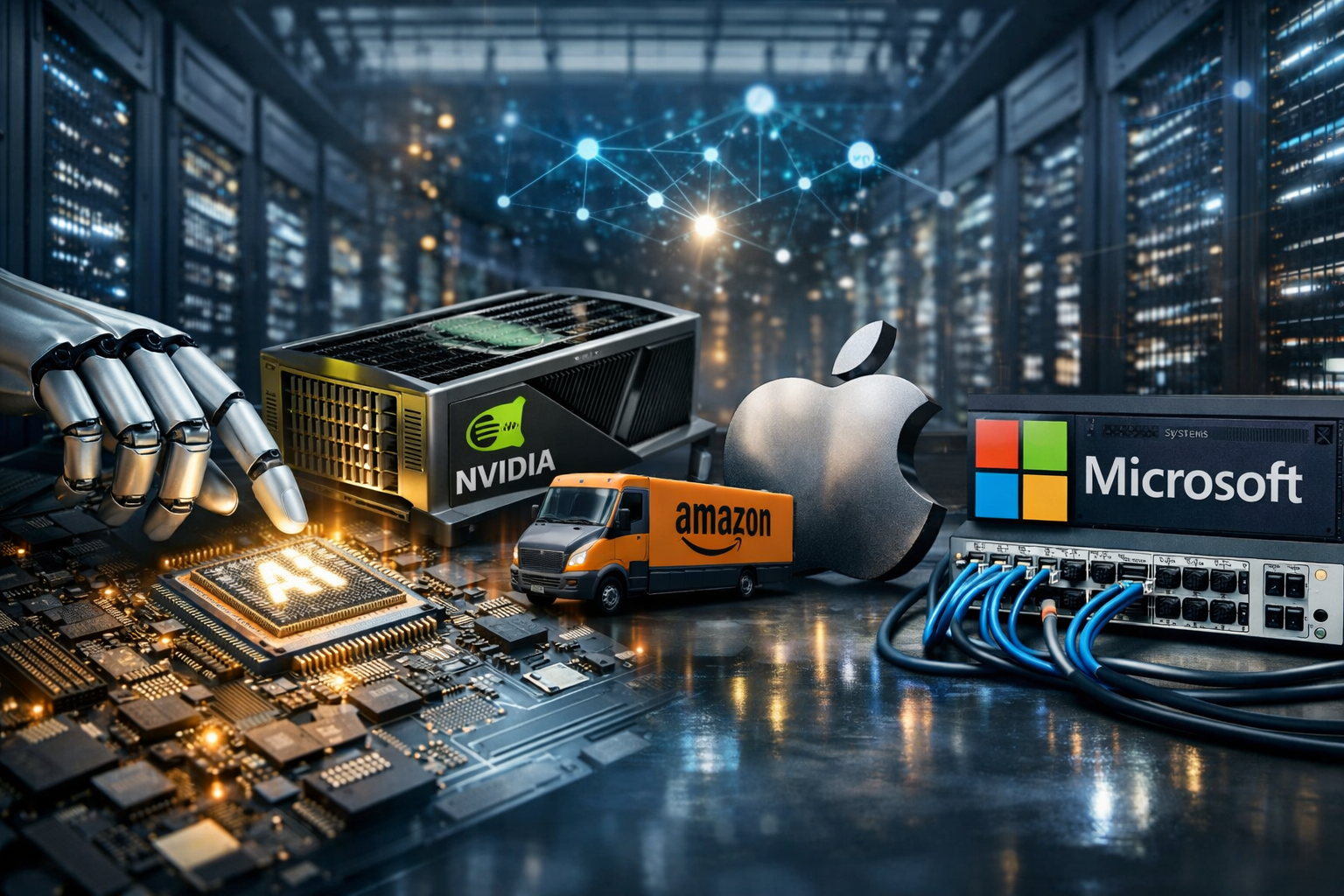
The technology trade is shifting from a pure “AI buildout” story toward a tougher question: who can turn unprecedented infrastructure spending into durable profit growth. Amazon.com (AMZN) slid into bear-market territory this week after an extended selloff that has been widely tied to investor unease over its planned 2026 AI-related capital expenditures, a debate that has also pressured other mega-cap platforms as spending projections climb into the hundreds of billions.
Microsoft (MSFT) has become a focal point of that discussion as investors scrutinize the pace of data-center expansion and the timeline for monetizing AI workloads. The market’s message has been consistent: strong revenue trends are no longer enough if guidance implies heavier spending and slimmer near-term margins.
In semiconductors, the next major checkpoint is Nvidia (NVDA) earnings on February 25, with expectations that management will address both demand visibility and customer digestion risks after a multi-year surge in AI accelerator orders. Even as pockets of analyst optimism persist, the stock has started to trade more on confidence in forward guidance than on backward-looking growth rates.
On the picks-and-shovels side of AI networking, Cisco Systems (CSCO) offered a reminder that “AI infrastructure” is not a monolith. Cisco topped quarterly expectations, but the stock fell after investors focused on a more cautious full-year revenue outlook—an example of how quickly sentiment can turn when guidance doesn’t match the market’s capex enthusiasm.
Meanwhile, consumer tech remains a stabilizer. Apple (AAPL) posted a record fiscal first quarter, underscoring that hardware cycles and Services momentum can still deliver dependable cash generation even as the market debates how fast AI can pay back its buildout costs.