Investors are rewarding the “pick-and-shovel” suppliers to hyperscaler-designed chips while questioning how durable Nvidia’s pricing power will be in 2026.
The technology market’s newest fault line isn’t whether artificial intelligence spending is growing—it’s where that spending is landing. This week, fresh capital-expenditure plans from the biggest cloud operators underscored that AI infrastructure budgets are expanding, but an increasing share is being steered toward in-house accelerators and the ecosystems around them. That has helped lift suppliers tied to custom silicon while leaving the traditional GPU complex more prone to air pockets on any wobble in sentiment.
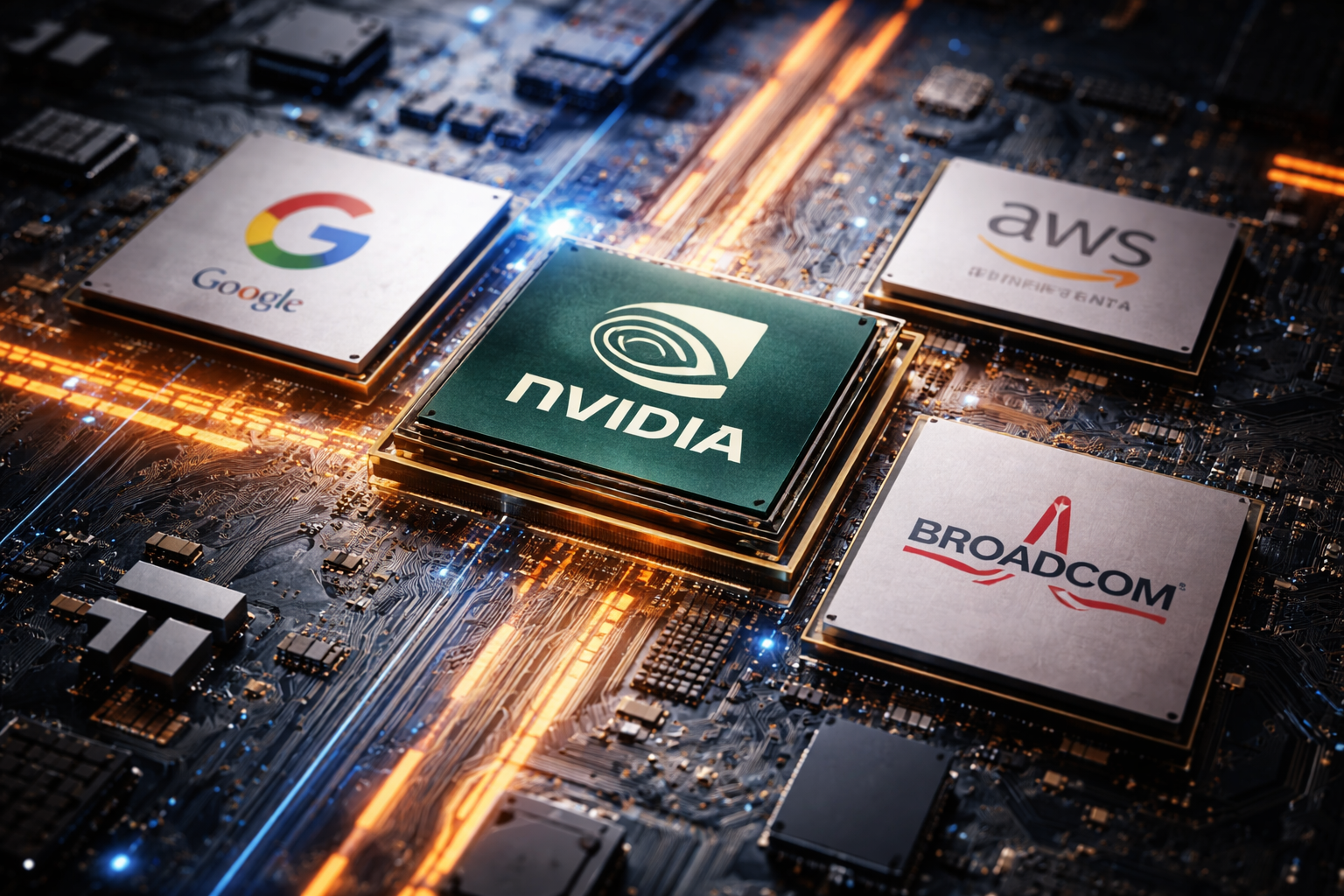
Nvidia (NVDA) remains the bellwether, but the narrative is broadening from “AI equals Nvidia” to “AI equals supply chain.” Even as cloud customers continue buying Nvidia hardware, they’re simultaneously marketing their own chips as cost-efficient alternatives for internal workloads—an approach that can cap upside when investors start modeling a multi-vendor future. The market’s recent pullback in NVDA—despite upbeat infrastructure headlines—reflects that tightening debate about mix, margins, and competitive durability rather than outright demand collapse.
One clear beneficiary of the shift is Broadcom (AVGO), which has become closely associated with hyperscaler custom-chip programs—most visibly the accelerator roadmap tied to Alphabet’s data-center push. When investors hear “more TPU-like spend,” they increasingly translate that into higher attach rates for networking, packaging, and custom silicon design partners. The result is a split tape: platform owners can see near-term margin pressure from capex surges, while suppliers that monetize those deployments get bid up on long-dated revenue visibility.
The same scarcity dynamics shaping AI are also spilling into consumer hardware. Reports of memory constraints influencing product roadmaps—and of Nvidia deprioritizing gaming GPUs in favor of data-center demand—are reminders that tech cycles are being driven as much by component allocation as by end-user appetite. For investors, that keeps the focus on companies with leverage to constrained inputs and pricing, not just the flashiest product releases.