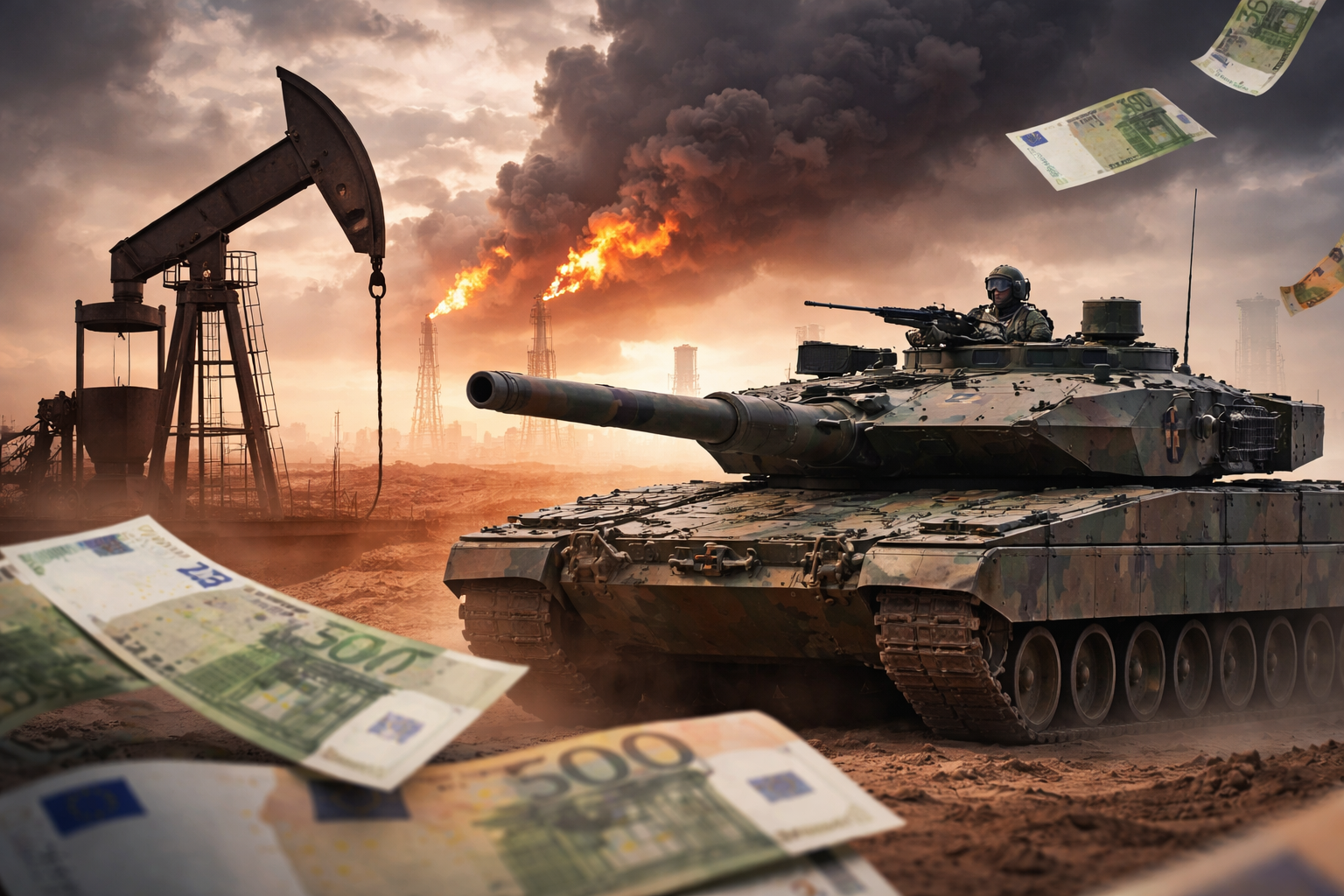
A rapid rise in defense spending across Europe is colliding with a Middle East-driven energy shock, forcing investors to rethink the region’s growth, inflation and borrowing outlook.
Europe entered March with a rare sense of momentum. Germany’s fiscal turn, once almost unthinkable in a country defined by budget restraint, had helped revive a broader narrative that the continent might finally be shifting from austerity and drift toward industrial renewal, military expansion and higher nominal growth. Investors were prepared to buy into that story because it offered something Europe had lacked for years: a credible case for stronger domestic demand, bigger capital spending and a more durable earnings backdrop for banks, builders and defense manufacturers.
Then energy markets intervened.
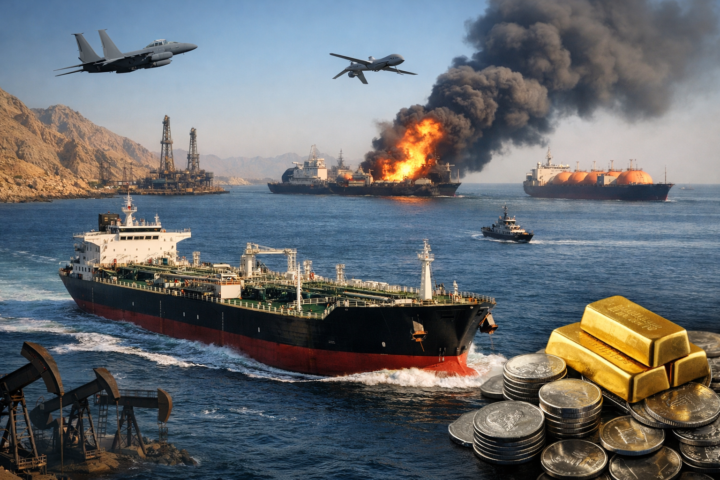
Oil’s sharp rise this week, driven by fears that conflict in the Middle East could disrupt flows through a region critical to global supply, has reintroduced a familiar European vulnerability. Brent crude moved into the mid-to-high $80s a barrel, capping its biggest weekly gain since 2020, while investors began cutting back expectations for interest-rate relief from major central banks. The result has been a swift repricing across bonds, currencies and equities, with Europe particularly exposed because it is trying to finance a large strategic pivot at the same time as imported inflation threatens to return.
That combination matters well beyond the trading floor. Europe’s new policy mix rests on a delicate proposition: governments, led by Germany, can borrow more to fund defense and infrastructure without destabilizing debt markets because faster nominal growth and improved security spending will ultimately strengthen the region’s economic base. That argument becomes harder to sustain when bond yields rise for the wrong reason. Higher yields tied to stronger growth are manageable. Higher yields driven by an oil shock and the risk of stickier inflation are more dangerous because they tighten financial conditions without delivering the same economic upside.
Germany remains the anchor of the story. Its willingness to exempt billions in defense spending from old borrowing constraints and channel fresh capital into infrastructure marked one of the most consequential policy shifts in Europe since the euro-area debt crisis. For years, Berlin’s fiscal caution acted as both a domestic brake and a signal to the rest of the bloc. Now the message is different: strategic risk, not just debt orthodoxy, is setting budget priorities. That has supported defense names such as Rheinmetall (RHM.DE), which has become a market proxy for Europe’s military buildout, and reinforced the idea that public spending will reshape the region’s industrial map.
But investors are increasingly confronting the cost side of that transformation. Europe’s bond market has already been wrestling with heavier sovereign supply as governments prepare to issue more debt and as Brussels develops a deeper role in collective funding. The energy shock adds another layer of pressure by increasing the odds that the European Central Bank will have less room to ease than markets expected only weeks ago. Traders have already scaled back rate-cut bets as they assess whether a prolonged period of higher oil prices could push the euro zone toward a mini-stagflation scenario of softer activity and firmer prices.
That is the core global significance of the moment. Europe’s rearmament is not just a regional budget story. It is becoming a test of whether advanced economies can simultaneously absorb geopolitical fragmentation, fund security priorities and manage inflation shocks without slipping into a new era of structurally higher borrowing costs. The answer will shape currencies, cross-border capital flows and equity leadership far beyond Europe.
For households, the transmission is direct. Higher oil prices feed quickly into transport and utility costs and can influence consumer inflation expectations even when underlying demand is soft. For policymakers, that creates a trap. Governments want to spend more to protect growth and security, but the inflationary side effects of energy stress reduce the central bank support that would make such spending easier to absorb. For corporations, especially energy-intensive manufacturers, airlines and consumer businesses, margin assumptions suddenly look less secure. Europe’s hoped-for industrial revival becomes harder to execute if the cost of capital and the cost of energy are both rising at once.
None of this means the strategic shift is reversing. On the contrary, the political logic behind higher defense spending appears stronger than ever. Europe now accounts for a larger share of global defense outlays than it did only a few years ago, and the drive to build domestic military capacity has become tied to wider ambitions around industrial resilience, procurement independence and support for Ukraine. That direction of travel is unlikely to change even if markets remain volatile. What may change is the speed and the financing mix. Investors may demand clearer prioritization, more joint funding and faster proof that spending plans can lift productivity rather than simply swell deficits.
There is also a geopolitical irony at work. Europe’s answer to a more dangerous world was to spend more at home, borrow more collectively and rely less on external guarantees. Yet the first major market test of that strategy is being shaped by an external shock in energy, the very channel through which geopolitics has repeatedly destabilized European growth. The continent is trying to become more strategically autonomous while still living with deep exposure to forces it cannot fully control.
For investors, the near-term message is that Europe is no longer a low-volatility macro backwater. It is becoming a market where fiscal activism, security policy and commodity risk interact in real time. That supports selected beneficiaries, notably defense contractors, infrastructure-linked firms and some banks, but it also argues for caution on duration-sensitive assets and sectors vulnerable to fuel costs or weaker household spending. Rheinmetall (RHM.DE) may still symbolize Europe’s new spending era, but the broader trade now depends as much on oil tankers and inflation expectations as on parliamentary votes in Berlin.
The bigger question is whether Europe can turn crisis spending into lasting economic renewal. If oil stabilizes and governments execute well, the continent could still emerge with stronger growth, deeper capital markets and a more credible industrial strategy. If energy remains volatile and borrowing costs keep climbing, the same fiscal awakening could become a more uneven story, rich in strategic intent but constrained by macroeconomic reality. That tension, more than any single summit or budget speech, now defines the world story investors need to watch.