A widening Middle East energy disruption is rippling through inflation, monetary policy and household budgets, forcing investors to rethink how quickly the world can return to a lower-rate, lower-volatility environment.
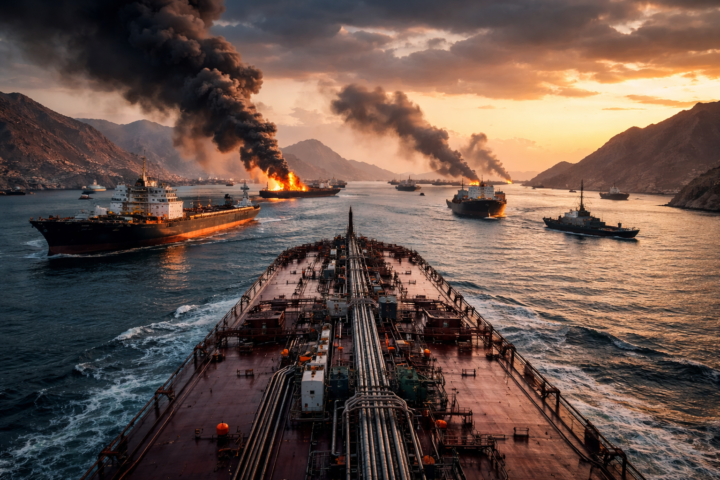
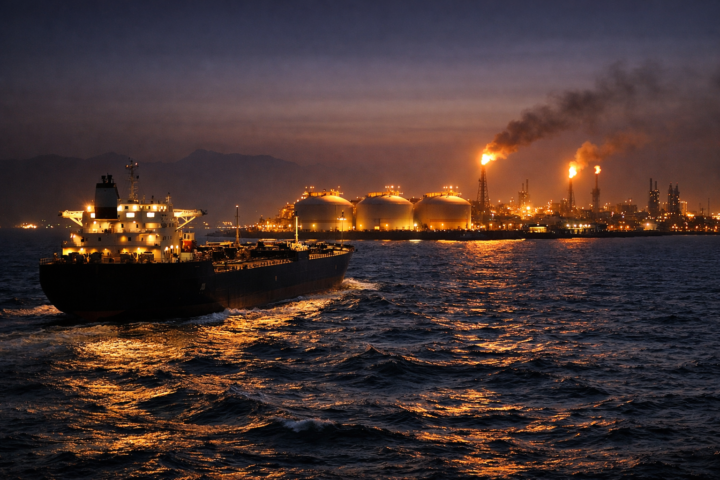
The global economy entered 2026 expecting a gradual handoff from inflation anxiety to growth management. Instead, the latest oil shock has put geopolitics back at the center of the investment case. Crude has climbed back above $100 a barrel, tanker traffic through the Strait of Hormuz has been severely disrupted, and energy infrastructure damage in the Gulf is raising fears that what began as a regional conflict could become a broader test of the world’s ability to absorb another supply shock. The International Energy Agency has described the disruption as the largest in the history of the global oil market, with flows through Hormuz sharply curtailed and LNG supply also hit.
That matters well beyond oil traders. The past two years had left policymakers hopeful that the final stretch of disinflation would allow central banks to ease policy without reigniting price pressures. The new energy surge has complicated that narrative almost overnight. Australia offered the clearest example on Tuesday, when the Reserve Bank of Australia raised its cash rate to 4.1%, citing persistent inflation risks as fuel costs rise and inflation expectations become harder to anchor. While the move is specific to Australia, markets treated it as a warning shot for other economies that had assumed oil-driven inflation would be temporary or manageable.
The market reaction has been telling. Equities have not collapsed, but leadership has narrowed and the tone has changed. Investors are rewarding energy producers and companies with pricing power while penalizing airlines, transport groups and other fuel-sensitive sectors. Exxon Mobil (XOM) has become an obvious proxy for the new mood, as investors seek direct exposure to higher crude prices and a measure of insulation from the broader growth scare. At the same time, the resilience in some major stock benchmarks suggests investors still believe the shock could be contained if supply routes stabilize or strategic reserves cushion the blow. That balance, between a still-functioning risk appetite and rising macro anxiety, is what makes the current moment so unstable.
The danger is that energy inflation rarely remains confined to the pump. Higher crude feeds into freight, food, chemicals, aviation and manufacturing, and it often reaches households through the most visible prices in the economy. For consumers already strained by expensive housing and elevated borrowing costs, even a modest second-round inflation effect can change behavior. In Australia, the RBA’s decision will push mortgage costs higher just as households are absorbing more expensive fuel. Similar dynamics are likely to be watched closely in Europe and parts of Asia, where energy imports remain a major vulnerability. The world economy can tolerate high rates or high oil for a time. It struggles much more when both arrive together.
That is why this has become more than a commodities story. It is now a question about the timing of the next phase of the global cycle. The OECD has already warned that higher trade barriers and policy uncertainty are weighing on growth prospects, and the energy shock lands on top of that weaker foundation rather than in a vacuum. If oil remains elevated for weeks rather than days, central banks may be forced to hold restrictive policy longer even as demand softens. That is the classic setup for a stagflation debate: not a 1970s replay, but a modern version in which growth disappoints, rate cuts are delayed and household finances deteriorate faster than headline GDP captures.
There are still buffers. The IEA has moved to coordinate a large emergency stock release, and that gives governments a tool to smooth the worst of the immediate supply loss. Financial markets, meanwhile, have shown a tendency to reprice war risk quickly and then stabilize if shipping lanes reopen or demand destruction offsets some of the shortage. Even now, crude remains below the most extreme spike scenarios that traders feared when the conflict intensified. That helps explain why global shares have been mixed rather than uniformly lower. Investors are trying to decide whether this is a temporary shock that lifts inflation prints for a quarter or a structural disruption that rewrites earnings and rate expectations for the rest of the year.
For governments, the politics may prove as consequential as the economics. High energy prices are among the fastest ways to turn an external crisis into a domestic one. Fuel, heating and transport costs are felt immediately, and they often arrive before wage adjustments or fiscal support can catch up. That creates pressure for subsidies, tax relief or direct household assistance, each of which can soften the blow in the short term while complicating inflation control in the medium term. The deeper issue is that a world already dealing with fragmented trade, tighter industrial policy and strategic competition is now confronting a more expensive energy backdrop as well. The result is a global economy that looks less synchronized, less efficient and more vulnerable to shocks than investors had hoped at the start of the year.
The next few sessions will not settle that debate, but they will shape it. If Brent retreats decisively below $100 and shipping conditions improve, the episode may be remembered as a violent but temporary interruption. If not, the implications stretch from central bank meeting rooms to supermarket shelves. For investors, the lesson is that geopolitics is no longer a side variable to the macro story. It is the macro story. The world entered 2026 looking for confirmation that inflation was fading and rate relief was coming. What it has instead is a renewed reminder that the global economy still runs on fragile arteries, and that when one of the biggest is squeezed, everything from mortgage payments to equity valuations must be repriced.