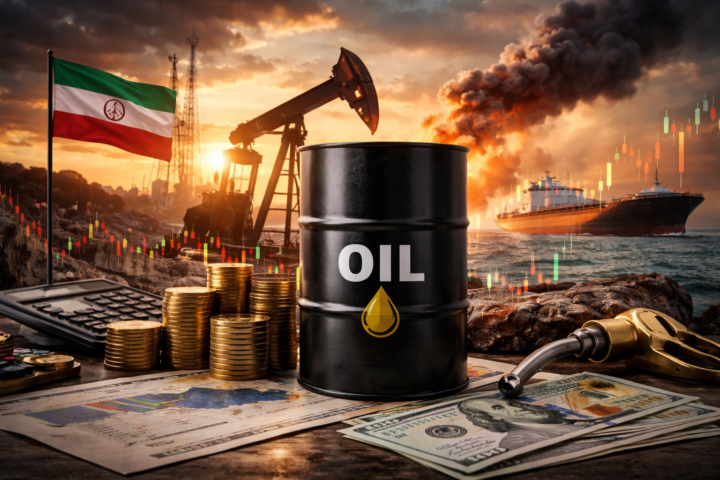
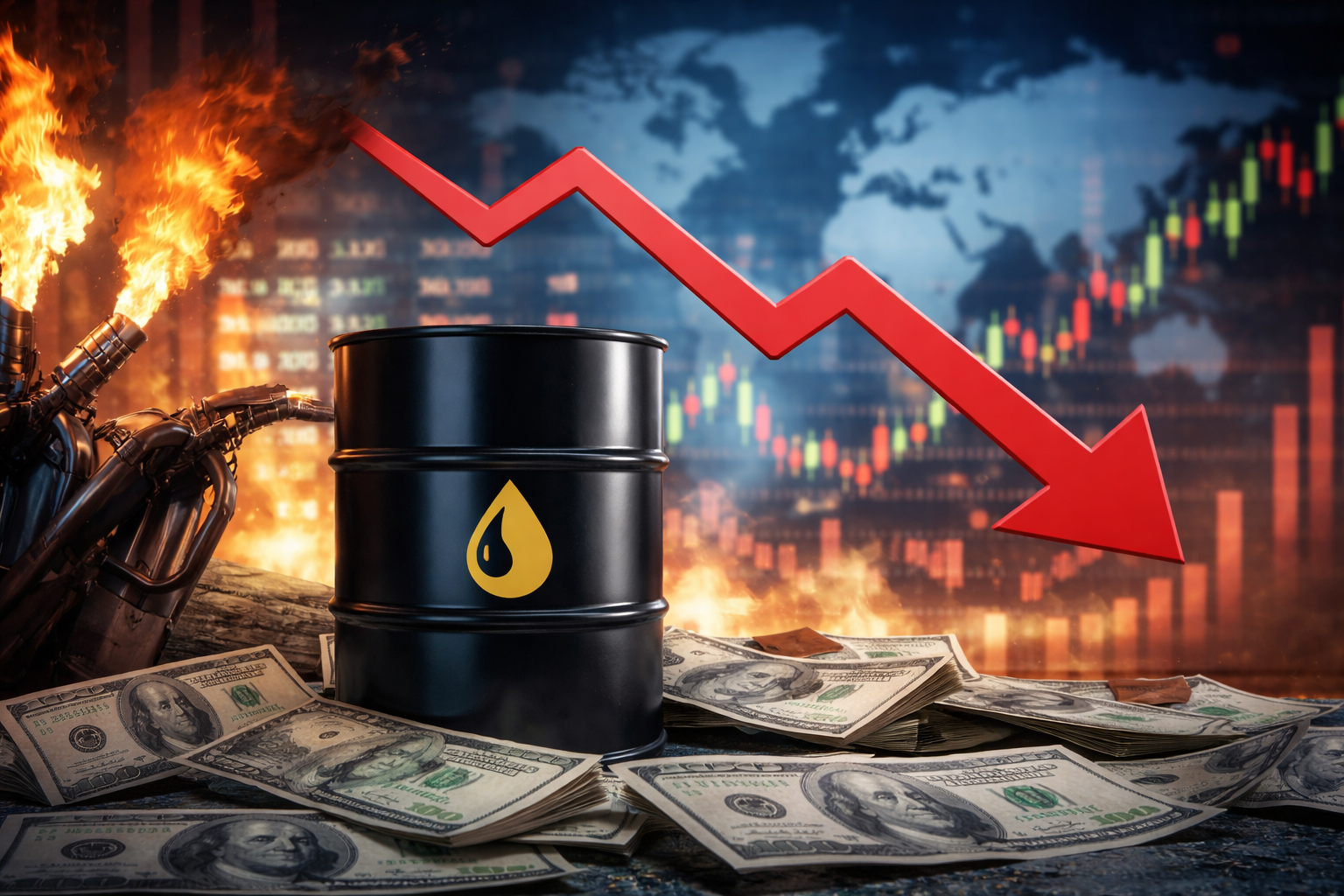
A surge in energy prices is rippling through equities, bonds and currencies as investors abandon hopes for quick rate cuts and brace for a more inflationary second quarter.
Global markets are ending the week with the same message across asset classes: the old refuge trade is not working cleanly because the latest geopolitical shock looks inflationary before it looks recessionary. Brent crude briefly surged to about $119 a barrel on Thursday before easing back toward the low $110s on Friday, after signs that further attacks on energy infrastructure might pause. Even with that pullback, the move was large enough to force investors to rethink growth, inflation and central-bank policy all at once. European shares, which are more directly exposed to imported energy stress, were hit harder than U.S. equities, while government bond yields rose instead of falling as traders priced in the risk that central banks may need to stay tighter for longer.
That combination has turned a commodity spike into a full market regime shift. The S&P 500 proxy SPDR S&P 500 ETF Trust (SPY) was recently trading at $659.80, down modestly on the day and leaving U.S. stocks on course for a fourth straight weekly decline. In Europe, the previous session’s selloff was sharper, with the Stoxx Europe 600 dropping 2.8% on Thursday before a partial rebound on Friday. The contrast matters. U.S. investors can still argue that domestic energy production offers a partial buffer against imported inflation, but Europe has far less room to make that case. The result is a market that is starting to distinguish much more aggressively between regions, sectors and business models.
The bond market is where the real repricing is happening. In a conventional geopolitical scare, investors would rush into Treasuries and major sovereign debt, pulling yields lower. Instead, yields have pushed higher because oil is no longer just a headline risk; it is a pipeline into consumer prices, freight costs and inflation expectations. U.S. Treasuries have erased their gains for the year, while UK gilts have sold off hard enough to send the 10-year yield close to levels last seen in 2008. The message from fixed income is that this is not being treated as a temporary risk-off episode. It is being treated as a stagflationary test.
Central banks have reinforced that interpretation. The Federal Reserve kept rates unchanged this week, and official materials show the March 18 statement and updated projections were released after the latest meeting. Market coverage indicates policymakers stuck with a cautious tone and a projection for only a single cut this year as uncertainty from the Middle East darkened the inflation outlook. The European Central Bank also held rates at 2% on March 19 while lifting its 2026 inflation forecast and trimming its growth outlook. The Bank of England kept Bank Rate at 3.75% but warned that higher energy prices could spill into broader inflation pressure. Investors had spent much of the first part of the year looking for a smoother handoff from disinflation to easier policy. That narrative is now badly damaged.
The equity market is responding exactly as one would expect when discount rates rise and input costs climb together. Energy stocks are the obvious relative winners. Exxon Mobil (XOM) recently traded at $158.16 and Chevron (CVX) at $201.44, both supported by stronger crude prices and the prospect of higher upstream cash flow. But the broader market damage is more revealing than the gains in oil majors. Expensive growth shares become harder to defend when bond yields are rising, consumer-facing sectors face margin pressure if fuel and transport costs keep climbing, and industrials must contend with a possible hit to global demand later if the energy shock persists. Investors are no longer debating only whether earnings will slow. They are also debating which companies can still protect margins in an environment where energy stops being a tailwind and turns back into a tax.
There is also a currency and safe-haven wrinkle that complicates portfolio positioning. The dollar has generally remained firm amid the uncertainty, but the usual haven complex has not behaved uniformly. Gold rebounded in headline reporting as the crisis intensified, yet SPDR Gold Shares (GLD) was recently down sharply on the day at $426.41, suggesting that rapid position shifts, liquidity needs and higher real-yield expectations are creating unusual short-term volatility even in defensive assets. That is a reminder that in inflation scares, correlations can break in uncomfortable ways. Owning “defensives” is not enough if the underlying macro driver keeps changing from hour to hour.
For investors, the critical question is whether the oil move stabilizes near current levels or reignites. If crude settles back further and diplomatic efforts hold, the damage may remain largely technical: a valuation reset, a delay to rate-cut hopes and a renewed bid for energy producers over rate-sensitive growth. If supply disruption broadens, however, markets will have to contemplate a much harsher scenario in which inflation rises again just as growth slows across Europe and parts of Asia. That would keep pressure on both stocks and bonds and leave central banks with very little room to cushion the blow. The market’s unease is not just about today’s crude price. It is about the realization that the inflation battle many investors thought was nearly over can quickly return through the energy channel.
For now, the cleanest conclusion is that markets have moved from a rate-cut cycle mindset to an energy-shock mindset in less than a week. That shift helps explain why equities are struggling, why bond yields are rising instead of falling, and why regional performance gaps are widening. Until oil stops dictating the inflation outlook, the market is likely to keep rewarding cash flow, pricing power and commodity exposure over long-duration optimism. This is not yet a full-blown capitulation phase, but it is a reminder that in global markets, a single commodity can still overpower almost every other narrative.