Today’s technology markets are shaped by robust AI-driven demand and geopolitical tension, with key chipmakers rallying even as broader tech sentiment remains clouded by recent sector weakness and regulatory shifts.
Investors in the technology sector are navigating a complex landscape where artificial intelligence remains the central narrative but external forces and stock-specific developments are increasingly influential. After a challenging week for tech shares — with the Nasdaq Composite leading losses and broader tech indices under pressure — market attention is shifting toward differentiated performance within the sector. Recent declines in major tech benchmarks underscore persistent rotation out of high-valuation names, while select hardware and AI suppliers are drawing renewed interest amid longer-term demand signals.
A standout among hardware suppliers, KLA Corporation (KLAC) saw its stock rise after a Jefferies upgrade to Buy, citing its leadership in advanced semiconductor-equipment tools and anticipated AI-related capex from leading chipmakers. The upgrade and subsequent price target increase reflect expectations that AI infrastructure spending will continue to buoy chip fabrication demand.
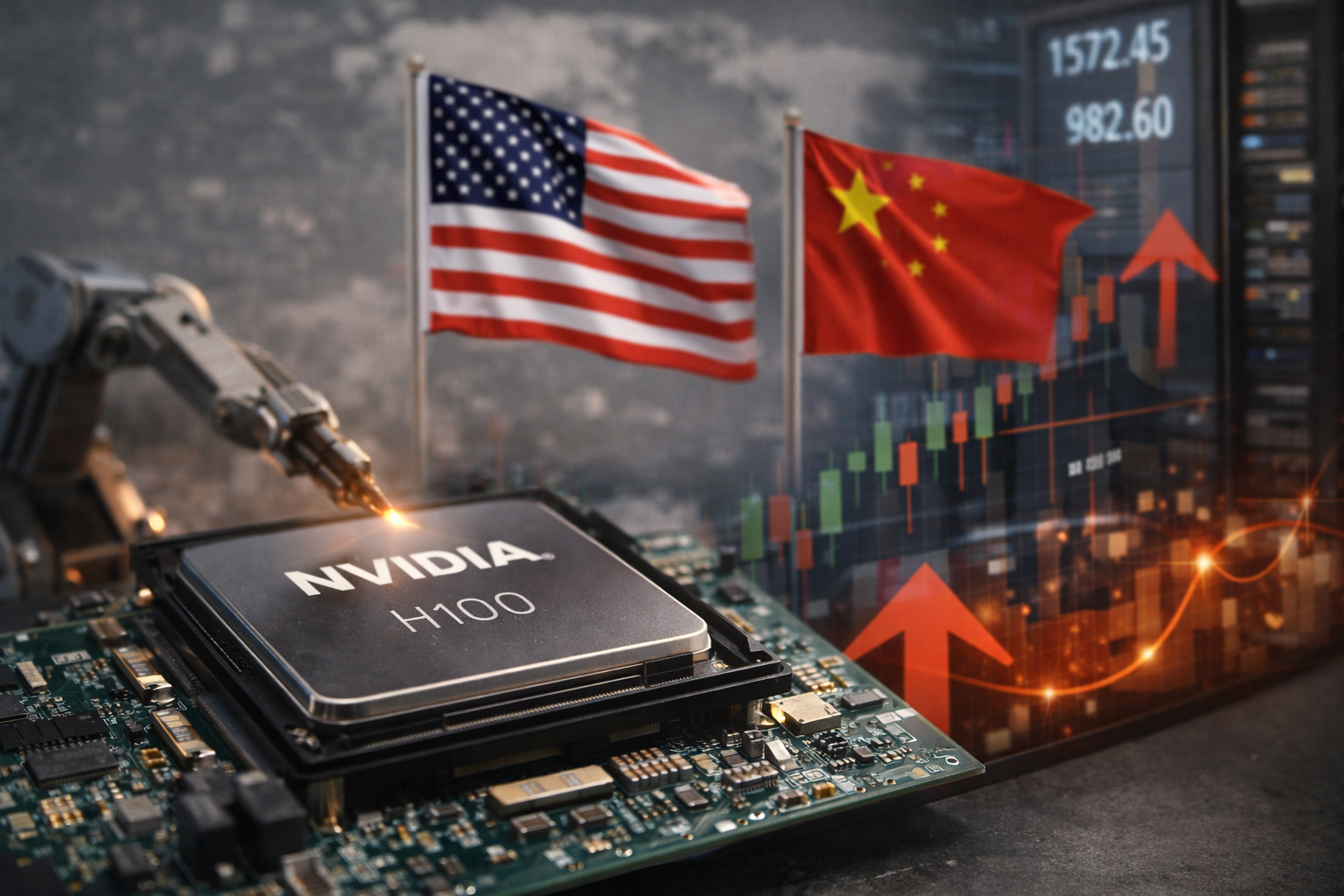
On the AI chip front, Nvidia (NVDA) is reportedly experiencing heightened demand in China for its H200 AI accelerators, a sign that geopolitical policy changes are opening incremental openings in constrained markets. That demand has contributed to modest stock strength after recent Nasdaq weakness, even as the macro rotation narrative persists.
However, the technology backdrop isn’t all bullish. Broader U.S.–U.K. technology cooperation has hit a snag with the suspension of a high-profile bilateral tech partnership, potentially dampening data-sharing and joint AI research opportunities that were expected to strengthen transatlantic tech leadership.
Elsewhere in the innovation ecosystem, quantum computing and AI infrastructure continue to attract institutional focus beyond pure hardware plays, with analysts pointing to major tech giants such as Microsoft, Alphabet, and IBM as strategic vehicles for quantum exposure amid rising commercialization prospects.
Amid these developments, broader macro uncertainty (including rising yields and rotation into value sectors) is tempering enthusiasm for traditional tech growth narratives. That said, the divergence between select bellwethers and lagging names suggests investors are increasingly discerning, favoring companies with clear paths to monetizing AI and compute infrastructure investment.