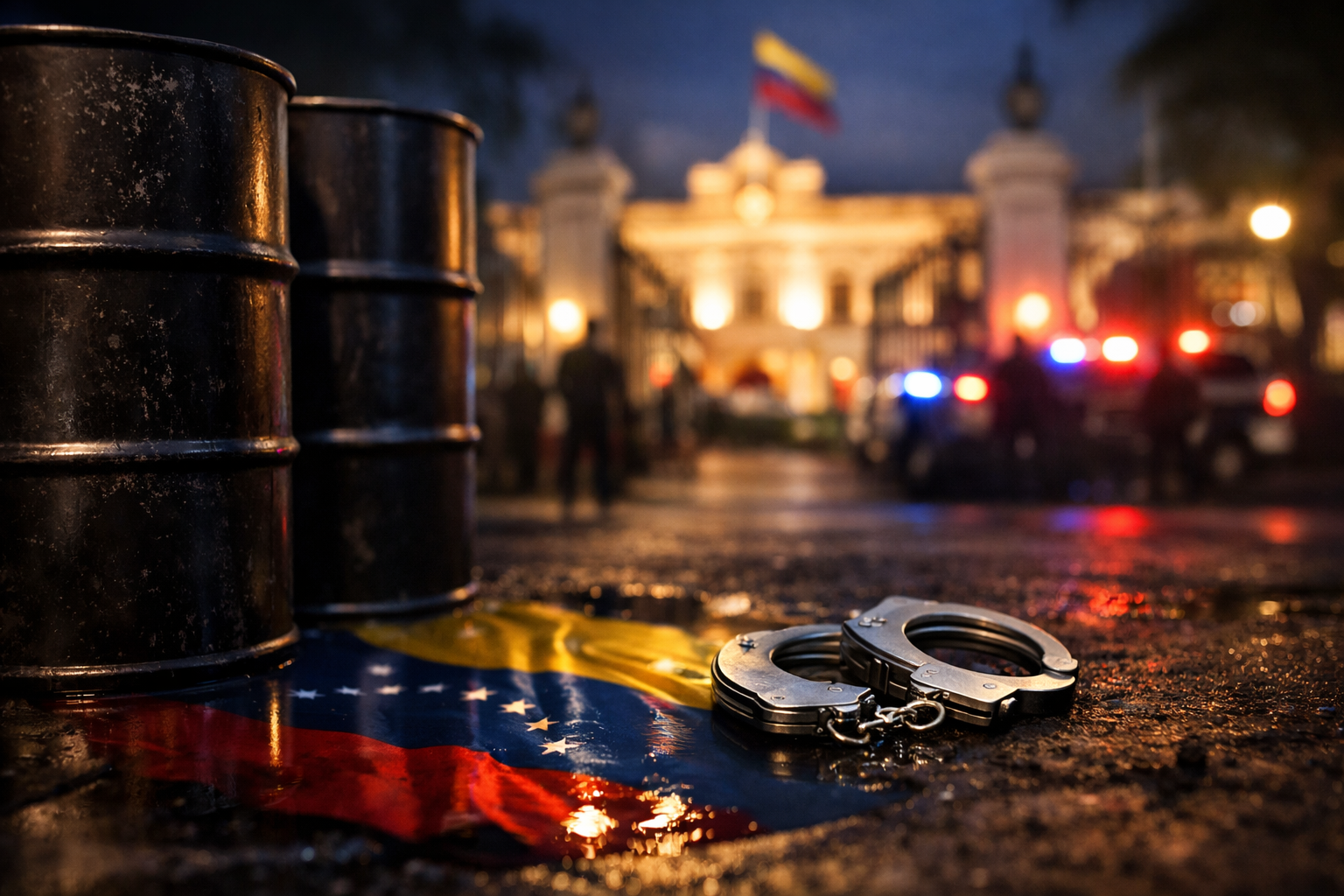
A U.S. weekend raid in Venezuela reverberated from the U.N. to energy trading desks, with investors weighing the long road from political rupture to any meaningful change in global crude supply.
The United States’ seizure of Venezuelan President Nicolás Maduro has rapidly become a global test of both geopolitics and market reflexes. In New York, the U.N. Security Council convened as U.N. Secretary-General António Guterres warned the operation could deepen instability and raised concerns about its legality under international law, while Colombia denounced the raid as a violation of sovereignty—an early signal that regional and multilateral blowback may be swift even as Washington frames the move as a security action.
Markets, meanwhile, reacted less with panic than with recalibration. Oil prices rose about 1% as traders assessed whether near-term flows would be disrupted, but analysts also emphasized that Venezuela’s current production—roughly 1 million barrels a day, about 1% of global output—limits immediate supply shock. The bigger market question is whether a political transition could eventually unlock investment and raise output, particularly with OPEC+ holding output policy steady and crude prices already sensitive to surplus fears.
Equities reflected that longer-dated optionality: U.S. energy names including Exxon Mobil (XOM) and Chevron (CVX) climbed as investors tried to handicap whether the episode could, over time, expand access to reserves and reshape the sanctions landscape. Defense-linked stocks also moved higher on expectations of elevated geopolitical risk.
In emerging markets, the sharpest move came in distressed debt. Defaulted Venezuelan sovereign and PDVSA bonds surged—some by roughly 20% on the day—as traders priced in higher odds of an eventual restructuring process, even if investors widely expect any deal to be multi-year and legally complex.
Caracas’ interim posture has been mixed: Acting President Delcy Rodríguez struck a conciliatory tone toward Washington, while Mexico’s President Claudia Sheinbaum publicly rejected U.S. interventionism and reiterated Mexico’s non-intervention doctrine. Those competing diplomatic signals underscore the core market risk: the gap between a dramatic headline event and the slow, uncertain mechanics of sanctions, investment, and legitimacy that ultimately determine barrels—and cashflows.