Crude’s rebound, firmer metals and resilient haven demand show investors repricing geopolitical risk across the raw-material complex.
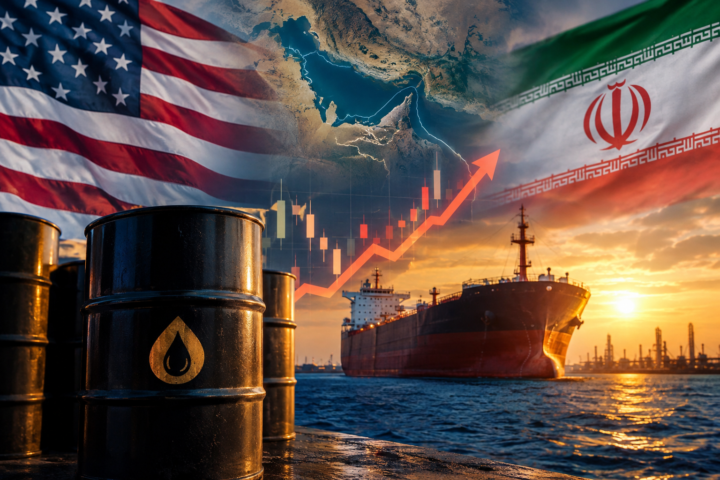
Oil returned to the center of the commodities trade Friday as renewed U.S.-Iran tensions pushed crude prices higher and revived concerns that geopolitical risk is again becoming the dominant force in energy markets. Brent crude traded near $101 a barrel, while West Texas Intermediate hovered around $96, snapping a recent losing streak as traders focused on the possibility of disruption around the Strait of Hormuz, one of the world’s most important energy transit routes.
The move was not large enough to suggest panic buying, but it was broad enough to remind investors that energy inflation risk has not disappeared. Brent’s rise of about 1.5% and WTI’s gain of more than 1% came alongside strength in refined products, with heating oil and gasoline also higher. That pattern matters because crude-price shocks are most economically damaging when they flow through quickly to diesel, jet fuel and gasoline, tightening household budgets and corporate margins at the same time.
For integrated oil majors such as Exxon Mobil (XOM), the latest rally improves the near-term cash-flow backdrop, but it also complicates the broader market story. Higher crude prices can support earnings in upstream operations, yet they can also pressure consumers, raise transportation costs and keep central banks cautious if energy feeds into inflation expectations. That tension has defined much of this year’s commodity trade: the same forces that lift resource producers can weigh on the wider equity market.
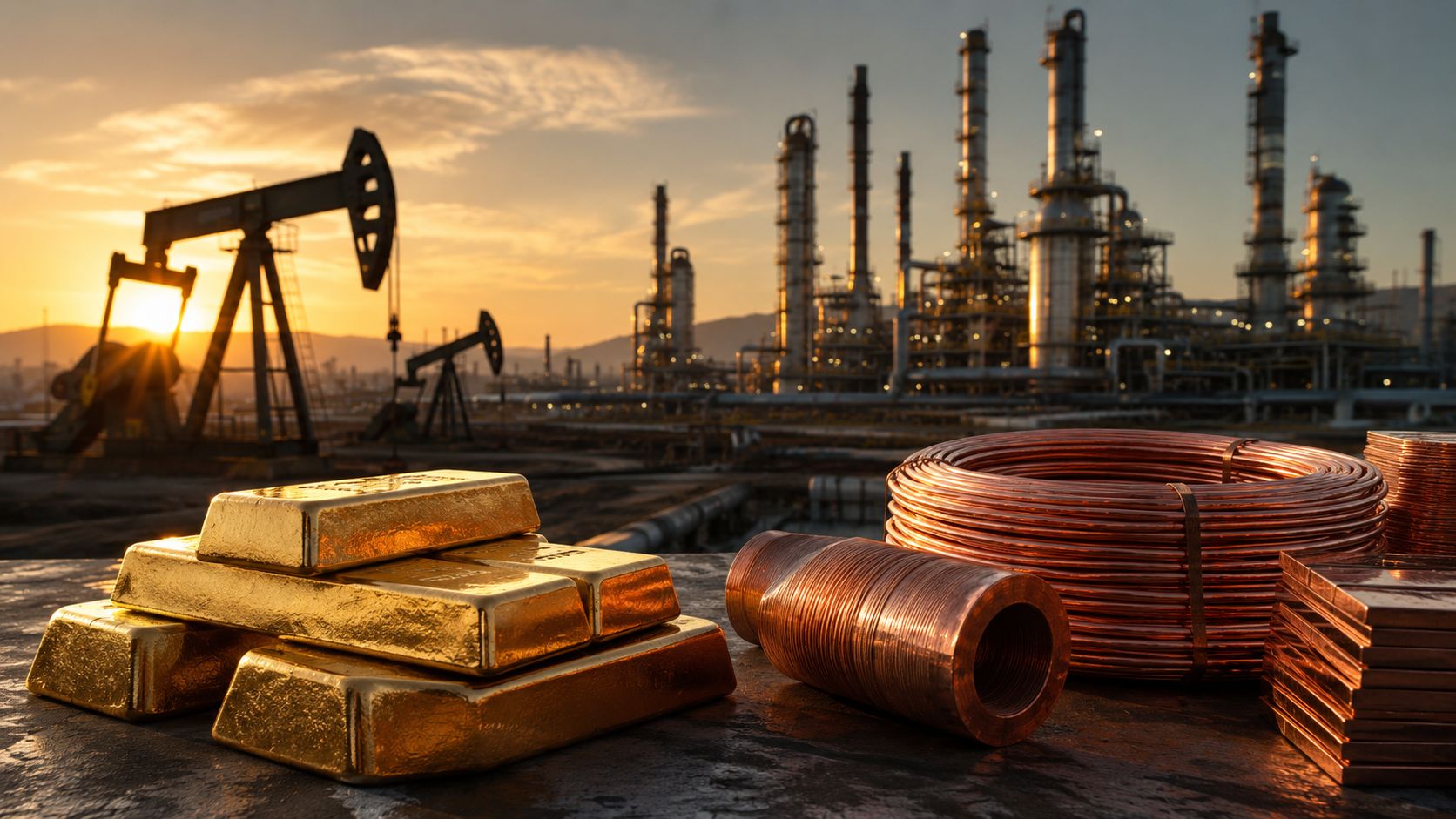
Gold continued to hold near elevated levels, with futures trading around $4,720 an ounce, reflecting a market still willing to pay for protection against inflation, currency volatility and geopolitical uncertainty. Silver also advanced, trading above $80 an ounce, helped by both haven demand and its industrial exposure. The precious-metals complex has increasingly behaved less like a single macro hedge and more like a portfolio of separate risk trades: gold as insurance, silver as a hybrid growth-and-inflation asset, and platinum-group metals responding more directly to industrial and auto-sector conditions.
Copper’s strength added another layer to the commodities rally. COMEX copper futures rose roughly 2% to about $6.30 a pound, while open interest remained substantial, signaling that investor engagement in the metal remains active even after a sharp run-up earlier in the year. Copper has been supported by expectations that electrification, grid investment and data-center growth will keep demand firm, though high prices also raise the risk of substitution, recycling and delayed purchases from industrial buyers.
The metals story is important because it points to a commodities market no longer driven only by oil. Energy supply risk is setting the tone, but copper, aluminum and other industrial metals are reflecting a different set of pressures tied to infrastructure, power demand and manufacturing resilience. Aluminum traded modestly higher near $3,500 a ton, while zinc and nickel were weaker, showing that investors are still distinguishing between metals with clearer structural demand narratives and those more exposed to uneven industrial cycles.
Agricultural commodities were mixed but generally firm, with wheat, corn and soybeans all higher. That matters for inflation because food-price pressures can be politically and socially more sensitive than moves in financial assets. Soybeans climbed more than 1%, corn rose nearly 1%, and wheat also advanced, suggesting that the commodity rally was not confined to energy and metals. Cocoa, by contrast, fell sharply, a reminder that some of last year’s most dramatic soft-commodity trades remain vulnerable to profit-taking and shifting supply expectations.
The broader theme is that investors are again confronting a two-sided commodities market. On one side, supply threats, geopolitics and years of underinvestment argue for higher risk premiums. On the other, elevated prices can weaken demand, squeeze margins and encourage policy responses. That makes the current rally different from a simple growth boom. It is more defensive, more fragmented and more dependent on whether supply fears translate into real physical shortages.
For households, the clearest channel remains fuel. If crude prices stay near or above $100, consumers may begin to feel the impact through gasoline, airfares and delivery costs. For companies, the burden will fall unevenly. Energy producers and miners may benefit, while airlines, chemical makers, trucking companies and retailers could face renewed cost pressure. Investors in broad-market funds such as SPDR S&P 500 ETF Trust (SPY) will therefore need to watch not only commodity prices themselves but also how quickly companies can pass those costs along.
The macroeconomic stakes are also significant. Central banks have been trying to separate temporary price shocks from persistent inflation, but commodities can blur that distinction when energy, food and metals rise together. A one-day move does not change the inflation outlook by itself, yet a sustained rally across oil, grains and industrial inputs would make it harder for policymakers to declare victory over price pressures. That is especially true if higher oil prices coincide with resilient employment, steady consumer spending or fiscal stimulus.
Still, the latest market action does not point to a uniform inflation scare. Natural gas was higher but remained far below the extreme levels seen during earlier energy crises, and some industrial metals slipped even as copper advanced. The dispersion suggests investors are pricing specific supply and demand stories rather than simply buying every hard asset. That selectivity is healthier than a broad speculative surge, but it also means commodity-linked equity performance could become more uneven.
For now, the message from raw-material markets is clear: geopolitical risk has regained pricing power. Oil’s recovery above psychologically important levels has revived concern about energy supply, while precious metals continue to signal demand for protection. Copper’s rally points to longer-term structural demand, and grains show that food markets remain sensitive to broader supply-chain and weather risks. The result is a commodity complex that looks less like a background input to the global economy and more like a central driver of market sentiment.
Investors should treat Friday’s move as a warning rather than a conclusion. If tensions ease and shipping routes remain secure, crude could surrender part of its risk premium. If disruptions intensify, the rally could broaden and test the ability of consumers, corporations and central banks to absorb another inflationary impulse. In that sense, the commodities market is again serving as an early-warning system, flashing signals that reach far beyond oil rigs, mines and grain terminals.