Fresh U.S.-Europe tensions tied to Greenland are rippling through equities and currencies just as global forecasters warn that the expansion is leaning on a narrow set of drivers.
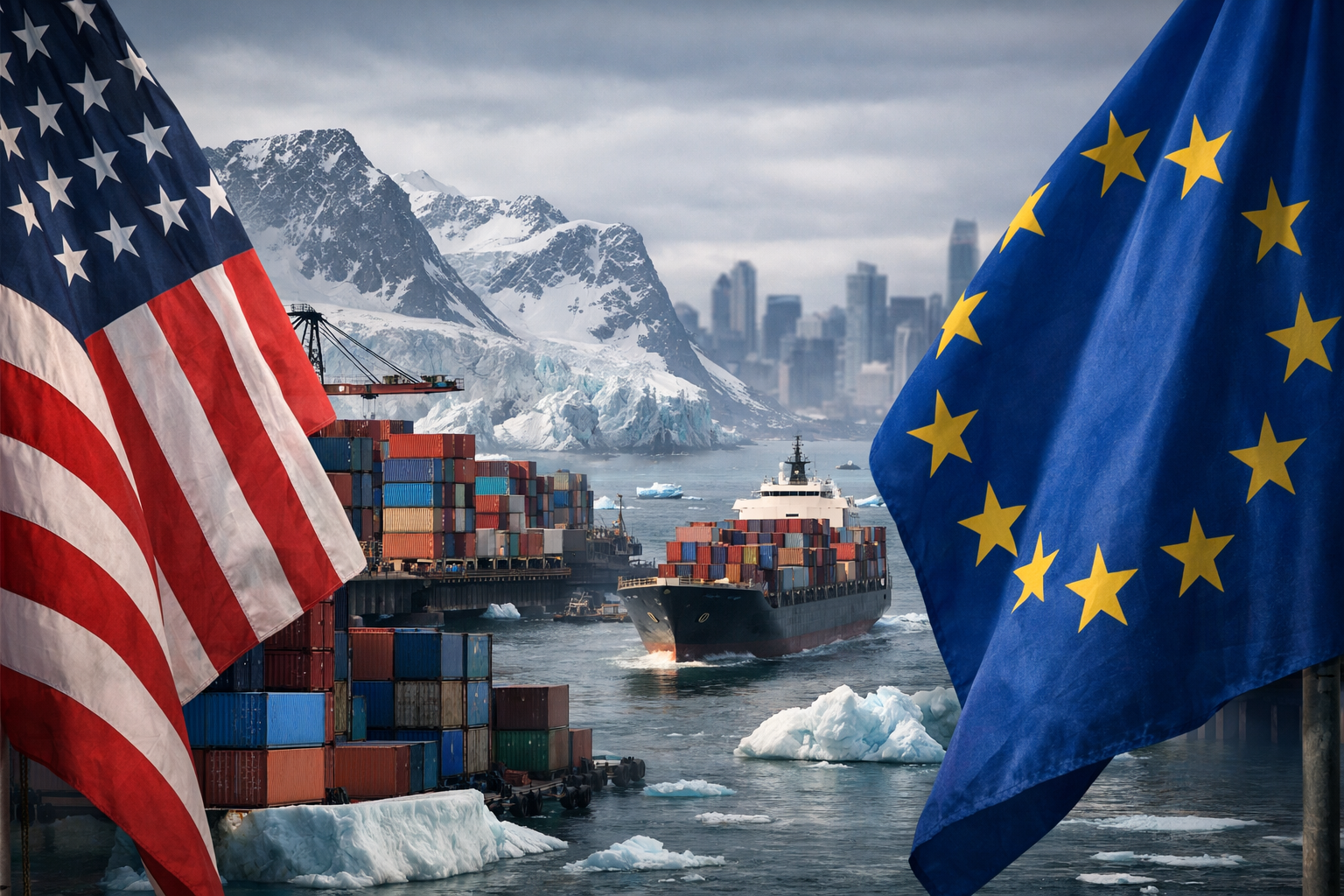
A new burst of transatlantic friction jolted markets Monday after President Donald Trump threatened additional tariffs on imports from eight European countries, escalating a dispute linked to Greenland and raising the risk of a broader trade confrontation. European stocks fell and U.S. equity futures softened as investors repriced the odds of retaliation and renewed supply-chain disruption, with defensive assets catching a bid.
The immediate market reaction was familiar: exporters and cyclicals came under pressure, while gold rose and the dollar firmed. For global investors, the significance isn’t the tariff headline in isolation—it’s the reminder that trade policy can re-emerge quickly as a macro variable, complicating earnings visibility and cross-border capital flows at a time when valuations in parts of the market already assume a relatively benign policy backdrop.
Europe’s response signaled a willingness to harden its stance. Policymakers discussed potential countermeasures, including reviving large counter-tariff packages and weighing the bloc’s newer anti-coercion tools—steps that, if pursued, could widen the shock from politics into pricing, procurement decisions, and investment plans on both sides of the Atlantic.
The timing matters. The International Monetary Fund’s latest outlook update underscored that global growth has been resilient, but warned that geopolitical tensions and tariff escalation can undermine that resilience by disrupting trade routes, investment, and financial conditions. In this framework, the Greenland-linked dispute is less a niche geopolitical story than a live stress test of how quickly “policy uncertainty” can translate into risk premia across assets.
For investors, the near-term watchpoints are straightforward: whether threats become scheduled tariffs, whether Europe responds with credible—and coordinated—retaliation, and how multinationals adjust guidance. Companies with complex cross-border supply chains, including large industrial and technology names such as Apple (AAPL), are typically among the first to see sentiment shift as markets reassess tariff pass-through and demand elasticity. In Europe, aerospace and manufacturing bellwethers like Airbus (EADSY) can act as proxies for how quickly trade risk bleeds into export expectations.