Oil and precious metals climbed as new U.S. tariffs and renewed Middle East uncertainty tightened the link between trade policy and commodity inflation.
Commodities markets are leaning back into a playbook that investors thought had faded with the post-pandemic disinflation: buy hard assets when policy uncertainty rises, supply chains look fragile, and central banks appear closer to cutting than hiking. In late February, that mix has pushed energy and precious metals higher at the same time, while industrial metals have traded with a more selective tone as traders weigh China’s demand outlook against elevated prices and the risk that tariffs redraw trade flows.
The clearest signal has come from precious metals, where safe-haven demand has resurfaced alongside a renewed debate about whether the next macro shock comes from growth weakness or cost pressure. Gold has pushed sharply higher in both international and local markets, and silver has outperformed in a move that has attracted momentum-oriented investors as well as traditional hedgers. In India, gold and silver futures surged early Wednesday, and international prices were also higher overnight, as traders linked the bid to tariff uncertainty and geopolitics.
The trade-policy catalyst is unusually direct. A new 10% U.S. global tariff has taken effect, a move that investors see as raising the floor under goods inflation even if demand cools. The immediate market question is not only how much of the cost is absorbed by corporate margins, but also how rapidly firms adjust sourcing and inventory policy. If companies rebuild buffers, the commodity complex tends to benefit: more inventory means more near-term demand for energy, metals, and freight, even if end consumption grows only modestly. A second-order effect is that tariffs can scramble regional price relationships, lifting volatility in refined products, base metals premia, and some agricultural flows as buyers and sellers seek alternative routes.
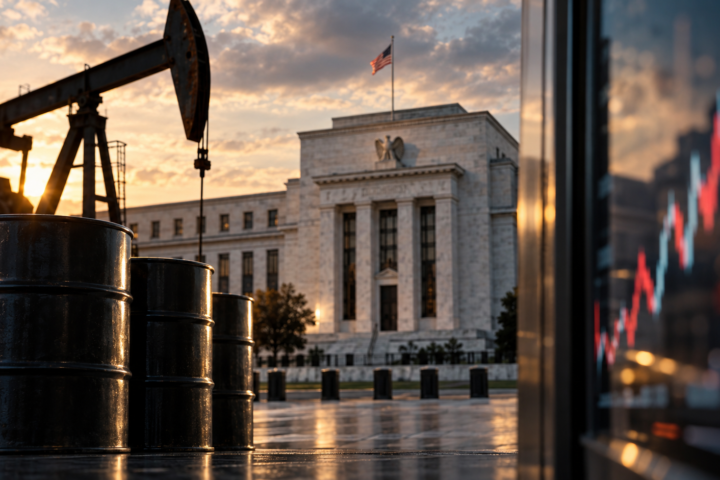
Energy traders are also watching geopolitics with a narrow focus on supply risk. Oil’s rally has been reinforced by headlines tied to U.S.-Iran tensions and diplomacy, with talks scheduled for February 26 in Geneva cited as a near-term focal point for risk appetite. In a market still influenced by the memory of abrupt outages and sanctions-driven dislocations, even the possibility of disruption tends to widen the risk premium, particularly in prompt crude and key middle-distillate cracks. For integrated producers like Exxon Mobil (XOM) and Chevron (CVX), higher prices can improve near-term cash flow, but investors are also watching whether volatility revives political pressure on fuel costs and windfall narratives.
The other near-term variable for oil is U.S. inventory data. The Energy Information Administration’s weekly petroleum report schedule highlights February 25 as the next release date, which traders often treat as a volatility trigger when positioning is stretched. Inventories matter less as a long-run driver than as a sentiment check: a surprise build can puncture a geopolitical rally, while a draw can validate the view that refiners are running hard and product balances are tighter than headline demand data implies. That tug-of-war is particularly important this time of year, when seasonal refinery maintenance can distort crude stocks while products tell a different story.
Precious metals, meanwhile, are increasingly trading as both a geopolitical hedge and a referendum on monetary credibility. A key feature of the current move is that it has persisted even as narratives compete: some investors cite fears that tariffs embed inflation; others see slowing growth and eventual rate cuts as the stronger driver; and still others focus on the political premium that tends to show up in gold when policy direction becomes less predictable. Market participation has been active, with COMEX data showing heavy turnover and rising open interest recently, consistent with new positioning rather than only short covering.
Not everyone is convinced the rally is fundamentally clean. Veteran investor Ruchir Sharma has argued that gold’s surge looks disconnected from the typical macro drivers and is being pushed by shifting “stories,” a warning that the trade can become unstable if narratives rotate quickly. That skepticism matters because it reflects a broader investor debate: whether gold is responding to a durable regime shift in policy risk, or whether it is simply the most liquid outlet for uncertainty in a market where bonds and the dollar are not offering the same hedging properties they once did. For gold miners such as Newmont (NEM), higher bullion prices can expand margins, but equities won’t mirror bullion one-for-one if investors start to price higher costs, political risk in mining jurisdictions, or a future pullback in spot prices.
Industrial metals have been comparatively nuanced. Copper has remained a high-conviction “electrification” commodity for many long-term allocators, but near-term pricing is sensitive to whether high prices ration demand, spur scrap flows, or accelerate substitution. Trading activity has been elevated, with COMEX copper volume jumping recently even as open interest declined, a pattern that can hint at profit-taking or rolling rather than fresh directional exposure. That aligns with a market that is trying to reconcile two timelines: structural demand from grid buildout, data centers, and EV supply chains, versus cyclical softness if China’s property-linked demand remains uneven and developed markets slow.
The tariff overlay complicates that calculus. If trade barriers broaden or persist, metals markets may see more regional fragmentation: higher premia in markets that import heavily, discounted supply in regions facing weaker access, and more emphasis on “friend-shoring” contracts. Over time, those shifts can support investment in non-traditional supply, but in the interim they tend to increase volatility and raise the value of inventory. For producers and traders, the commercial challenge becomes managing basis risk rather than simply forecasting headline prices. For investors, it can make broad commodity exposure more attractive, because dispersion across contracts and regions can create opportunities even when the overall complex is range-bound.
Agricultural markets, though not the day’s headline, sit in the background as the most politically sensitive piece of the commodity puzzle. Tariffs and retaliation can hit grains and softs quickly, and weather-driven supply shocks can turn a trade story into a food-inflation story. Even when agriculture is not leading, it can shape policy reaction functions if consumer price measures begin to re-accelerate. That is one reason commodities are again showing up in portfolio conversations not only as “inflation hedges,” but as hedges against policy error: the risk that governments respond to higher prices with measures that further disrupt supply.
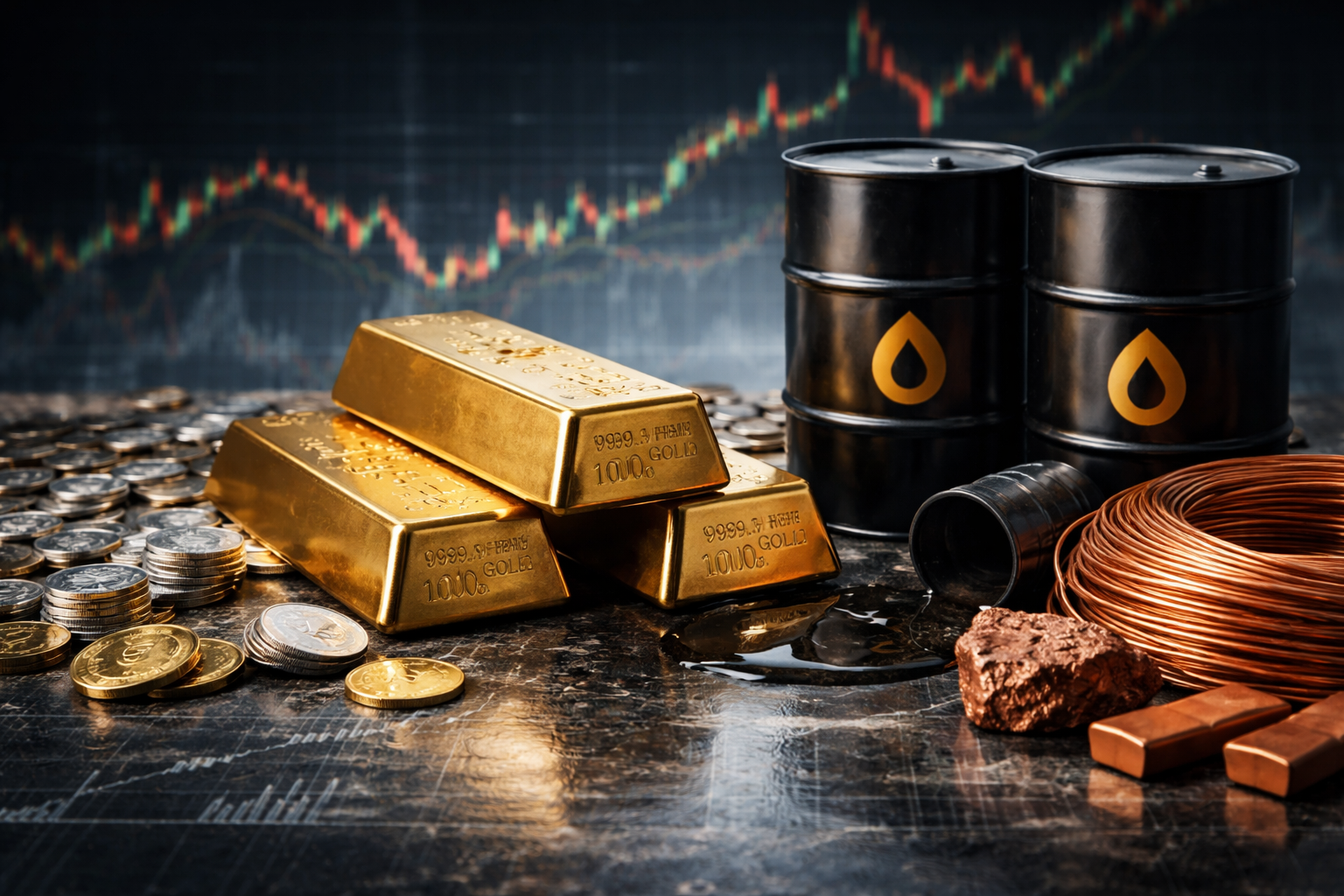
For investors, the practical takeaway is that the commodity rally is no longer a single-theme trade. Energy is being pulled by geopolitics and inventories; gold by uncertainty and rates; and copper by an uneasy balance between long-term electrification and near-term price sensitivity. In that environment, broad exposure such as the SPDR S&P 500 ETF Trust (SPY) may still capture commodity-linked earnings through energy and materials constituents, but direct commodity sensitivity is increasingly coming through specific equities and curves: integrated oil for cash flow leverage, miners for operating leverage, and select industrial names for pricing power.
If tariffs persist and geopolitical risk remains elevated, commodities may keep their bid even without a synchronized global expansion. The bigger test will be whether higher input costs translate into stickier inflation and a slower easing cycle. If so, the commodity complex could shift from being a tactical hedge to a more structural allocation again, with volatility as the price of admission.