A violent move in crude, combined with resilient gold and still-elevated copper, is leaving commodity investors to price a world where geopolitics and structural supply strains matter more than the old assumption of abundant slack.
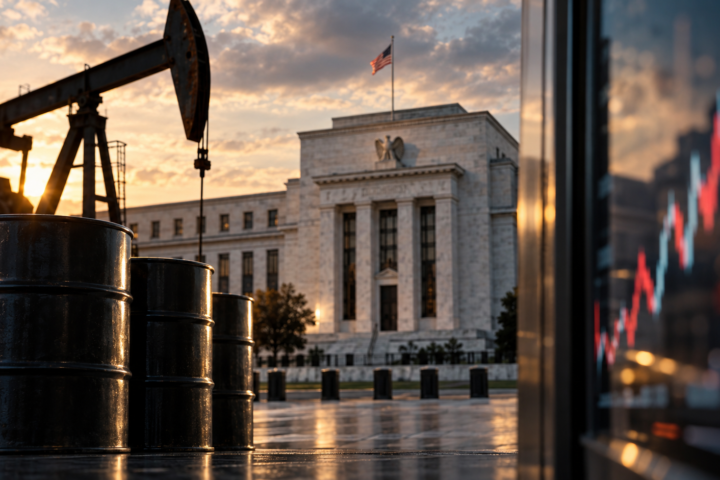
Commodity markets are once again being forced to trade two stories at the same time. The first is immediate and destabilizing: oil remains the market’s most powerful inflation transmitter, and the latest Middle East disruption has shown how quickly crude can move from a manageable macro variable to the central risk in the global pricing system. Brent crude was trading near $92 a barrel on March 10 after an extraordinary swing that briefly carried prices close to $120 before a partial retreat, a reminder that even when panic fades, the new floor can remain uncomfortably high for consumers, central banks, airlines and manufacturers.
That reversal does not mean the danger has passed. It means traders are trying to judge whether the market is dealing with a temporary logistics shock or the beginning of a longer supply event. Reports that G7 countries stood ready to coordinate emergency reserve releases helped cool the most extreme price action, and Saudi Aramco has signaled that it can reroute part of its exports through Red Sea infrastructure. But those stabilizers are not the same as a clean normalization in physical flows. When policymakers start discussing reserve releases and major producers warn of severe economic fallout, the market is acknowledging that oil security, not just oil demand, has become the dominant variable.
That matters because oil’s influence spreads far beyond the energy complex. Every sustained increase in crude seeps into freight rates, petrochemical costs, fertilizer economics, fuel bills and inflation expectations. The macro concern is not merely that oil gets expensive. It is that oil gets expensive at a moment when many investors had entered 2026 expecting softer commodity prices overall. The World Bank said in its latest commodity outlook that global commodity prices were projected to fall in 2026, reflecting weaker growth and a growing oil surplus. The current market shock does not invalidate that framework, but it does expose how fragile those baseline forecasts can be when geopolitical supply risk abruptly overrides balance-sheet logic.
Gold, by contrast, is behaving less like a panic instrument than a strategic hedge that no longer needs a single catalyst. Prices were above $5,170 per troy ounce on March 10, still below January’s record but sharply higher than a year ago. The move suggests bullion is benefiting from a broader repricing of political risk, fiscal uncertainty and reserve diversification rather than from one isolated scare. A stronger dollar has intermittently limited upside, yet gold has held onto most of its gains, indicating that investors continue to treat the metal as protection against both policy error and market stress. For producers such as Newmont (NEM), that backdrop supports margins even if bullion’s ascent becomes less dramatic from here.
Copper tells a different story, and perhaps the more interesting one for longer-term investors. Prices were around $5.85 per pound on March 10, below the January peak but still roughly 23% above a year earlier. In the near term, higher inventories and a more uncertain industrial outlook have moderated the rally. Yet the metal remains supported by a structural thesis that has not gone away: electrification, data-center expansion, grid investment and defense spending all point to a tighter medium-term market. Earlier forecasts compiled by Reuters showed analysts expecting copper to hold gains through 2026 because mine disruptions and refined-market tightening are arriving sooner than previously expected. That makes copper less of a pure growth trade than in past cycles and more of a scarcity asset with industrial demand attached. Companies such as Freeport-McMoRan (FCX) remain among the clearest equity expressions of that view.
The larger lesson across the commodity complex is that investors can no longer rely on a single cyclical narrative. Oil is trading geopolitical vulnerability. Gold is trading institutional distrust and macro insurance demand. Copper is trading future scarcity even as present-day manufacturing signals remain mixed. Those are different time horizons and different investor constituencies, but they now coexist in the same tape. That is why commodity volatility feels more persistent than episodic. The market is not simply reacting to headlines. It is repricing the value of secure supply chains.
For equity investors, this creates both opportunity and discipline. Energy majors such as Exxon Mobil (XOM) may benefit from higher crude realizations, but they also face demand destruction risk if fuel costs choke growth. Gold miners can enjoy powerful cash generation in a sustained bullion upcycle, yet their stocks still depend on execution, cost control and reserve quality. Copper producers may look expensive on near-term earnings metrics but cheap against a multi-year supply deficit story. The right framework is no longer to ask whether commodities are bullish or bearish as an asset class. It is to ask which commodities have pricing power rooted in scarcity, and which are merely riding momentum.
There is also an important consumer angle. A renewed oil shock would hit households much faster than higher gold or copper prices ever could. Fuel and transportation costs are politically sensitive, and governments know it. That helps explain the speed with which officials have moved to discuss emergency reserves and to warn retailers against profiteering. The policy response may reduce the odds of a disorderly spike, but it cannot instantly replace disrupted barrels or erase the inflation psychology that accompanies triple-digit oil.
For now, the commodity market is signaling a simple but uncomfortable truth. The world may still be capable of producing enough raw materials in aggregate, yet it is increasingly vulnerable to where those materials are produced, how they are transported and how quickly alternative supply can be mobilized. In quieter years that distinction is academic. In 2026 it is the whole trade.