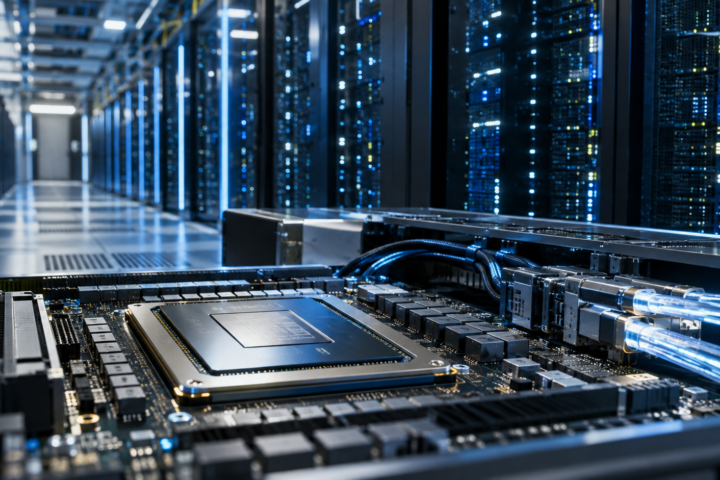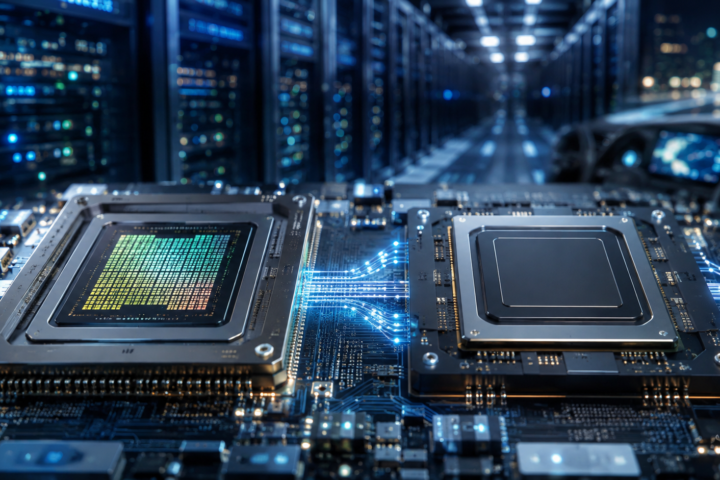
A surge in artificial intelligence investment is driving an unprecedented buildout of global data center infrastructure, reshaping capital allocation across the technology sector.
The race to dominate artificial intelligence is rapidly evolving into a capital-intensive contest over infrastructure, with the world’s largest technology companies committing tens of billions of dollars to expand data center capacity. This shift marks a new phase in the AI cycle, where competitive advantage increasingly depends not just on software innovation, but on access to computing power, energy, and physical scale.
In recent quarters, companies including Microsoft Corp. (MSFT), Alphabet Inc. (GOOGL), and Amazon.com Inc. (AMZN) have significantly increased capital expenditure forecasts, largely tied to AI workloads. These investments are flowing into hyperscale data centers designed to support training and deployment of large language models, as well as enterprise AI services delivered through cloud platforms.
The scale of spending is striking. Microsoft has signaled continued aggressive investment in Azure infrastructure, while Alphabet has expanded its global data center footprint to support growing demand for Google Cloud and AI-driven services. Amazon, through AWS, remains the market leader in cloud infrastructure and is reinforcing that position with new regions and specialized AI chips.
This wave of spending reflects both opportunity and necessity. AI applications, particularly generative models, require vast computational resources, far exceeding those used in traditional cloud workloads. Training a frontier model can cost hundreds of millions of dollars, while inference at scale introduces ongoing operational demands. As a result, companies are vertically integrating more of their infrastructure stacks, from custom silicon to energy procurement.
Nvidia Corp. (NVDA), the dominant supplier of AI accelerators, sits at the center of this ecosystem. Its graphics processing units have become the industry standard for AI training, driving explosive revenue growth and positioning the company as a critical enabler of the AI boom. However, the concentration of demand has also prompted customers to diversify supply chains and develop in-house alternatives, adding a strategic dimension to infrastructure investment.
Custom chip development is now a key battleground. Alphabet’s Tensor Processing Units and Amazon’s Trainium and Inferentia chips represent efforts to reduce reliance on third-party suppliers while optimizing performance for specific workloads. Microsoft has also moved in this direction, unveiling its own AI chips to support Azure services. These initiatives aim to lower costs over time, though they require substantial upfront investment and technical expertise.
Beyond hardware, energy has emerged as a critical constraint. Data centers are among the most power-intensive assets in the modern economy, and AI workloads are amplifying that demand. Securing reliable, cost-effective, and increasingly sustainable energy sources has become a strategic priority. Companies are entering long-term agreements for renewable energy and exploring partnerships with utilities to ensure capacity.
This dynamic is influencing geographic decisions. Data center expansion is increasingly tied to regions with abundant energy resources, favorable regulation, and connectivity. Northern Europe, parts of the United States, and select areas in Asia are seeing heightened activity, while constraints in urban centers are pushing development outward.
The ripple effects extend across the broader technology supply chain. Semiconductor manufacturers, networking equipment providers, and construction firms are all benefiting from the surge in demand. Companies producing cooling systems, power management solutions, and specialized materials are also seeing increased interest, as efficiency becomes a critical differentiator.
At the same time, the pace of spending is raising questions among investors about returns on capital. While demand for AI services remains strong, monetization models are still evolving. Enterprises are experimenting with use cases, and pricing dynamics are not yet fully established. This creates a degree of uncertainty around how quickly infrastructure investments will translate into sustained profitability.
Public markets have, for now, largely rewarded companies leading the AI push. Shares of Nvidia have surged, while Microsoft and Alphabet have seen renewed investor enthusiasm tied to their AI strategies. The broader technology sector, as reflected in the SPDR S&P 500 ETF Trust (SPY), has benefited from this momentum, though performance remains uneven across subsectors.
Skeptics caution that the current cycle bears some resemblance to past periods of overinvestment in technology infrastructure. The dot-com era saw a similar buildout of fiber networks and data centers, many of which initially operated below capacity. However, proponents argue that AI represents a more durable and transformative demand driver, with applications spanning industries from healthcare to finance.
Regulation is another emerging factor. Governments are beginning to scrutinize the concentration of AI capabilities and the implications for competition, data privacy, and national security. Infrastructure investments, particularly those involving cross-border data flows and critical technologies, may face increasing oversight. This could influence where and how companies deploy capital.
Looking ahead, the trajectory of AI infrastructure spending will depend on several factors. Continued advances in model efficiency could moderate compute requirements, while breakthroughs in hardware could shift cost curves. Conversely, the expansion of AI use cases could sustain or even accelerate demand, reinforcing the need for ongoing investment.
For investors, the key question is not whether AI will remain a central theme, but how value will be distributed across the ecosystem. While hyperscalers and chipmakers have captured early gains, opportunities may broaden to include suppliers, energy providers, and software companies that enable more efficient use of infrastructure.
The current phase underscores a fundamental shift in the technology landscape. AI is no longer just a layer of software innovation; it is reshaping the physical and economic foundations of the industry. As companies continue to build out the infrastructure required to support this transformation, the balance between growth, cost, and return will define the next chapter of the sector.