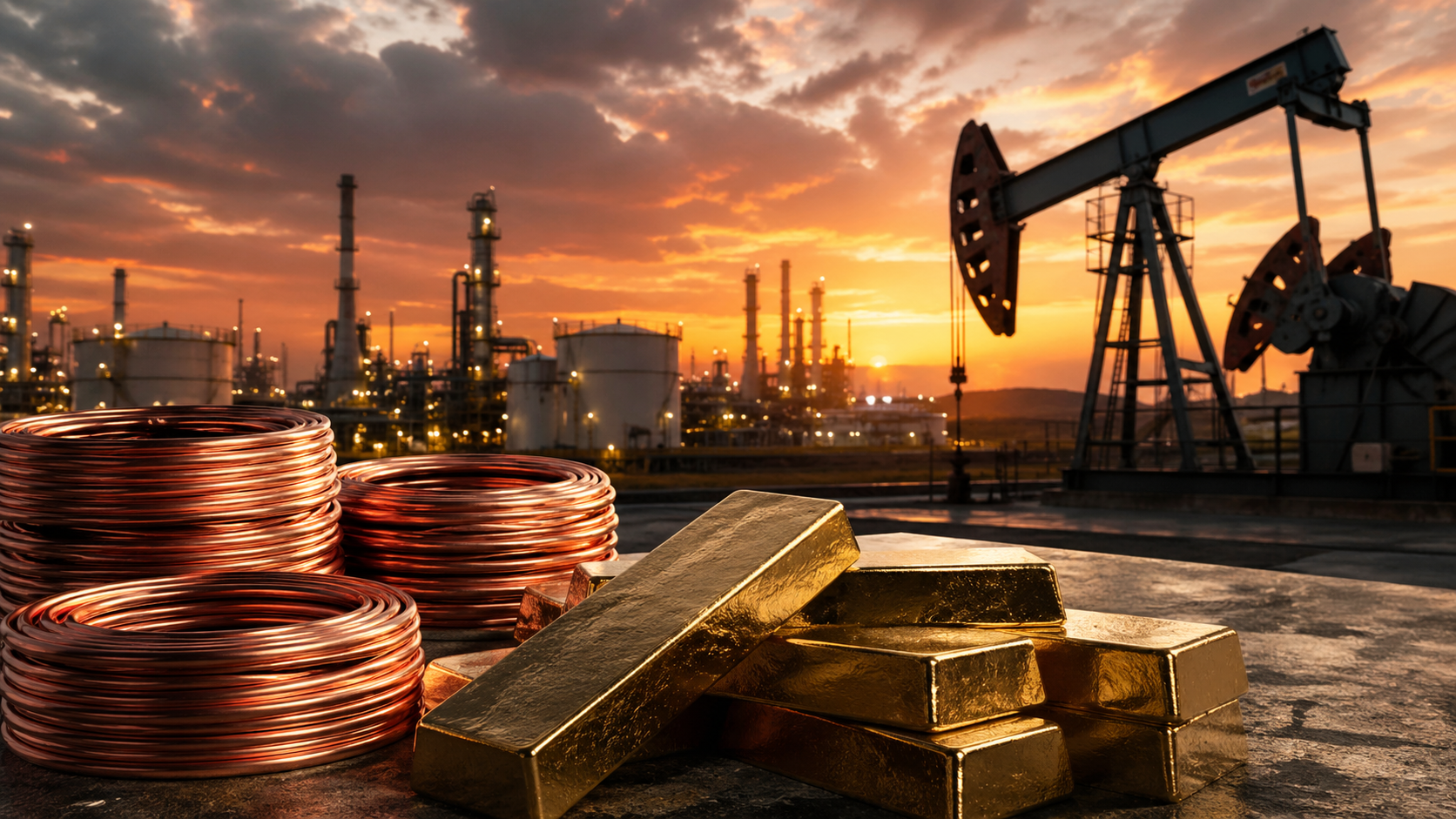
Energy markets moved back to the center of global inflation risk as crude surged, gold steadied near record levels, and copper held close to historically elevated prices.
The commodity market is again trading less like a collection of separate assets and more like a single macroeconomic warning system. Oil is the clearest signal. Brent crude has pushed above $120 a barrel, with market forecasts rising as traders price in the possibility that disruption tied to the Iran conflict could persist rather than fade quickly. The move has revived a familiar but uncomfortable question for investors: whether energy inflation can once again tighten financial conditions even without another round of central-bank rate increases.
For producers, the price move is a windfall. Exxon Mobil (XOM), Chevron (CVX), Shell (SHEL) and BP (BP) all stand to benefit from stronger upstream margins if benchmark crude remains elevated. The catch is that equity investors rarely reward oil companies in a straight line during geopolitical shocks. Higher prices lift cash flow, but they also raise recession risk, threaten fuel demand, and invite political pressure over gasoline and diesel costs. That leaves the sector in a complicated position: operationally stronger, but more exposed to a broader market repricing if the oil shock starts to weaken consumer spending and industrial activity.
The immediate concern is supply security. Oil markets can absorb temporary outages when inventories are comfortable and alternative supply is available. They struggle when disruptions touch strategic routes, spare capacity is uncertain, and refiners must compete aggressively for prompt barrels. The latest surge suggests traders are no longer treating the disruption as a brief risk premium. Instead, crude is beginning to price a more durable shortage, one that could flow through freight rates, jet fuel, petrochemicals and food production costs.
That matters because the inflationary impact of oil is unusually broad. A higher crude price quickly reaches households through gasoline and utility costs, but it also reaches companies through transport, packaging, plastics and working-capital needs. Retailers, airlines and chemical manufacturers can hedge some exposure, but not the secondary effect of weaker demand. Delta Air Lines (DAL), United Airlines (UAL) and FedEx (FDX) are among the companies whose earnings sensitivity to fuel can become more visible when crude prices rise this quickly.
Gold’s behavior is more nuanced. Spot prices have remained near elevated levels, with gold quoted around the mid-$4,500s per ounce in recent trading and futures recovering after a short pullback. The metal’s resilience reflects the same forces unsettling oil: geopolitical stress, inflation anxiety and questions over the path of real interest rates. But gold is also facing an offsetting headwind. If higher oil prices keep inflation sticky, central banks may have less room to cut rates, supporting bond yields and the dollar. That can limit the appeal of a non-yielding asset even in a risk-off market.
For gold miners such as Newmont (NEM) and Barrick Mining (B), the current setup is favorable but not risk-free. High bullion prices can expand margins, especially for producers with disciplined cost structures and stable jurisdictions. Yet energy is also a major input for mining. Diesel, power and transportation costs can rise at the same time as the gold price, blunting some of the benefit. Investors are likely to separate companies with strong balance sheets and manageable operating inflation from those whose costs rise almost as quickly as revenue.
Copper is sending a different message. The metal has been trading near $5.95 a pound, up sharply over the past year and close to levels that continue to reflect tight supply, electrification demand and infrastructure spending. Unlike oil, copper is not only a geopolitical hedge or inflation input. It is also a long-cycle growth indicator. Strong copper prices suggest that investors still see durable demand from grid expansion, data centers, electric vehicles and industrial construction, even as higher energy prices threaten the economic outlook.
That tension is important for Freeport-McMoRan (FCX), Southern Copper (SCCO) and other miners tied to industrial metals. Copper strength supports earnings expectations, but it also depends on whether manufacturers and construction firms can keep absorbing higher financing and energy costs. A prolonged oil spike could eventually weaken the very demand that has underpinned copper’s rally. For now, the market appears to be distinguishing between short-term macro stress and long-term structural scarcity, but that distinction may narrow if global growth forecasts begin to fall.
Agricultural commodities are the next channel to watch. Even when crop supplies are adequate, higher oil prices can lift fertilizer, diesel and shipping costs, pressuring farm margins and food prices. That makes energy the first domino in a wider commodity chain. Companies such as Archer-Daniels-Midland (ADM), Bunge Global (BG) and Deere (DE) may face a mixed environment in which higher crop volatility supports trading and equipment demand in some regions, while input inflation squeezes producers elsewhere.
For investors, the broader lesson is that commodity rallies are not all equal. A demand-led rally usually rewards cyclicals and emerging markets. A supply-shock rally is more ambiguous. It can lift producers while hurting consumers, boost inflation hedges while weighing on growth assets, and make central-bank policy harder to predict. The latest move looks closer to the second type. Energy is leading, gold is defensive, and copper remains firm but vulnerable to a growth scare.
The market’s next phase will depend on whether oil stabilizes or keeps rising. If crude consolidates near current levels, investors may treat the shock as painful but manageable, favoring integrated energy producers, select miners and inflation-linked assets. If prices move materially higher, the trade may shift from commodity upside to recession protection, with demand-sensitive equities, airlines, retailers and lower-income consumer sectors bearing the pressure.
For now, commodities are carrying the market’s most direct message: inflation risk has not disappeared, supply chains remain vulnerable, and the path from geopolitical shock to household finances can be short. The winners are visible in energy and metals cash flows. The risks are harder to price, but they are spreading quickly across the global economy.