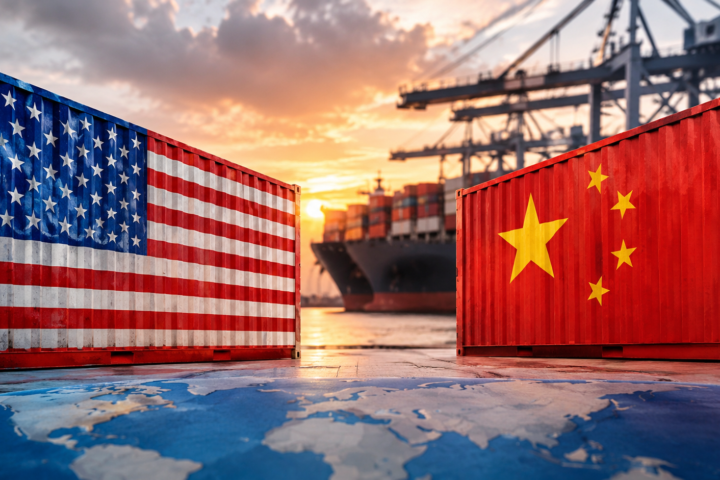
The global trade landscape is entering another period of uncertainty as Washington moves to expand its tariff strategy. The Trump administration’s latest proposal to impose additional duties on 14 major trading partners has renewed concerns about supply-chain disruption, rising import costs and the future of international commerce.
Announced on November 25, the proposed measures follow a U.S. investigation into what the administration describes as structural excess industrial capacity and production in manufacturing sectors. China remains a central target, but the investigation also covers major economies across Europe and Asia, including the European Union, Japan, South Korea and India.
For investors, the announcement is more than another trade-policy headline. It introduces a new layer of uncertainty for multinational companies, manufacturers, exporters and businesses that depend on cross-border production. The final outcome could influence corporate margins, inflation expectations and investment decisions well into 2027.
Washington Expands Its Section 301 Trade Strategy
The Office of the United States Trade Representative (USTR) determined that the industrial policies of 14 economies were unreasonable and burdened or restricted U.S. commerce. The findings were made under Section 301 of the Trade Act of 1974, which allows the United States to respond to certain foreign trade practices considered unfair.
The economies covered by the proposed actions are China, the European Union, Bangladesh, Cambodia, India, Indonesia, Japan, South Korea, Malaysia, Singapore, Switzerland, Taiwan, Thailand and Vietnam.
The administration argues that some trading partners have developed manufacturing capacity beyond market demand, contributing to overproduction, persistent trade surpluses and pressure on U.S. manufacturers. Washington says the proposed tariffs are intended to encourage changes in those practices and protect domestic industrial competitiveness.
However, the allegations remain contested. Several affected economies have rejected the U.S. characterization of their manufacturing policies, arguing that their production and export strategies reflect legitimate economic development and market competition.
Proposed Tariff Rates Vary Across Economies
The proposed tariff structure differs by trading partner and includes provisions linked to existing trade agreements, negotiated commitments and product-specific exemptions.
According to USTR, China could face proposed additional duties of up to 20% on certain goods, while some products could receive a lower proposed rate. The European Union and Japan could face rates of up to 15%, subject to applicable existing duties and exemptions.
India could face proposed tariffs of up to 25%, with a potential adjustment to 17% if it reaches a qualifying trade agreement with the United States. Vietnam faces a proposed rate of up to 35%, potentially adjusted to 20% under a qualifying agreement.
Several Southeast Asian economies, including Bangladesh, Cambodia, Indonesia, Malaysia and Thailand, could face proposed rates of up to 18%. Singapore’s proposed rate could reach 20%.
These figures should not be interpreted as final all-in tariff rates. USTR has indicated that certain existing Section 301 and Section 232 duties will be accounted for, and exemptions may apply to specific products.
The administration has also indicated that some tariff commitments could be adjusted through negotiations. This leaves room for diplomatic developments to influence the eventual trade impact.
Why This Matters for Investors
The most immediate concern for investors is the potential effect on corporate costs and profitability. Tariffs can increase the price of imported components, raw materials and finished products, forcing companies to absorb additional expenses or pass them on to customers.
Businesses with limited pricing power may face pressure on operating margins. Companies that rely heavily on imported goods could also experience higher working-capital requirements as they manage inventory and prepare for possible changes in customs duties.
Consumer-facing industries are particularly sensitive. Retailers, apparel companies, electronics manufacturers and automotive businesses often operate across complex international supply chains. Higher import costs could affect product pricing, demand and earnings forecasts.
The inflation implications are also important. If businesses pass tariff-related costs to consumers, goods prices could remain elevated. That could complicate the outlook for the Federal Reserve, particularly if inflation proves more persistent than expected.
Investors should therefore monitor not only the tariff announcement itself but also company guidance, inflation data and changes in market expectations for interest rates.
Supply Chains and Manufacturing Face a New Test
The proposed measures could accelerate the restructuring of global supply chains. Companies may reconsider where they manufacture products, source materials or assemble components to reduce exposure to trade-policy uncertainty.
Countries that attract additional manufacturing investment could benefit from supply-chain diversification. However, relocating production is expensive and often requires years of planning, infrastructure investment and supplier development.
The potential effects will vary considerably by industry. Semiconductor production, electronics assembly, textiles, footwear, automotive components and industrial machinery may all face different levels of exposure depending on their sourcing arrangements and product classifications.
For multinational companies, the challenge is balancing cost efficiency with resilience. A supply chain designed around the lowest production cost may become less attractive if tariff risks increase.
China Remains at the Center of Trade Tensions
China’s role in the latest tariff proposal is particularly significant because of its position in global manufacturing and international trade.
The U.S. administration has repeatedly argued that Chinese industrial production and export policies create competitive pressure for American manufacturers. Beijing, meanwhile, has rejected the excess-capacity allegations and criticized the proposed measures.
The tariff announcement could complicate efforts to maintain stable U.S.-China economic relations. Even where negotiations produce exemptions or lower rates, the possibility of further trade restrictions may discourage companies from making long-term investment commitments.
For investors, the key issue is whether the new proposal leads to a negotiated settlement or another cycle of retaliation and uncertainty.
What Happens Next?
The proposed tariffs are not yet final. USTR has opened a public comment process, with written submissions due January 5, 2027. Hearings are scheduled to begin on January 25, 2027.
The review period gives businesses, industry associations and affected governments an opportunity to present arguments concerning the proposed measures. The administration may revise tariff rates, introduce additional exemptions or adjust its approach following negotiations.
Investors should pay close attention to official notices, trade-agreement developments and announcements from affected economies. The timing and scope of implementation will be critical in determining the actual economic impact.
Key Investment Insight
The latest tariff proposal reinforces the importance of assessing companies by their exposure to global trade, rather than relying solely on broad sector classifications.
Investors may wish to monitor businesses with diversified manufacturing locations, flexible sourcing arrangements and the ability to manage cost increases. Companies heavily dependent on a single country or vulnerable to imported-input inflation may face greater uncertainty.
Potential beneficiaries of supply-chain diversification could include selected logistics providers, industrial infrastructure businesses and manufacturers in alternative production hubs. However, any advantage will depend on actual investment flows, trade rules and the final tariff framework.
The central risk is that a proposal intended to protect domestic manufacturing could also raise costs for businesses and consumers, creating a difficult balance between industrial policy and economic growth.
As trade negotiations develop, Stockmarket-news will continue tracking the policy changes, market implications and investor-relevant developments shaping the global economy. Stay with Stockmarket-news for daily financial news and analysis designed to help investors understand what matters next.