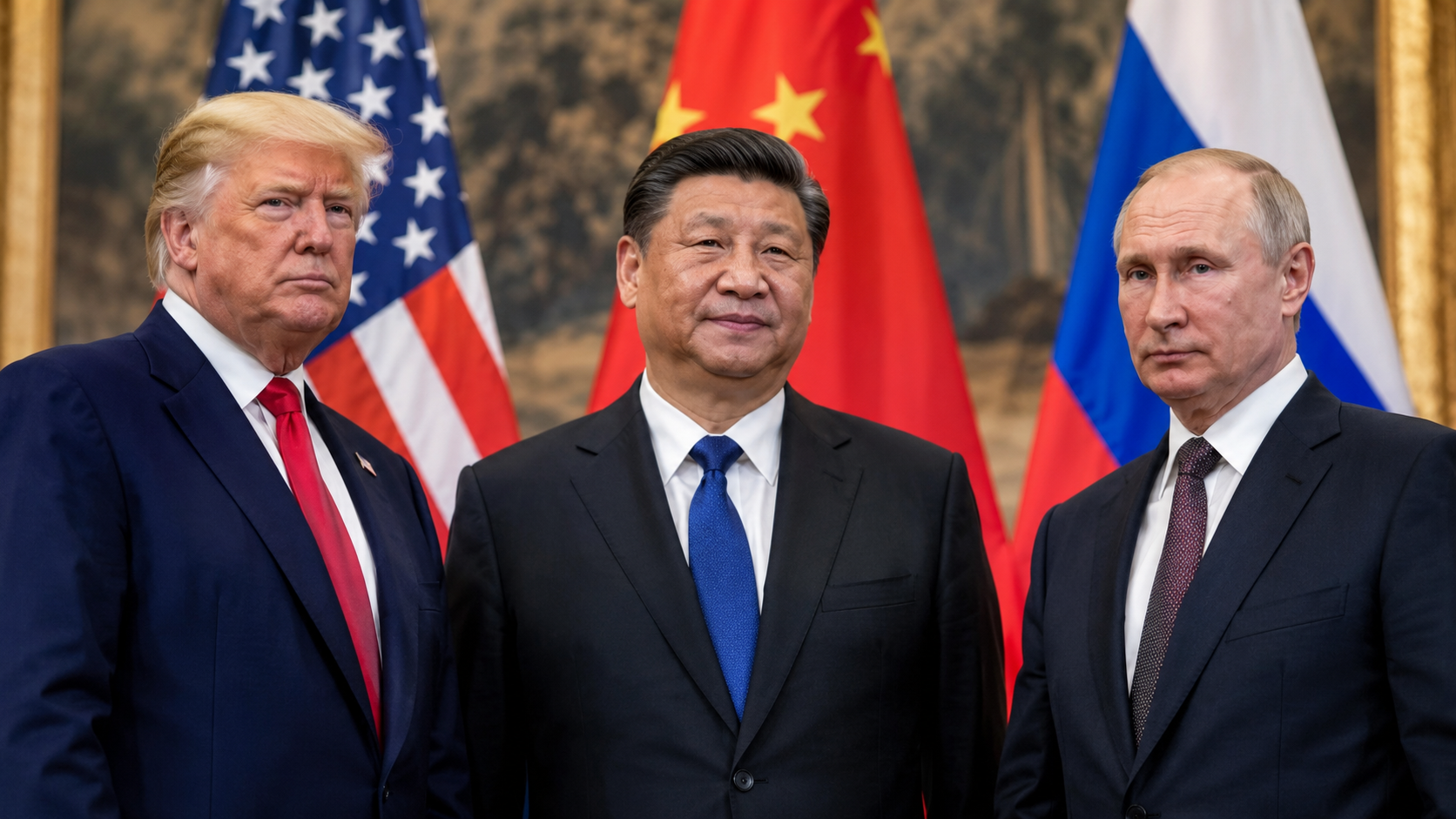
The global investment landscape is entering another critical geopolitical moment. As U.S. President Donald Trump arrives in China for the Asia-Pacific Economic Cooperation (APEC) summit, investors are watching preparations for an unprecedented trilateral meeting with Chinese President Xi Jinping and Russian President Vladimir Putin. Scheduled for November 19 in Shenzhen, the talks could influence the direction of international trade, economic sanctions, technology competition and global security.
The meeting comes at a particularly sensitive time for financial markets. Washington and Beijing continue to navigate trade disagreements and restrictions on advanced artificial intelligence (AI) chips, while Western sanctions against Russia remain a major factor in international economic relations. Meanwhile, ongoing conflicts involving Ukraine and Iran add further uncertainty to the global outlook.
For investors, this is more than a diplomatic event. Decisions or even signals emerging from Shenzhen could influence corporate investment plans, international supply chains, commodity markets and the risk appetite of global financial markets.
A Historic Meeting With Global Consequences
The planned meeting between Trump, Xi and Putin represents an unusual diplomatic development, bringing together leaders of three major powers whose policies significantly influence the global economy.
According to Reuters reporting on November 18, the three leaders are expected to discuss Russia’s war in Ukraine, the conflict involving Iran, international trade, AI competition and nuclear security. The meeting is scheduled to take place on the sidelines of the APEC summit.
China’s Foreign Ministry confirmed the trilateral meeting on November 16, while the Kremlin and White House also confirmed the arrangements.
The diplomatic significance is considerable. The United States remains a dominant force in global finance and technology, China is central to international manufacturing and trade, and Russia remains an important participant in global energy and commodity markets.
An agreement between these governments could reshape economic relationships across multiple regions. However, disagreements over security, territorial issues, sanctions and trade policy could make meaningful progress difficult.
The uncertainty surrounding the outcome is itself important for investors, particularly those exposed to international markets.
Xi and Putin Signal Their Positions Ahead of Talks
The developments at the APEC summit on November 18 have already offered investors important signals about the positions of Beijing and Moscow.
Xi Jinping called for free and open international trade, stronger economic cooperation and greater market access. He also pledged to oppose protectionism and unilateral trade restrictions.
Putin, meanwhile, criticised Western sanctions against Russia, arguing that they had failed to prevent economic growth or weaken the country’s economy as intended.
Reuters reported that these statements came shortly before the anticipated trilateral discussions with Trump.
The contrasting positions highlight one of the central challenges facing the negotiations. Washington’s approach to trade restrictions and national security remains a major point of disagreement with Beijing and Moscow.
For investors, the important question is whether diplomatic engagement can translate into practical policy changes. Positive statements alone are unlikely to produce lasting market effects unless they are followed by measurable developments in tariffs, export restrictions, sanctions or international agreements.
Trade Relations Remain a Major Market Concern
One of the most important issues investors will be watching is the future of U.S.–China economic relations.
The two economies remain deeply connected through manufacturing, technology, consumer goods and international supply chains. However, years of trade disputes, tariffs and restrictions have increased uncertainty for companies operating across both markets.
The upcoming discussions could provide an opportunity to address some of these concerns, particularly as the existing trade truce is approaching a January 2027 expiration, according to reporting on the summit’s preparations.
For multinational corporations, the continuation or breakdown of trade negotiations could have significant financial consequences. Companies that depend on Chinese manufacturing or sell products in the Chinese market may face changing operating costs, regulatory uncertainty and potential restrictions on market access.
The semiconductor industry is particularly exposed. Advanced chips are essential to smartphones, cloud computing, data centers, automotive technology and AI infrastructure. Restrictions on semiconductor exports can affect both manufacturers and businesses that rely on advanced computing equipment.
A Reuters report published November 18 highlighted China’s opposition to protectionism and the importance of the latest U.S. restrictions on China’s access to advanced AI chips.
For investors, any indication of progress on tariffs and technology trade could become an important catalyst for semiconductor stocks and broader technology-sector sentiment.
AI Competition Adds Another Layer of Uncertainty
Artificial intelligence has become one of the most strategically important areas of competition between Washington and Beijing.
The United States has sought to protect its technological advantages through restrictions on certain advanced semiconductor exports and other technology-related controls. China, meanwhile, is continuing to invest in domestic technology capabilities and industrial development.
The issue extends beyond chip manufacturers. AI development increasingly influences cloud infrastructure, software, cybersecurity, data centers and industrial automation.
Companies such as Nvidia, Advanced Micro Devices, Microsoft and other major technology businesses operate within an international ecosystem that can be affected by changing export policies and geopolitical relationships.
For investors, the concern is not simply whether AI demand will continue growing. It is also whether geopolitical restrictions will affect companies’ ability to sell products, access manufacturing capacity or expand into major international markets.
A more constructive U.S.–China relationship could improve the operating environment for some internationally exposed technology businesses. Conversely, tighter restrictions could accelerate supply-chain fragmentation and increase compliance and production costs.
Investors should therefore distinguish between companies benefiting from long-term AI demand and those facing substantial geopolitical exposure.
Russia Sanctions and Energy Markets Remain in Focus
The Russia-related dimension of the summit is equally important for international investors.
Since Russia’s invasion of Ukraine in 2022, Western governments have introduced extensive economic and financial restrictions targeting Russian trade, financial institutions, energy exports and other strategic industries.
These measures have reshaped international energy flows and created new commercial relationships between Russia and countries outside the Western sanctions framework.
Putin’s criticism of Western sanctions ahead of the trilateral meeting suggests that economic restrictions will remain a significant point of discussion.
Any potential diplomatic progress involving Ukraine could influence expectations surrounding future sanctions policy. However, investors should not assume that a meeting between the three leaders will automatically result in sanctions relief.
Energy markets are particularly sensitive to geopolitical developments because supply expectations, transportation routes and trade restrictions can influence global pricing.
Oil and natural gas companies, energy-intensive manufacturers, shipping businesses and commodity traders could all be affected by changes in the geopolitical environment.
For North American investors, this creates both opportunities and risks. Energy producers may benefit from supply uncertainty and stronger commodity prices, while airlines, logistics companies and industrial manufacturers could face higher operating expenses.
Why This Matters for North American Investors
Although the meeting is taking place in China, its economic consequences could extend directly to the United States and Canada.
The U.S. economy has substantial exposure to international trade, global technology supply chains and foreign investment. Changes in relations with China and Russia could influence business confidence, corporate earnings expectations and investment decisions.
Canada also has significant exposure to global commodity markets and international trade. Its energy, mining, agricultural and manufacturing industries can be affected by changing trade relationships and geopolitical developments.
For Canadian businesses, the broader question is whether geopolitical tensions encourage further diversification of international trade or increase uncertainty across established North American supply chains.
The United States, Canada and Mexico are closely integrated through manufacturing and cross-border commerce. Any deterioration in U.S.–China relations could encourage companies to reconsider sourcing strategies, potentially creating opportunities for North American manufacturers and suppliers.
However, the benefits would not be automatic. Expanding domestic production and relocating supply chains can require substantial capital expenditure, and companies may face higher costs during the transition.
Three Market Developments Investors Should Watch
The summit creates several important developments worth monitoring over the coming days.
1. Trade and tariff negotiations
Investors should watch for announcements concerning the continuation of the U.S.–China trade truce, tariff adjustments and market-access commitments. A more predictable trade environment could support internationally exposed companies, while renewed restrictions could increase volatility.
2. Semiconductor and AI export controls
Any changes to restrictions on advanced chips could influence semiconductor manufacturers, cloud-computing providers and data-center businesses. Investors should pay particular attention to whether the leaders signal cooperation or continued technological separation.
3. Russia-related sanctions and geopolitical developments
Statements concerning Ukraine, Iran and Western sanctions could affect energy-market expectations, international banking exposure and commodity-related businesses. Concrete policy announcements would matter considerably more than general diplomatic language.
These developments should be evaluated alongside corporate earnings, market valuations and broader economic conditions rather than treated as independent investment signals.
What Could Move Global Markets After the Summit?
The immediate market reaction will depend on whether the discussions produce concrete agreements or simply reinforce existing political positions.
A positive diplomatic outcome could improve investor confidence by reducing uncertainty surrounding international trade and geopolitical relationships. Technology companies, manufacturers and businesses with significant international operations could benefit from greater policy predictability.
On the other hand, an unsuccessful meeting could reinforce concerns about economic fragmentation, technology restrictions and geopolitical competition.
Investors should also consider the possibility that markets have already incorporated some geopolitical risks into current valuations. Consequently, even positive diplomatic developments may not produce a significant rally unless they lead to tangible improvements in business conditions.
The Congressional Research Service has identified trade, investment restrictions and technology competition as important elements of the broader U.S.–China relationship. These issues are likely to remain relevant beyond the November summit. Every CRS Report+1
Key Investment Insight: Focus on Geopolitical Exposure
For investors, the most practical approach is to monitor how diplomatic developments translate into corporate earnings, supply-chain costs and regulatory conditions.
Several industries deserve particular attention:
- Semiconductors: Monitor export restrictions, international chip demand and supply-chain developments.
- Energy: Follow crude oil and natural gas markets for potential geopolitical supply disruptions.
- Manufacturing: Watch companies exposed to U.S.–China trade and international sourcing.
- Mining and critical minerals: Monitor developments involving rare earths and strategic resource supplies.
- Technology: Evaluate how international AI competition and changing regulations affect long-term business prospects.
Investors should avoid making decisions based solely on summit headlines. Instead, they should look for confirmed agreements, official policy announcements and measurable changes in corporate operating conditions.
The Road Ahead for Global Investors
The November 19 meeting in Shenzhen could become an important moment in the evolving relationship between the world’s three major powers. Its significance extends beyond diplomacy, touching international commerce, technological leadership, energy security and the structure of global economic cooperation.
For now, the most important development is that the three leaders are preparing to engage while their governments continue to disagree over several major economic and security issues.
Whether the summit produces meaningful progress or exposes deeper divisions, its outcome could influence investor expectations well beyond November.
For investors in the United States, Canada and international markets, understanding these geopolitical developments is increasingly important when evaluating risks and opportunities across global industries.
Stay ahead of the markets with Stockmarket-news. Follow our daily coverage for the latest developments in global trade, geopolitics, technology and financial markets, with the insights investors need to make more informed decisions.