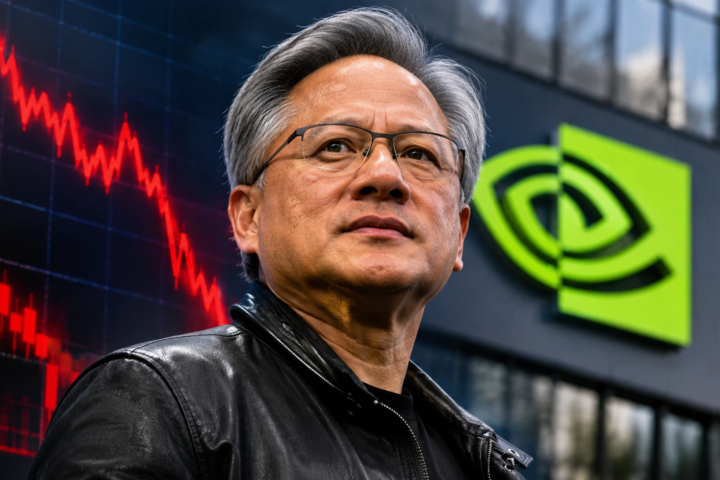
Washington’s latest move to tighten controls over advanced artificial intelligence (AI) chips is adding another layer of uncertainty to an already turbulent semiconductor market. With chip stocks facing a substantial correction, questions mounting over the profitability of AI investments, and Nvidia preparing to report its latest quarterly results, investors are confronting a critical test of the technology sector’s growth story.
The U.S. Commerce Department’s new restrictions target not only the physical shipment of advanced computing technology but also the remote use of powerful American chips through overseas data centers. The decision could reshape international AI infrastructure operations, increase compliance costs for technology companies, and complicate the global expansion plans of semiconductor manufacturers.
At the same time, the Philadelphia Semiconductor Index has fallen approximately 34% from its late-June peak. Although the index remains up more than 35% for 2026, the recent decline highlights how quickly investor confidence can change when expectations surrounding AI spending and future earnings come under pressure.
For investors, the combination of regulatory uncertainty and Nvidia’s earnings announcement makes this one of the semiconductor industry’s most consequential weeks of the year.
Washington Closes a Loophole in AI Chip Restrictions
The latest regulatory development came from the U.S. Department of Commerce’s Bureau of Industry and Security (BIS), which announced an interim final rule addressing remote access to advanced American computing technology.
Published on November 16, the measure is designed to prevent companies in restricted countries, particularly China, from accessing advanced U.S. AI chips indirectly through data centers located in third countries.
Previously, export restrictions primarily focused on the physical shipment of advanced semiconductor products. However, the rapid expansion of cloud computing has created another route: companies can potentially rent computing capacity from overseas facilities without directly importing the restricted hardware.
The new rule seeks to close that gap by extending licensing and compliance requirements to certain exports, re-exports, transfers, and remote computing arrangements.
The regulation also introduces additional licensing requirements for advanced chip exports involving Indonesia, Malaysia, Singapore, Thailand, and Brazil, which U.S. authorities identify as higher-risk destinations for potential technology diversion.
The announcement reflects Washington’s broader effort to maintain control over strategically important computing technology while limiting its potential use by geopolitical competitors.
For semiconductor companies, however, the implications extend beyond international trade policy. Businesses involved in chip manufacturing, distribution, cloud infrastructure, and data-center operations may face additional compliance responsibilities and greater uncertainty about overseas demand.
Semiconductor Stocks Face a Major Confidence Test
The regulatory announcement arrives as semiconductor shares are already experiencing significant selling pressure.
According to Reuters, the Philadelphia Semiconductor Index has declined approximately 34% since its late-June peak. Nevertheless, the index remains more than 35% higher for the year, illustrating the substantial gains that preceded the correction.
Several prominent semiconductor companies have experienced particularly sharp declines since the Nasdaq Composite reached its October peak.
Nvidia has fallen nearly 35% over that period, while Intel has declined more than 50% and Micron Technology approximately 31%, according to Reuters’ November 17 market report.
These movements suggest that investors are reassessing more than short-term earnings expectations. The market is increasingly questioning whether the enormous capital investments supporting the AI boom will generate sufficiently strong and sustainable financial returns.
Another concern involves the pace of future earnings growth. Data cited by Reuters from LSEG indicates that earnings across the S&P 500 semiconductor and semiconductor-equipment group are expected to increase approximately 125% in 2026. However, the projected growth rate moderates to around 65% in 2027.
Although these forecasts still indicate substantial industry growth, the expected slowdown could make highly valued companies more vulnerable to disappointing guidance.
The sector’s forward price-to-earnings ratio has also declined to approximately its lowest level in at least six years, according to LSEG Datastream data cited by Reuters.
This creates an important distinction for investors: falling valuations may present opportunities, but they do not automatically indicate that semiconductor stocks have reached their market bottom.
Nvidia Earnings Could Determine the Next Direction of AI Stocks
Nvidia’s November 17 earnings announcement is another major event investors are watching.
The company is scheduled to release its third-quarter fiscal 2027 results after the U.S. market closes, with its conference call scheduled for 5 p.m. Eastern Time. The results cover the quarter ended October 25, 2026.
Nvidia remains a central player in the AI semiconductor ecosystem because its advanced processors are widely used to train and operate sophisticated AI systems.
Its financial performance therefore provides an important indication of demand across the broader AI infrastructure market.
Investors will be particularly interested in several areas:
- Data-center revenue: Whether demand for AI computing infrastructure remains strong enough to support continued revenue expansion.
- Forward guidance: Whether management expects sustained growth in the coming quarters despite regulatory and market uncertainty.
- Profit margins: Whether rising competition, manufacturing costs, and supply-chain pressures are affecting profitability.
- Customer investment: Whether major cloud providers and technology companies are maintaining their AI infrastructure spending plans.
- International exposure: How evolving U.S. export restrictions could affect future sales opportunities and market access.
Nvidia’s official financial announcements will be especially important because the company’s guidance could influence expectations for semiconductor manufacturers, equipment suppliers, and cloud infrastructure businesses.
A strong earnings report may help restore confidence in the AI investment cycle. Conversely, weaker-than-expected guidance or cautious commentary could reinforce concerns that technology valuations have moved ahead of sustainable demand.
Why the New Restrictions Matter Beyond Nvidia
The impact of the latest U.S. policy extends across several interconnected technology industries.
Semiconductor manufacturers: Companies producing advanced processors may face greater uncertainty regarding international sales, licensing requirements, and customer relationships.
Cloud computing providers: Businesses operating international data centers could face additional obligations to identify customers, verify end users, and monitor how computing resources are accessed.
AI infrastructure companies: Restrictions could influence where companies build computing facilities and how they structure international partnerships.
Technology equipment suppliers: Semiconductor manufacturing equipment providers could experience indirect effects if chipmakers adjust production plans or reconsider expansion in certain markets.
For investors, this broader exposure is important. The AI economy is not supported by chipmakers alone. It also depends on data centers, networking equipment, cooling systems, electricity infrastructure, and cloud services.
Companies providing these supporting technologies could continue benefiting from long-term AI demand even as individual semiconductor stocks experience volatility.
However, regulatory uncertainty and the possibility of slower infrastructure spending remain important risks across the supply chain.
The Bigger Question: Can AI Spending Deliver Sustainable Returns?
The current semiconductor correction reflects a wider debate about the financial sustainability of the AI boom.
Technology companies have committed substantial resources to developing AI models, expanding data-center capacity, and purchasing advanced processors. These investments have created significant opportunities for semiconductor manufacturers and infrastructure providers.
However, higher capital expenditure does not automatically translate into higher profits.
Investors increasingly want evidence that AI investments are generating measurable productivity improvements, additional revenue, and attractive returns on capital.
This distinction could become increasingly important as the industry moves from its initial infrastructure-building phase toward commercial deployment and monetization.
Companies that demonstrate strong cash generation, recurring customer demand, and disciplined capital allocation may attract greater investor confidence than businesses relying primarily on optimistic long-term growth projections.
The regulatory environment also adds another variable. If international restrictions make advanced computing capacity more difficult to distribute, companies may need to reconsider their infrastructure strategies and customer relationships.
Key Investment Insights: What Investors Should Watch Next
The latest developments highlight several trends worth monitoring across the technology sector.
First, investors should follow the implementation of the new BIS restrictions, particularly how licensing requirements affect international chip shipments and overseas data-center operations.
Second, Nvidia’s earnings and forward guidance could provide a clearer picture of whether AI infrastructure demand remains strong enough to support current industry growth expectations.
Third, semiconductor earnings forecasts deserve close attention. The projected moderation in industry earnings growth from 2026 to 2027 could influence how investors value chipmakers.
Finally, the performance of companies operating across cloud computing, networking, data-center equipment, and power infrastructure may help reveal where the next phase of AI investment is creating sustainable business opportunities.
Rather than interpreting a sharp stock-price decline as an automatic buying opportunity, investors should distinguish between companies with durable competitive advantages and businesses whose valuations depend heavily on aggressive growth assumptions.
Semiconductor Industry Enters a Defining Week
The combination of stricter U.S. AI chip restrictions, declining semiconductor valuations, and Nvidia’s upcoming earnings has placed the technology sector at an important turning point.
The long-term expansion of artificial intelligence remains a potentially powerful driver of demand for advanced computing. However, the market is becoming more selective about which companies can convert that demand into sustainable earnings and cash flow.
For semiconductor investors, the next few days could provide important signals about whether the recent correction is approaching stabilization or whether additional uncertainty remains ahead.
Nvidia’s financial results, Washington’s evolving export-control policies, and the investment decisions of major cloud providers will all help shape the industry’s next chapter.
Stay ahead of the markets with Stockmarket-news, your destination for daily technology developments, semiconductor industry analysis, and investor-focused insights into the trends shaping the global economy.