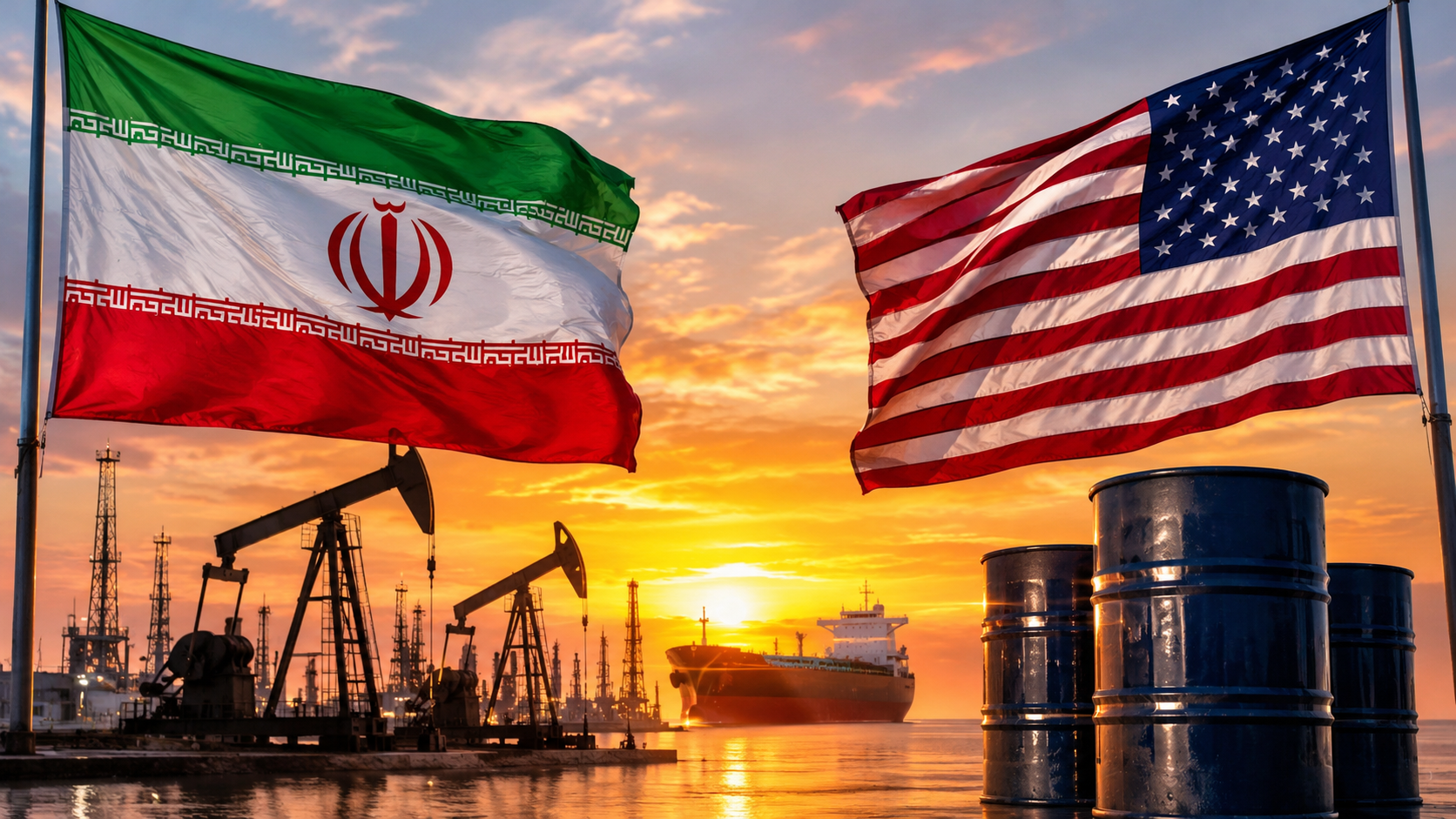
Oil prices have started retreating after weeks of geopolitical uncertainty, as renewed diplomatic efforts between Iran and Qatar raise hopes of a possible breakthrough in the conflict involving the United States and Israel. For investors, however, the decline offers only limited reassurance. With the Strait of Hormuz remaining a critical energy chokepoint and negotiations yet to produce a final agreement, the global economy continues to face considerable uncertainty over energy supplies, inflation and financial market stability.
On Monday, November 2, international oil benchmarks dropped more than 3% in early trading following renewed diplomatic discussions in Doha. Brent crude futures declined approximately 3.2% to $109.75 per barrel, while U.S. West Texas Intermediate (WTI) fell around 3.3% to $100.69. The movement provided some relief to markets after Brent finished October at its highest level in six months.
The latest developments have brought geopolitical risk back into focus for investors across North America and international markets. While diplomatic progress could eventually ease energy costs and inflationary pressure, the absence of a confirmed agreement means markets remain vulnerable to sudden changes in the situation.
Diplomatic Progress Offers Temporary Relief to Energy Markets
Iranian and Qatari officials have held consecutive rounds of discussions aimed at finding a possible pathway toward ending the conflict. Qatar has been facilitating communications between Tehran and Washington, with negotiations focusing on regional security, maritime transportation and the conditions required to reopen the Strait of Hormuz.
According to a Reuters report published November 2, Iranian negotiators departed Doha following the latest discussions, while a draft proposal was reportedly being circulated and another meeting remained possible. The departure was not attributed to difficulties in the negotiations.
Iranian officials have indicated that reopening the Strait of Hormuz would depend on resolving outstanding disagreements, including the U.S. naval blockade and Tehran’s wider demands. Iranian Foreign Minister Abbas Araqchi has also suggested that the waterway could reopen within two days under an acceptable agreement, rather than the seven-day period previously proposed.
However, the diplomatic process remains uncertain. U.S. President Donald Trump has described discussions as productive but has not ruled out further military action. Washington has also rejected Iran’s initial proposal.
These developments explain why financial markets have reacted positively to diplomatic signals without completely removing the geopolitical risk premium embedded in oil prices.
Why the Strait of Hormuz Matters to Global Investors
The Strait of Hormuz is among the world’s most important energy transportation routes. Its strategic importance extends far beyond the Middle East because a substantial portion of internationally traded oil passes through this narrow waterway.
According to the International Energy Agency (IEA), approximately 20 million barrels of crude oil and petroleum products passed through the Strait daily in 2025. This represented around 25% of global seaborne oil trade. The agency also highlights the limited availability of alternative export routes capable of replacing these shipments.
Consequently, any prolonged disruption can affect crude oil availability, tanker transportation costs, insurance premiums and international energy prices.
For the United States and Canada, the implications are particularly relevant even though both countries have substantial domestic energy production. Oil is traded in interconnected international markets, meaning higher global benchmark prices can influence domestic fuel costs, transportation expenses and inflation.
Canadian energy producers may benefit from stronger international oil prices, while U.S. shale producers and other upstream companies could experience similar revenue advantages. However, refiners, airlines, logistics businesses and manufacturing companies may face higher operating expenses.
A stable reopening of the Strait could reverse some of these pressures by improving supply expectations and reducing transportation-related uncertainty.
Oil Prices Retreat, but Supply Risks Remain
Monday’s decline should not automatically be interpreted as evidence that the energy crisis is ending.
The Associated Press reported that Brent crude fell approximately 3.9% to $109.01 per barrel in early trading, while U.S. crude declined approximately 4.1% to $99.82. Despite the retreat, both benchmarks remained significantly above their pre-conflict levels of approximately $72 per barrel in late February.
The different price figures reported during the morning reflect separate market snapshots as trading continued.
The recent rally demonstrated how quickly geopolitical developments can influence commodity markets. Even the possibility of renewed disruption has been sufficient to increase market volatility and raise concerns about the reliability of global energy supplies.
There is also an important distinction between diplomatic progress and actual supply recovery. An announcement of negotiations does not immediately restore shipping capacity, normalize insurance arrangements or guarantee that oil exports will return to previous levels.
Investors therefore need to monitor physical supply indicators alongside headlines and futures prices.
OPEC+ Production Strategy Adds Another Layer of Uncertainty
The Organization of the Petroleum Exporting Countries and its allies, known as OPEC+, are also influencing the market outlook.
On November 1, seven key OPEC+ members agreed to maintain their December production targets unchanged. The decision reflects continuing uncertainty surrounding regional exports and the broader consequences of the conflict.
Reuters reported that the full 21-country OPEC+ group is scheduled to meet on November 29 to discuss its 2027 production framework and quotas.
The group’s next decisions could become particularly important if diplomatic negotiations produce a lasting agreement and disrupted Gulf exports gradually recover.
A return of previously constrained supplies could place downward pressure on oil prices. Conversely, continued export restrictions combined with steady production targets could keep the market relatively tight.
For investors, OPEC+ policy represents an important variable when assessing the sustainability of current energy prices.
What the Developments Mean for U.S. and Canadian Markets
The changing oil outlook creates different opportunities and challenges across several industries.
Energy producers: Companies involved in oil exploration and production may face pressure on revenue expectations if crude prices continue declining. However, prices remaining above historical pre-conflict levels could still support relatively strong operating conditions.
Airlines and transportation: Lower oil prices could provide relief through reduced fuel expenses. Airlines, trucking companies and shipping businesses are particularly sensitive to changes in energy costs.
Refining and manufacturing: Refiners may benefit from lower crude input costs, although actual profitability will depend on refining margins and demand. Manufacturers could also benefit from reduced energy and transportation expenses.
Consumers and retail businesses: Lower gasoline and transportation costs could gradually improve household purchasing power. This may support consumer-facing businesses if the savings translate into stronger spending.
Financial markets: Reduced geopolitical risk could improve investor confidence and support equities. Lower energy-driven inflation expectations may also influence bond yields and central-bank policy discussions.
Nevertheless, these effects are not immediate or guaranteed. Companies with long-term supply contracts, hedging arrangements or different cost structures may respond differently to changes in crude prices.
Inflation and Interest Rates Remain Important Considerations
Energy prices are a major component of the broader inflation outlook. When crude oil prices rise sharply, the impact can extend beyond gasoline and diesel to transportation, industrial production, food distribution and other consumer expenses.
For the United States, sustained increases in energy costs could complicate the Federal Reserve’s efforts to maintain price stability. In Canada, fluctuations in oil prices create a more complicated economic picture because the country is both a major energy producer and an energy consumer.
Lower oil prices could help ease headline inflation and provide some relief to businesses and households. However, central banks will need to assess broader inflation trends rather than relying on energy prices alone.
Investors should therefore watch upcoming inflation reports, central-bank communications and changes in market expectations for interest rates.
Key Investment Insight: Watch the Difference Between Diplomatic Optimism and Actual Supply Recovery
The most important consideration for investors is whether the current diplomatic momentum leads to measurable improvements in energy transportation and supply.
A temporary decline in oil prices can create opportunities in fuel-sensitive industries, but assuming that geopolitical risks have disappeared could expose portfolios to unexpected volatility.
Investors following U.S. and Canadian markets should pay particular attention to:
- Brent and WTI prices: Monitor whether the latest decline develops into a sustained downward trend.
- Strait of Hormuz shipping activity: Look for evidence that tanker movements and export volumes are returning to normal.
- OPEC+ decisions: Watch the November 29 meeting for signals about production targets and the 2027 supply outlook.
- Energy company earnings: Assess how changing crude prices affect producers, refiners and integrated energy businesses.
- Inflation indicators: Follow U.S. and Canadian inflation data for evidence that lower energy costs are reaching consumers and businesses.
Rather than making decisions based on a single diplomatic headline, investors should consider the wider relationship between energy supply, corporate profitability and economic conditions.
What Comes Next for Global Markets?
The coming days could prove important for determining whether diplomatic discussions develop into a meaningful agreement or remain another temporary pause in a prolonged geopolitical crisis.
The U.S. midterm elections on November 3 also represent an important near-term event for market participants, particularly given concerns about the possibility of renewed escalation afterward.
If negotiations advance and the Strait of Hormuz reopens under a credible arrangement, international energy markets could experience further relief. That outcome would potentially support transportation, manufacturing and consumer-related businesses while easing some inflationary pressures.
However, a breakdown in discussions or renewed military confrontation could quickly reverse the recent decline in oil prices.
For now, the market is balancing cautious optimism against substantial geopolitical uncertainty. The direction of energy prices will depend not simply on diplomatic statements but on whether those discussions translate into restored supply flows and lasting regional stability.
Stockmarket-news will continue monitoring the latest geopolitical developments, energy market movements and their implications for investors across the United States, Canada and the wider global economy. Stay informed with our daily investor-focused coverage for the insights that matter when markets move.