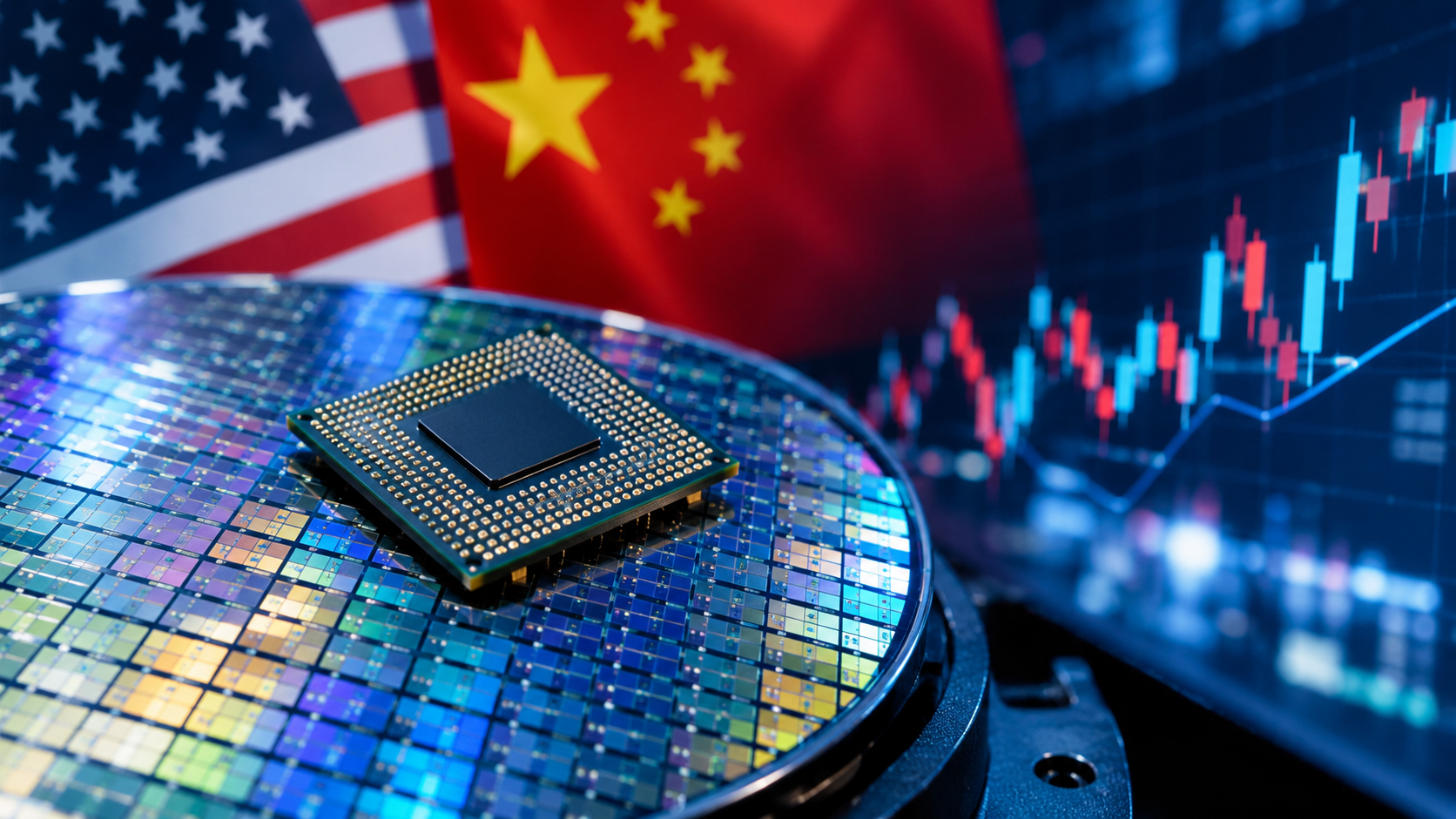
The artificial intelligence boom continues to create enormous demand for advanced semiconductors, but investors are discovering that a growing market does not guarantee rising stock prices. Fresh signals from Dutch semiconductor equipment giant ASML point to sustained demand for chipmaking technology, while concerns about Chinese competitors and the profitability of AI investments are adding pressure to U.S. semiconductor shares.
The contrast highlights a critical turning point for technology investors. Companies supplying the infrastructure behind AI may still benefit from expanding data-center investment, but valuations, competitive threats, and the ability to turn capital spending into sustainable profits are becoming increasingly important.
For investors following the technology sector, the question is no longer simply whether AI will expand. It is whether semiconductor companies can translate that expansion into durable earnings growth.
ASML’s Outlook Reinforces the AI Investment Story
ASML, one of the world’s most important suppliers of semiconductor manufacturing equipment, has delivered an encouraging signal for the industry’s long-term outlook. According to Reuters reporting published on October 14, the company expects demand for its chipmaking tools to exceed its supply capacity in 2027 and 2028. ASML also raised its full-year sales outlook and outlined plans to expand capacity.
The company’s position in the semiconductor supply chain makes its outlook particularly important. ASML manufactures advanced lithography systems used by chipmakers to produce increasingly sophisticated semiconductors. These systems are essential to the production of many high-performance chips used in AI accelerators, data centers, and other advanced computing applications.
Strong demand for ASML’s equipment suggests that semiconductor manufacturers continue to anticipate substantial investment in production capabilities. As technology companies build infrastructure to train and operate increasingly powerful AI models, demand for advanced computing hardware can support spending across several parts of the semiconductor ecosystem.
However, equipment demand does not automatically translate into immediate revenue growth for every chipmaker. Manufacturing capacity takes time to develop, and individual companies face different competitive pressures, product cycles, and capital requirements.
For investors, ASML’s outlook is therefore an important industry indicator rather than a guarantee that all semiconductor stocks will advance together.
Why Semiconductor Stocks Are Under Pressure
Despite the positive demand outlook, semiconductor shares have faced a prolonged selloff, reflecting growing investor sensitivity to competitive threats and the cost of the AI investment boom.
One concern is the gap between expectations and financial performance. Investors have assigned substantial value to companies expected to benefit from AI adoption. When share prices already reflect aggressive growth assumptions, even strong operating results may fail to satisfy the market.
The issue is particularly relevant for businesses exposed to large capital expenditure cycles. Semiconductor manufacturers must invest heavily in equipment, production facilities, research, and development. If demand grows more slowly than anticipated, or if selling prices weaken, those investments can put pressure on margins and cash flow.
AI infrastructure spending also creates questions about returns. Cloud providers and other technology companies are committing substantial resources to computing capacity, but investors increasingly need evidence that these investments will generate sufficient revenue and profits over time.
This does not mean the AI expansion is ending. Instead, markets may be becoming more selective about which companies can convert technological progress into measurable financial results.
For long-term investors, that distinction matters more than short-term enthusiasm surrounding individual AI announcements.
China’s Semiconductor Industry Adds a Competitive Challenge
Another concern is the development of China’s domestic semiconductor industry, particularly memory-chip producer ChangXin Memory Technologies (CXMT).
Reuters reporting on October 13 highlighted concerns about Chinese memory-chip competition and its potential impact on U.S. semiconductor companies. Those concerns contributed to pressure on shares of businesses including Micron Technology, SanDisk, Seagate Technology, and Western Digital.
Memory chips play an important role in AI infrastructure, where systems require substantial quantities of high-performance memory and data-storage capacity. As AI workloads expand, demand for these components can create opportunities for established suppliers.
However, increased competition could complicate that outlook. If Chinese manufacturers improve their production capabilities, increase output, and compete more aggressively on price, established companies could face pressure on market share and profitability.
The impact will depend on the pace of technological progress, manufacturing yields, product quality, customer adoption, and the effects of U.S.-China trade restrictions. Export controls and other geopolitical measures may also influence which companies can access particular markets and technologies.
Investors should distinguish between verified competitive advances and market speculation. A report about a potential rival does not establish that the competitor can immediately match the performance, scale, or profitability of established suppliers.
Nevertheless, the possibility of additional supply makes memory pricing and industry capacity important indicators to monitor.
Why This Matters for U.S. Technology Investors
The latest developments present a mixed picture for the U.S. technology sector. On one side, strong demand for chipmaking equipment supports the argument that AI infrastructure investment remains substantial. On the other, competitive pressure and elevated expectations create risks for companies whose valuations depend on continued rapid growth.
Investors should evaluate semiconductor businesses according to their positions within the supply chain.
Equipment suppliers such as ASML may benefit from manufacturers’ efforts to expand and modernize production capacity. Chip designers serving AI data centers may benefit from continued demand for accelerated computing. Memory and storage manufacturers could also gain from growing data volumes, although their earnings are particularly sensitive to supply conditions and pricing cycles.
These opportunities carry different risks. Equipment companies can be affected by changes in customers’ capital expenditure plans and export restrictions. Chip designers face competition, product-development challenges, and customer concentration. Memory manufacturers are exposed to cyclical pricing, capacity additions, and shifts in supply-demand balances.
Consequently, investors should avoid treating the semiconductor industry as a single investment theme. Strong demand in one segment can coexist with weakening margins or declining share prices in another.
Future Trends Investors Should Watch
Several developments could help determine the next direction of semiconductor stocks.
1. ASML’s order outlook and production capacity
Investors should watch future earnings releases for evidence that demand expectations are translating into orders, deliveries, and revenue. The company’s expectation of demand exceeding supply capacity in 2027 and 2028 is encouraging, but execution and customer spending remain important variables.
2. AI capital expenditure and monetization
Major cloud providers and technology companies will remain central to the outlook. Their spending plans matter, but so does evidence that AI products and services are generating revenue, improving productivity, and supporting returns on invested capital.
3. Memory-chip pricing and competition
Pricing trends, inventory levels, production capacity, and customer demand will help reveal whether competition is intensifying. Investors should pay particular attention to developments involving established suppliers and Chinese manufacturers.
4. U.S.-China technology policy
Export controls, trade restrictions, and domestic manufacturing initiatives could affect market access, supply chains, and long-term investment decisions. Policy developments may create opportunities for some suppliers while increasing costs and uncertainty for others.
5. Valuations and earnings revisions
Share-price performance will ultimately depend on expectations relative to results. Investors should examine forward earnings estimates, operating margins, free cash flow, and capital expenditure requirements rather than relying solely on AI-related growth narratives.
Key Investment Insight: Focus on Financial Results, Not Just AI Hype
The semiconductor sector continues to offer exposure to one of the most important technology investment themes, but selectivity is becoming essential.
Investors may benefit from comparing companies with established customer relationships, differentiated technology, pricing power, and credible earnings growth against businesses whose valuations depend heavily on optimistic assumptions. Diversification across different parts of the semiconductor supply chain can also help reduce dependence on a single product category or market cycle.
Before making investment decisions, investors should review the latest company filings, earnings guidance, valuation measures, and risk disclosures. ASML’s outlook provides evidence of sustained demand for chipmaking equipment, but it does not eliminate the risks associated with competition, geopolitical uncertainty, or potentially excessive investment.
The central question for the coming quarters is whether AI infrastructure spending will continue to expand while generating attractive returns for the companies financing and supplying it.
Market Outlook: What Investors Need to Know
ASML’s latest outlook reinforces the view that AI-related semiconductor demand remains a powerful industry driver. Yet concerns about Chinese competition, capital expenditure, and elevated valuations demonstrate why strong industry growth does not guarantee gains for every stock.
For investors, the next phase of the AI boom may reward companies that combine technological advantages with sustainable earnings, disciplined investment, and resilient cash flow. Monitoring semiconductor orders, memory pricing, AI monetization, and earnings revisions will be essential as the market reassesses which businesses are best positioned for long-term growth.
Stay informed with Stockmarket-news for daily technology-sector developments, market analysis, and investor-focused insights that help you understand the opportunities and risks shaping global financial markets.