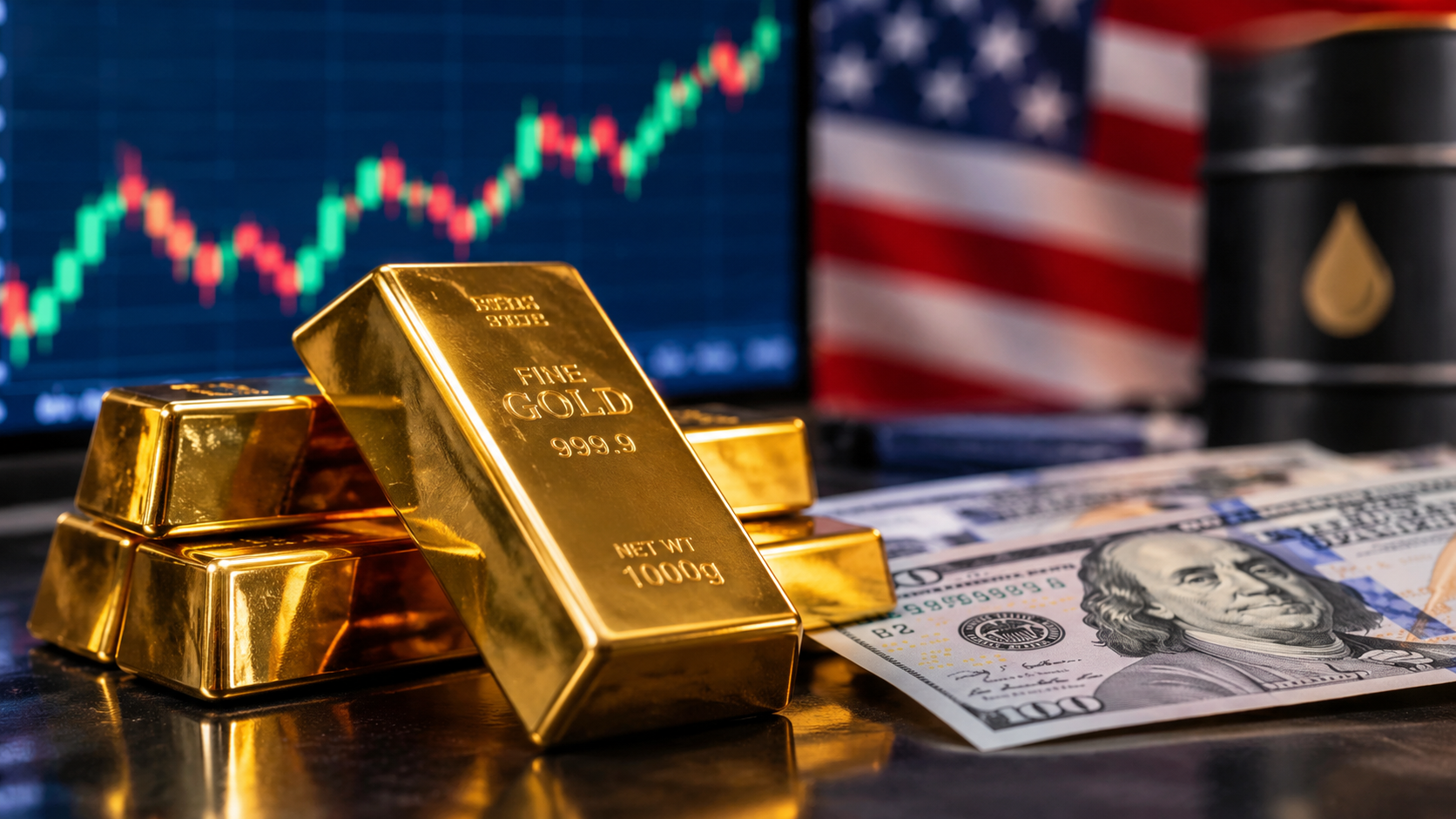
Gold regained momentum on Friday, highlighting how quickly currency movements, bond yields and shifting interest-rate expectations can reshape investor demand for precious metals. Spot gold climbed more than 1% to approximately $4,177 per ounce in morning trading, according to the supplied Reuters report published through MarketScreener UK. The rebound came as a softer U.S. dollar and easing Treasury yields improved the investment case for bullion, while retreating oil prices added another variable to the inflation outlook.
For investors, the move represents more than a daily price recovery. Gold is navigating a complicated environment in which geopolitical uncertainty, inflation concerns and expectations for Federal Reserve policy can pull markets in opposing directions. Whether the latest advance develops into a sustained rally will depend on the durability of these underlying drivers.
A Softer Dollar Gives Gold Room to Recover
Gold is internationally priced in U.S. dollars, making movements in the currency particularly important for precious-metals investors. When the dollar weakens, gold becomes less expensive for buyers using other currencies, potentially supporting demand. A stronger dollar can have the opposite effect by making bullion more expensive for international purchasers.
Friday’s advance illustrates how changes in currency markets can influence gold even when the broader economic outlook remains uncertain. Investors assessing the latest move should distinguish between a temporary currency-driven bounce and a broader improvement in demand for the metal.
The U.S. dollar’s direction will remain closely tied to expectations for American economic growth, inflation and interest rates. If incoming economic data encourage markets to anticipate lower borrowing costs, the dollar could face additional pressure, potentially providing further support for gold.
However, currency relationships are not automatic. Geopolitical developments and changing demand for safe-haven assets can sometimes strengthen the dollar and gold simultaneously. Investors should therefore assess the wider market environment rather than relying on a single indicator.
Treasury Yields and Federal Reserve Policy Remain Critical
Interest-rate expectations are another major influence on gold prices. Unlike government bonds and many other interest-bearing investments, physical gold does not generate regular income. When Treasury yields rise, investors may find interest-bearing assets more attractive relative to bullion. When yields fall, the opportunity cost of holding gold can decline.
The latest rebound comes as investors reassess the Federal Reserve’s policy outlook amid persistent concerns about inflation. The central bank’s next decisions will depend on incoming evidence about consumer prices, employment, economic activity and financial conditions.
For gold investors, the distinction between nominal and inflation-adjusted, or real, Treasury yields is particularly important. Real yields account for inflation expectations and help measure the purchasing-power-adjusted return on bonds. A sustained decline in real yields can make gold more attractive, although the relationship is not consistent in every market environment.
Investors should monitor Federal Reserve statements, U.S. inflation releases, employment reports and Treasury market movements for evidence that Friday’s recovery has a durable macroeconomic foundation.
Retreating Oil Prices Add Complexity to the Inflation Outlook
Oil prices also influence the outlook for precious metals by affecting inflation expectations, household purchasing power and central-bank decisions. Lower energy prices can ease pressure on transportation, manufacturing and other operating costs, potentially reducing headline inflation.
That development can be supportive for gold if it encourages expectations of lower interest rates. Yet the relationship is complicated. If oil falls because investors become concerned about weakening economic growth, demand for gold may receive support from defensive positioning. Conversely, if lower energy prices strengthen confidence in a soft landing while bond yields remain attractive, some investors may prefer equities or income-producing assets.
Friday’s combination of retreating oil prices and easing Treasury yields therefore requires careful interpretation. Investors should determine whether the market is responding primarily to improving inflation prospects, changing expectations for economic growth or a temporary adjustment in risk sentiment.
The next round of energy-market developments and inflation data should help clarify which factor is exerting the greatest influence.
Why This Matters for Investors
Gold plays several potential roles in a diversified portfolio. Investors may use it to diversify exposure to financial assets, hedge against certain inflationary or geopolitical risks, or respond to changes in real interest rates and currency markets.
Nevertheless, gold is not a guaranteed hedge against falling equity markets or rising prices. Its performance depends on the circumstances, and investors can experience substantial losses when purchasing at elevated prices or during sharp market reversals.
The recovery toward $4,177 per ounce gives investors a reference point for evaluating market momentum, but one session’s gains do not establish a lasting trend. The strength of subsequent trading, changes in investment demand and developments in Treasury yields will be important confirmation signals.
Investors should also distinguish between owning bullion and investing in gold-mining companies. Bullion prices directly influence miners’ potential revenue, but mining shares also reflect operating costs, labor expenses, energy prices, production risks, debt levels and broader equity-market sentiment.
If gold prices remain elevated while miners control their costs, some producers could experience improved profit margins. However, a rise in bullion does not guarantee that mining stocks will outperform the metal itself.
Gold ETFs and Mining Stocks: Opportunities and Risks
Exchange-traded funds backed by physical gold can offer investors exposure to bullion prices without requiring them to store physical metal themselves. Before investing, readers should examine management fees, tracking performance, fund structure and liquidity.
Gold-mining companies offer a different risk profile. Their shares can amplify movements in gold prices, but they may also fall even when bullion rises. Investors evaluating mining businesses should review all-in sustaining costs, production guidance, reserve quality, balance-sheet strength and geographic exposure.
Royalty and streaming companies represent another segment of the precious-metals industry. These businesses generally finance mining operations in exchange for contractual payments or rights to future production. Their economics differ from those of traditional producers, and they remain exposed to counterparty, commodity-price and project risks.
The appropriate exposure depends on an investor’s objectives, time horizon and tolerance for volatility. Diversification and position sizing remain important, particularly after a strong price advance.
Future Trends to Watch
Several developments could determine whether gold extends its recovery in the coming weeks.
Federal Reserve expectations: Signals of easier monetary policy could support bullion, particularly if real Treasury yields decline. Conversely, renewed concerns about persistent inflation could push yields higher and pressure gold.
The U.S. dollar: Continued weakness could improve gold’s affordability for international buyers. A rebound in the dollar would present a potential headwind.
Inflation and energy prices: Falling oil prices may reduce headline inflation pressure, but investors should watch whether the decline reflects improved supply conditions or deteriorating global demand.
Geopolitical uncertainty: Escalating international tensions may strengthen demand for perceived safe-haven assets. However, market reactions are unpredictable, and safe-haven flows can reverse quickly.
Investment demand: Changes in gold-backed ETF holdings, futures positioning and official-sector purchases can provide useful context for determining whether the recovery is attracting sustained participation.
Investors should use current data from the Federal Reserve, the U.S. Treasury, the Bureau of Labor Statistics and the World Gold Council to evaluate these developments. The supplied Reuters report provides the immediate market context, while official releases can help establish whether the underlying economic conditions are changing.
Key Investment Insight: Watch Confirmation, Not Just Momentum
Friday’s rebound reinforces gold’s sensitivity to the U.S. dollar, Treasury yields and shifting expectations for monetary policy. Investors considering fresh exposure should look for confirmation from several indicators rather than treating a gain of more than 1% as proof of a sustained bull market.
A continued decline in real yields, a weaker dollar and persistent investment demand would strengthen the case for further gains. Rising real yields, renewed dollar strength or deteriorating investor sentiment could limit the recovery.
For existing holders, the latest move is an opportunity to reassess portfolio exposure, diversification goals and risk limits. For prospective buyers, staged entries and disciplined position sizing may help manage the risk of buying after a sharp daily move. These are general market considerations, not individualized investment advice.
Gold’s next move will depend on whether supportive currency and interest-rate conditions persist. Follow Stockmarket-news for daily commodities coverage, market-moving developments and investor-focused analysis to help you make better-informed decisions in an increasingly uncertain financial environment.