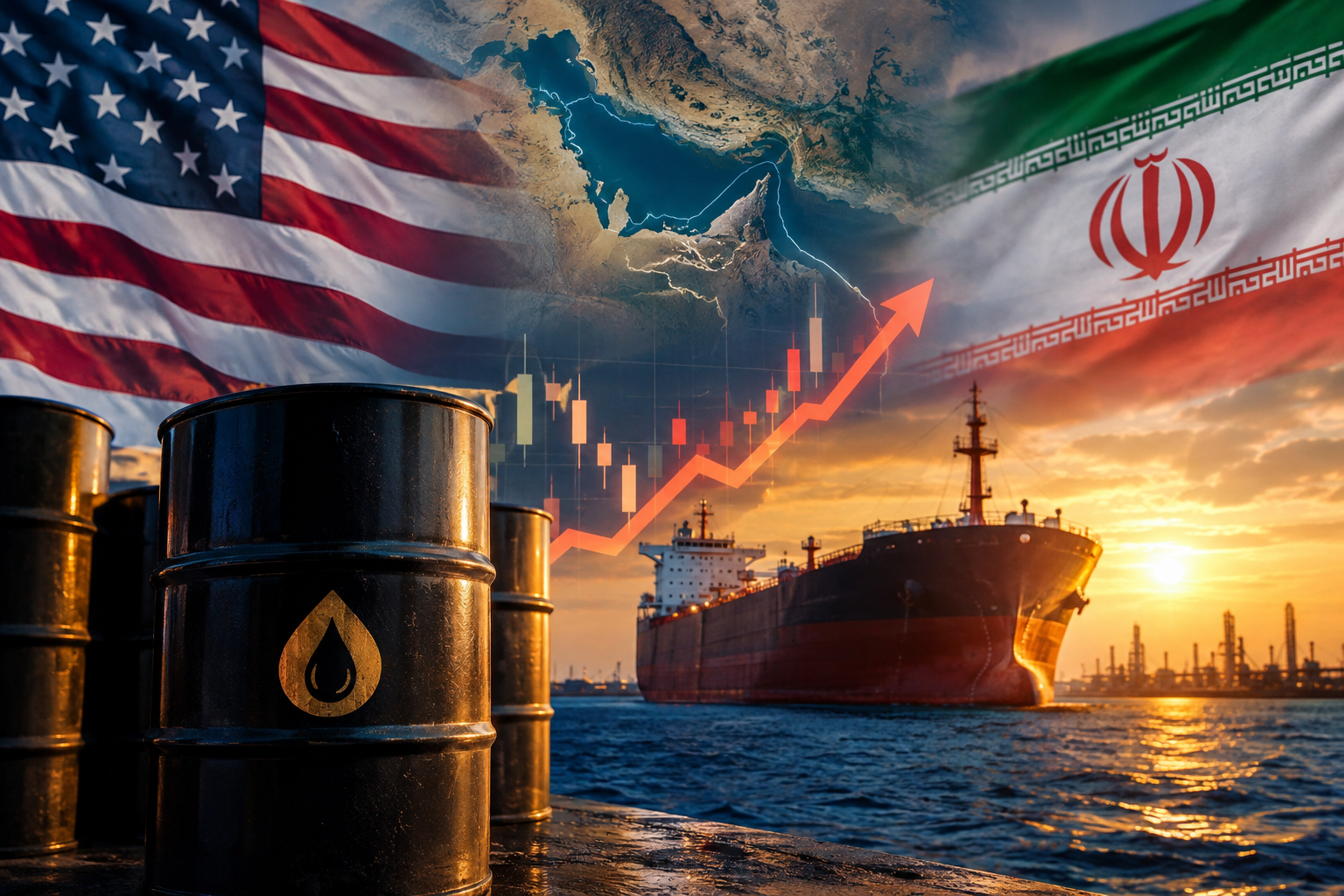
Global markets entered a new phase of uncertainty on September 28 as crude oil prices surged above $107 per barrel following an escalating diplomatic standoff between the United States and Iran. The latest breakdown in negotiations surrounding the Strait of Hormuz—a critical shipping route responsible for transporting a significant portion of the world’s oil supply—has reignited fears of supply disruptions, higher inflation, and a prolonged period of elevated interest rates.
The market reaction was swift. Global equities retreated, U.S. Treasury yields climbed, and investors rushed to reassess their expectations for inflation and monetary policy. At the same time, energy stocks outperformed broader markets as traders priced in the possibility of tighter oil supplies.
For investors, the situation extends beyond geopolitics. The renewed surge in energy prices could reshape inflation expectations, influence central bank decisions, and impact corporate earnings across multiple sectors. As a result, the U.S.-Iran stalemate has quickly become one of the most important market-moving stories in the world.
Oil’s Return Above $100 Changes the Market Narrative
For much of the year, investors had anticipated a gradual moderation in inflation as supply chains improved and economic growth stabilized. However, the sharp increase in oil prices threatens to disrupt that outlook.
According to Reuters market coverage on September 28, benchmark crude prices rose above $107 per barrel after Washington rejected Iran’s latest proposal regarding the reopening and security arrangements of the Strait of Hormuz. The waterway remains one of the most strategically important energy corridors globally, with millions of barrels of oil moving through it every day.
Historically, geopolitical tensions in the Middle East have triggered significant energy market volatility. Investors are particularly sensitive to developments involving Iran because any disruption to regional shipping routes could affect global crude supplies and fuel costs worldwide.
The latest price move has sparked concerns that inflation could remain elevated for longer than many economists previously expected. Rising energy costs tend to flow through the broader economy, affecting transportation, manufacturing, logistics, and consumer spending.
Why This Matters for Investors
The immediate impact of higher oil prices extends far beyond the energy sector.
Inflation remains one of the most important drivers of financial markets. When energy prices rise sharply, businesses often face higher operating costs. Companies may attempt to pass those costs on to consumers, potentially pushing inflation higher and reducing purchasing power.
For investors, this creates a chain reaction:
- Higher oil prices can fuel inflation.
- Persistent inflation may delay interest rate cuts.
- Higher rates can pressure stock valuations.
- Bond yields may continue rising.
- Economic growth could slow if consumers reduce spending.
Reuters reported that Treasury yields moved higher as traders adjusted expectations for future Federal Reserve policy. Markets are increasingly questioning whether policymakers will be able to ease monetary conditions as quickly as previously anticipated.
This shift is particularly important for growth-oriented sectors that have benefited from expectations of lower rates.
Energy Stocks Emerge as Early Winners
While many sectors face potential headwinds, energy companies stand to benefit from elevated crude prices.
Integrated oil producers, exploration and production companies, oilfield service firms, and energy infrastructure operators typically generate stronger revenues when oil prices remain high. Investors have already begun rotating capital toward energy-related assets as crude continues its upward momentum.
Analysts have noted that sustained oil prices above $100 could improve cash flow generation across the energy sector and potentially support increased shareholder returns through dividends and share buybacks.
North American producers may be among the primary beneficiaries if global supply concerns persist. Canadian energy companies, in particular, could see renewed investor interest given their exposure to crude exports and expanding energy infrastructure.
However, investors should remain cautious. Energy markets are notoriously volatile, and geopolitical developments can shift rapidly.
The Federal Reserve Faces a New Challenge
Perhaps the most significant market implication involves the Federal Reserve.
Investors are entering a critical week of U.S. economic data releases, including inflation indicators, labor market reports, and consumer spending figures. These reports will help determine whether policymakers believe inflation pressures are becoming more entrenched.
If oil prices remain elevated, the Fed could face a difficult balancing act.
On one hand, economic growth may slow if higher fuel costs reduce consumer spending. On the other hand, persistent inflation could limit the central bank’s ability to cut interest rates.
Market participants are now watching closely for signs that rising energy costs could influence future policy discussions.
Higher-for-longer interest rates would likely affect several sectors:
Technology
Technology stocks are particularly sensitive to interest-rate expectations because their valuations often rely on future earnings growth. Rising yields can place pressure on high-growth companies and reduce investor appetite for risk assets.
Real Estate
Real estate investment trusts (REITs) and property-related businesses may face challenges if borrowing costs remain elevated. Higher mortgage rates can also impact housing demand.
Consumer Discretionary
Retailers, travel companies, and other consumer-focused businesses could encounter slower spending if households devote more income toward energy and transportation costs.
Financials
Banks may benefit from higher rates in some areas, but broader economic uncertainty could weigh on lending activity and credit quality.
Global Markets React to Rising Geopolitical Risk
The implications of the U.S.-Iran standoff extend well beyond North America.
European and Asian markets have also responded to the renewed uncertainty. Reuters reported that investors across global markets are increasingly concerned about the possibility of prolonged geopolitical tensions affecting trade flows, commodity prices, and overall economic growth.
Currency markets have reflected similar concerns. The U.S. dollar strengthened as investors sought safety, while volatility increased across commodity-linked currencies and emerging markets.
Historically, periods of heightened geopolitical risk tend to encourage a flight toward defensive assets such as government bonds, gold, and certain defensive equity sectors. Investors may continue monitoring these areas as the situation develops.
Future Trends to Watch
Several key developments could determine the market’s next move:
1. Diplomatic Progress Between Washington and Tehran
Any indication of renewed negotiations or a breakthrough agreement could ease supply concerns and reduce pressure on oil prices.
2. U.S. Inflation Data
Upcoming inflation reports will provide critical insight into whether rising energy costs are beginning to influence broader price trends.
3. Federal Reserve Communication
Comments from Federal Reserve officials could shape expectations regarding future interest-rate decisions.
4. Corporate Earnings Guidance
Investors should pay close attention to management commentary regarding fuel costs, supply chains, and consumer demand.
5. Energy Market Supply Trends
Production decisions by major oil-producing nations and inventory data could influence whether crude remains above the $100 threshold.
Key Investment Insight
The current environment favors a disciplined and diversified approach. Investors should closely monitor energy exposure, inflation-sensitive assets, and sectors most vulnerable to rising interest rates. Energy producers, pipeline operators, and commodity-linked investments may continue benefiting if oil prices remain elevated, while rate-sensitive growth sectors could experience increased volatility.
At the same time, investors should avoid making decisions based solely on short-term geopolitical headlines. Market conditions can change rapidly, particularly when diplomatic negotiations are involved. Maintaining a balanced portfolio and focusing on long-term fundamentals remains essential.
The U.S.-Iran stalemate has become a defining global market story because it sits at the intersection of energy security, inflation, monetary policy, and investor sentiment. Whether crude oil remains above $100 or retreats in the coming weeks will likely depend on both geopolitical developments and economic data.
For investors seeking to navigate rapidly changing market conditions, staying informed is more important than ever. Follow Stockmarket-news for daily market intelligence, breaking financial developments, and actionable investor insights from around the world.