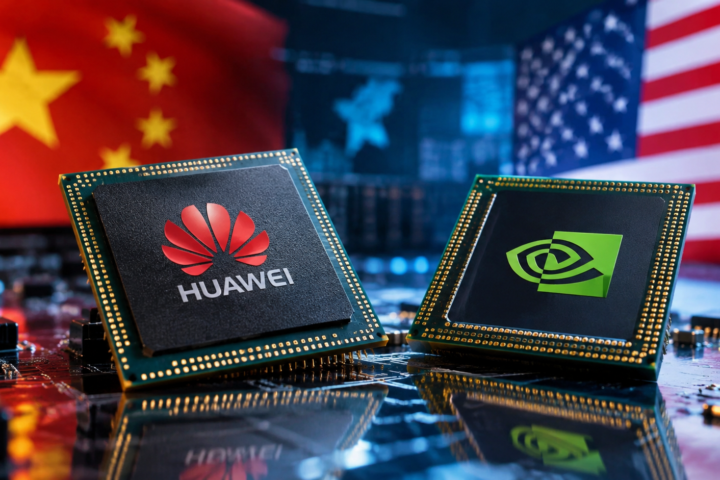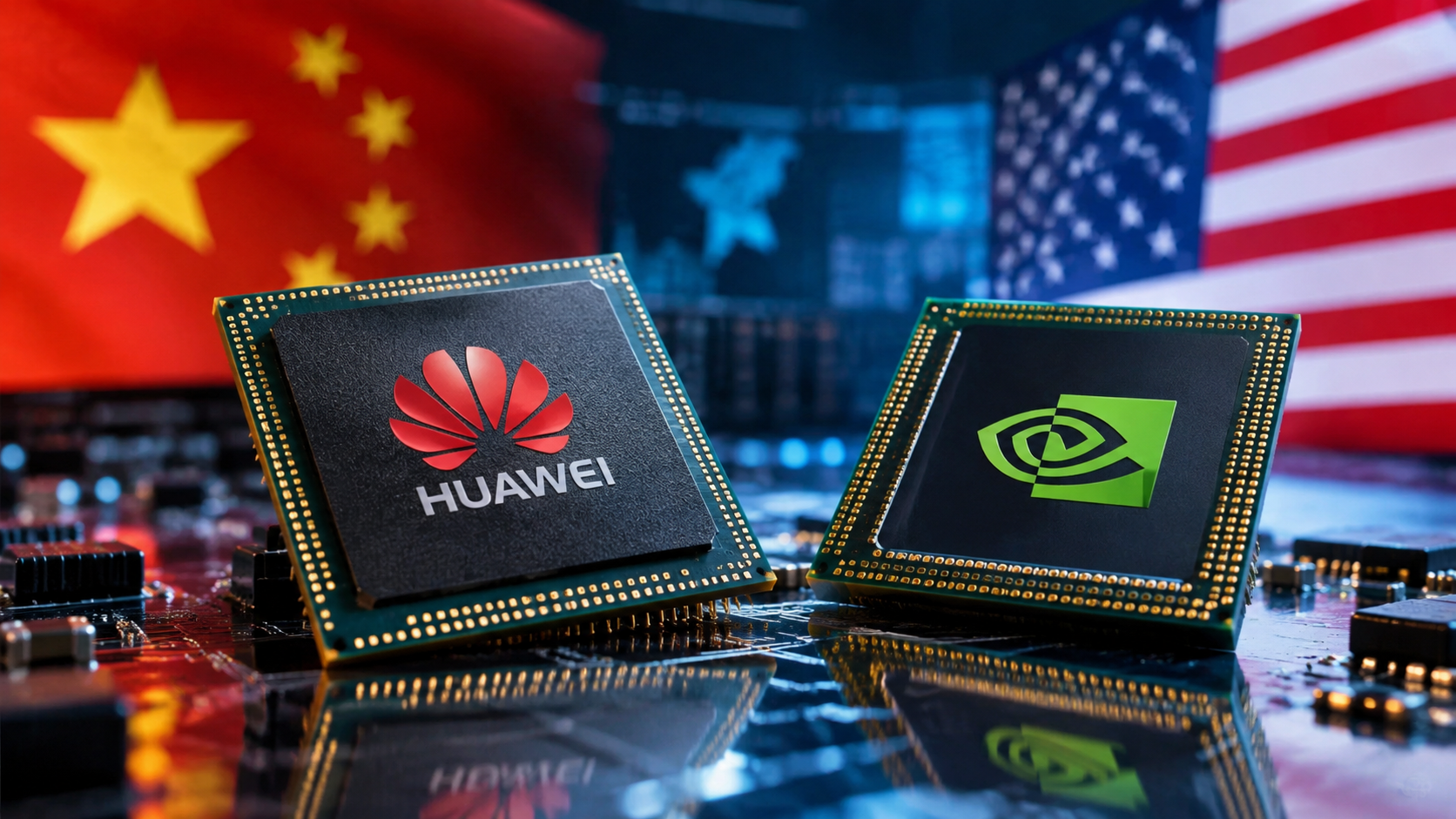
Huawei is signaling that China’s artificial-intelligence boom is creating a semiconductor supply crunch of its own—and that has significant implications for Nvidia and the broader global AI-chip market.
At Huawei Connect in Shanghai, the Chinese technology giant said demand for its AI computing products in China is currently exceeding its production capacity. The company is accelerating its next-generation chip roadmap, while U.S. restrictions on advanced semiconductor exports continue to reshape the competitive landscape between Chinese chipmakers and Nvidia.
For investors, the development is about more than one new processor. It points to a rapidly evolving AI infrastructure market in which chip supply, software ecosystems, export controls and national technology policies are becoming increasingly important drivers of corporate value.
Huawei Accelerates Its AI-Chip Roadmap
Huawei is moving aggressively to expand its Ascend AI semiconductor family.
According to Reuters, Huawei said its current AI computing equipment is in such strong demand domestically that production is not sufficient to meet Chinese requirements. The company is therefore prioritizing the Chinese market, limiting its ability to expand internationally in the near term.
Huawei is also bringing forward the launch of its next-generation products.
The Ascend 960DT, designed for AI model training, is now expected to arrive in the first quarter of 2027, around nine months earlier than previously planned. Huawei’s Ascend 960PR, aimed at AI inference, is expected in the third quarter of 2027. The company has also indicated that it intends to maintain an annual upgrade cycle, with additional Ascend generations planned for 2028 and 2029.
That accelerated product cadence matters because AI hardware is evolving exceptionally quickly. Companies building large AI models and inference systems increasingly require more computing capacity, creating an opportunity for suppliers capable of delivering processors at scale.
Why the Development Matters for Nvidia
Nvidia remains a central player in the global AI accelerator market, but China’s semiconductor ecosystem is becoming increasingly important as U.S. export restrictions limit access to some advanced American chips.
Huawei’s opportunity is particularly significant because Chinese companies and government-linked organizations have strong incentives to develop domestic alternatives.
Reuters reported that Huawei is already positioning itself as a major supplier for China’s AI computing market, while the company’s latest announcements emphasize larger computing systems designed to overcome limitations at the individual-chip level. Huawei is developing its Peerium architecture, which it says can connect as many as 1 million processors for large-scale AI training.
This represents an important strategic shift.
Rather than competing solely on the performance of an individual accelerator, Huawei is increasingly competing at the system level—combining chips, networking, computing architectures and software.
That approach could make the overall infrastructure more relevant to Chinese AI developers than chip specifications alone.
China’s Domestic AI Market Is Becoming a Strategic Battleground
The scale of China’s AI market makes the competition particularly important for investors.
Reuters reported this week that Huawei has become a major participant in China’s AI-chip market as U.S. restrictions limit access to advanced foreign processors. At the same time, Huawei has acknowledged that its own production capacity remains below domestic demand.
Third-party estimates also indicate that Chinese suppliers are gaining ground.
TrendForce estimates cited by the South China Morning Post projected that Chinese domestic chip suppliers could account for 56% of China’s AI-server market in 2026, up from 46% in 2025. The same analysis projected the combined share of foreign suppliers such as Nvidia and AMD falling to approximately 21%, compared with 34% the previous year.
Those figures are forecasts rather than reported market results, but they illustrate the direction of travel: China’s AI infrastructure market is increasingly being shaped by domestic supply chains.
For Nvidia, that could mean a structurally smaller addressable market in China even if global AI demand continues to grow rapidly.
Export Controls Are Changing the Competitive Equation
The Nvidia-Huawei competition cannot be separated from U.S.-China semiconductor policy.
Washington has imposed restrictions on the export of advanced AI chips and semiconductor technology to China for several years. These policies are designed to limit China’s access to cutting-edge computing capabilities, but they also create incentives for Chinese companies to develop alternatives.
That creates a complicated investment dynamic.
Export controls can restrict Nvidia’s sales opportunities in China while simultaneously stimulating investment in Chinese alternatives such as Huawei’s Ascend platform.
Reuters has also reported that AI and semiconductor exports are expected to be important subjects in upcoming U.S.-China discussions. The technology rivalry therefore remains closely connected to broader trade and geopolitical negotiations.
Investors should therefore treat semiconductor regulation as a potential market variable rather than simply a political headline.
A change in export policy could materially affect which companies can sell advanced AI hardware into one of the world’s largest technology markets.
Nvidia Still Has a Major Software Advantage
Huawei’s progress does not mean the competitive landscape has suddenly become equal.
One of Nvidia’s most important advantages extends beyond the physical GPU. Its CUDA software ecosystem has become deeply embedded in AI development, providing developers with tools, libraries and programming infrastructure that can be difficult for competitors to replicate.
Reuters noted that Nvidia continues to maintain an important software advantage through CUDA even as Huawei expands its hardware capabilities.
Huawei is attempting to address this challenge through its own software ecosystem, including its Compute Architecture for Neural Networks, or CANN. The company has also been working with Chinese AI developers to optimize models for Ascend hardware.
Earlier this year, Huawei’s Ascend platform was reported to have been adapted to DeepSeek’s V4 model, illustrating the importance of hardware-software compatibility in China’s domestic AI ecosystem.
For investors, this means the competition should not be evaluated simply by comparing theoretical chip performance.
Developer adoption, software compatibility, networking, memory availability and system-level performance may ultimately be just as important.
AI Demand Is Also Creating New Semiconductor Bottlenecks
Huawei’s supply shortage comes at a time when the broader AI semiconductor industry is already facing pressure from strong demand.
Reuters reported earlier this month that Chinese AI-chip manufacturers, including Huawei and Cambricon, have raised prices for current and next-generation processors as the cost of high-bandwidth memory increases. HBM is a critical component in modern AI computing systems.
That highlights an important point for investors: the AI semiconductor opportunity extends beyond accelerator designers.
The companies supplying HBM, advanced packaging, semiconductor manufacturing equipment, networking components, cooling systems and data-center infrastructure can also benefit from sustained AI capital expenditure.
The AI boom is therefore becoming a much broader semiconductor and infrastructure investment cycle.
What Investors Should Watch Next
Several developments could determine how the Huawei-Nvidia rivalry evolves.
First, monitor Huawei’s production capacity. Demand exceeding supply is positive from a market-demand perspective, but Huawei needs sufficient manufacturing capacity to convert that demand into revenue.
Second, watch the Ascend 960 rollout. The success of the 2027 products could provide a clearer indication of Huawei’s ability to compete in increasingly demanding AI-training workloads.
Third, track Nvidia’s China exposure. Any changes to U.S. export restrictions or licensing rules could influence Nvidia’s ability to serve Chinese customers.
Fourth, follow the software ecosystem. The adoption of Huawei’s CANN platform and compatibility with major Chinese AI models could be as important as the underlying hardware.
Finally, watch memory and semiconductor equipment supply. Rising HBM costs and broader manufacturing constraints could affect margins across the AI-chip industry.
Key Investment Insight
The latest Huawei developments reinforce a broader trend: AI infrastructure is becoming a strategic competition between technology ecosystems, not simply a contest between individual chips.
For Nvidia investors, the key issue is whether the company’s global AI demand and software advantage can continue to outweigh potential market-share pressure in China.
For investors looking beyond Nvidia, Huawei’s rapid expansion highlights opportunities across the wider semiconductor value chain—including memory, manufacturing equipment, networking and data-center infrastructure.
At the same time, investors should recognize that Huawei’s production constraints, U.S. export controls and the difficulty of building a software ecosystem comparable to CUDA remain important uncertainties.
The most important signal to watch is therefore not simply which company announces the fastest chip, but which ecosystem can consistently deliver AI computing at scale.
As the global AI race moves into its next phase, Stockmarket-news will continue tracking the semiconductor companies, technology platforms and infrastructure trends shaping the investment landscape. Stay with Stockmarket-news for daily market-moving technology news and investor-focused analysis.