Brent and WTI are extending declines as reopening hopes collide with tight physical supply, diminished OPEC+ flexibility and a sharp slowdown in Chinese crude buying.
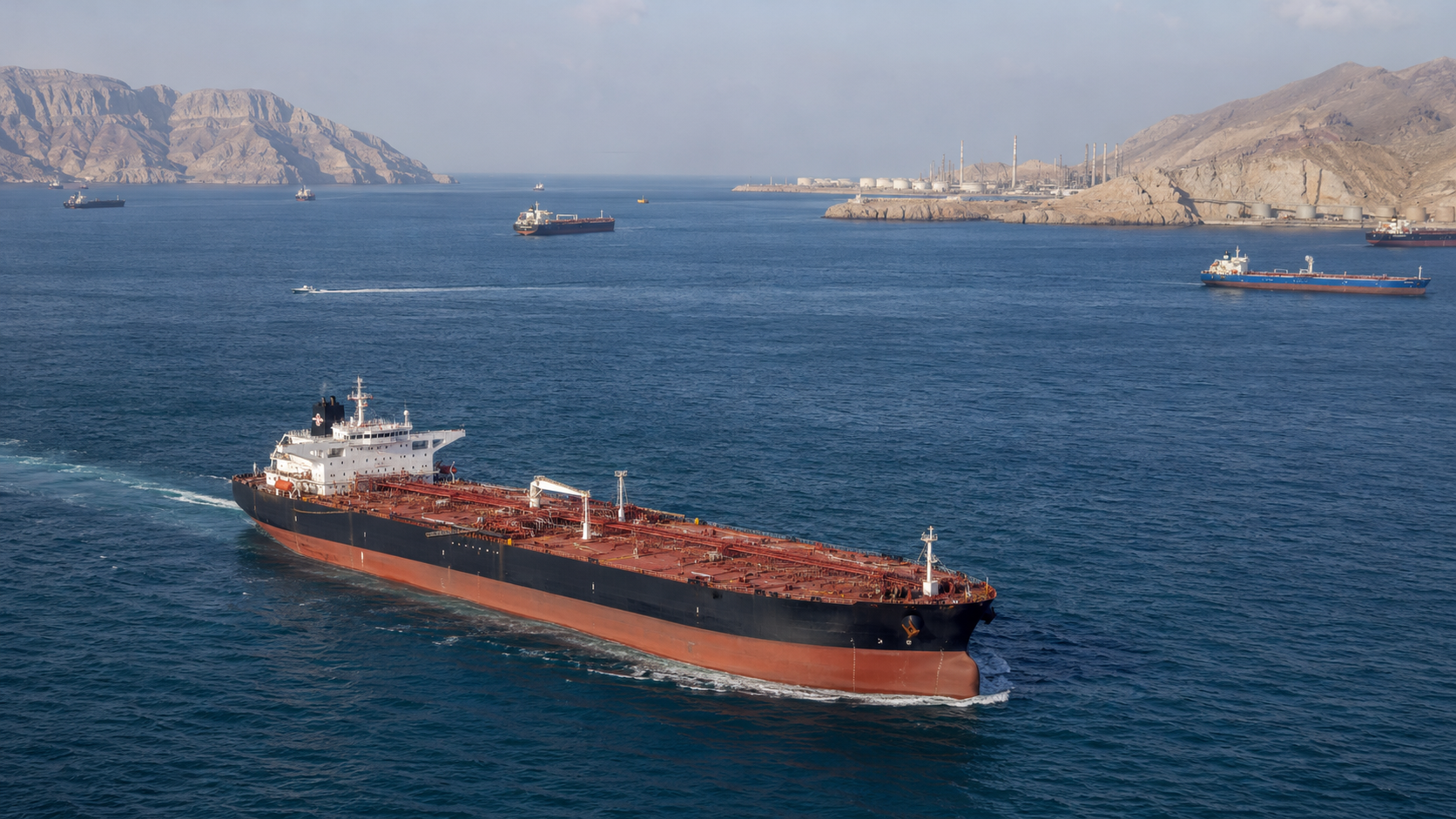
Oil prices moved lower Thursday as diplomatic efforts surrounding the Strait of Hormuz encouraged traders to reduce part of the geopolitical premium that has supported crude through months of Middle East conflict. Brent crude fell more than 1% to around $87 a barrel in early trading, while West Texas Intermediate slipped toward $81, putting both benchmarks on course for another session of losses. The retreat reflects growing expectations that negotiations involving Iran and Oman could eventually restore more commercial traffic through the waterway, one of the most important energy corridors in the world.
The market reaction shows how sensitive crude remains to even incremental changes in the probability of a reopening. Before the conflict, oil and natural gas shipments equivalent to roughly one-fifth of global consumption moved through Hormuz. Restrictions since the war began have disrupted established shipping patterns, increased transportation costs and limited the ability of several Gulf producers to translate available production capacity into actual exports. A credible reopening would therefore affect more than Iranian barrels. It could improve access for supplies from Saudi Arabia, Iraq, Kuwait and other regional exporters whose ability to reach international customers has been constrained.
That possibility explains why oil prices can fall sharply even though the physical market is hardly awash with crude. The immediate question for traders is no longer simply how much petroleum producers are willing to pump. It is how much can move safely and economically from producing fields to refiners. Until shipping conditions normalize, spare capacity has less value than it would in an ordinary supply shock.
The disruption has also exposed a significant shift in the influence of OPEC+. The producer alliance accounted for about 40% of global oil output in July, down from more than 48% before the war began in late February, although part of that decline reflects the United Arab Emirates’ departure from OPEC. A core group of seven OPEC+ producers now represents only about one-quarter of global supply. The group has announced six output increases since March, but transport constraints have prevented much of that additional production from reaching the market.
For investors, that weakens the traditional relationship between OPEC+ policy announcements and crude prices. In earlier cycles, the organization could often move markets simply by signaling production cuts or increases. The current environment places greater emphasis on logistics, infrastructure and geopolitics. A barrel that cannot be exported has little influence on global availability regardless of a producer’s official quota.
China has emerged as the other major force reshaping the balance. Chinese crude purchases since the start of the war have been roughly 400 million barrels below the comparable period a year earlier, according to estimates cited in market reporting. Lower refinery activity, restrictions affecting fuel exports and the continued expansion of electric transportation have reduced demand at a moment when Middle Eastern supplies are constrained. That decline has acted as an important counterweight to the geopolitical shortage, helping prevent oil prices from moving even higher.
The development is significant because China increasingly functions as a swing source of demand rather than simply a steadily growing consumer. When Chinese refiners accumulate inventories aggressively, the additional buying can tighten global markets quickly. When purchases retreat, as they have this year, demand destruction can partially absorb even an unusually severe supply shock. The resulting oil market is less dependent on a single producer group and more responsive to the interaction between Middle Eastern exports and Asian consumption.
U.S. fundamentals provide another reminder that the recent decline in prices should not be mistaken for broad oversupply. Commercial crude inventories increased by only about 95,000 barrels last week to 428.9 million barrels, considerably less than some market expectations. Gasoline inventories declined by about 2.5 million barrels, while distillate stocks fell by roughly 2.2 million barrels. U.S. crude production remained strong near 13.8 million barrels a day, but refinery utilization was also elevated.
More striking is the Strategic Petroleum Reserve. Inventories fell by approximately 3.7 million barrels during the latest reporting week to 289.7 million barrels, substantially reducing the emergency cushion available to offset another major disruption. That matters because strategic inventories have become an important part of the policy response to wartime energy shortages. With the reserve considerably lower than it was before the conflict, Washington has less flexibility to use public barrels repeatedly without raising concerns about long-term energy security.
For oil producers, the current pullback removes some of the extraordinary pricing benefit generated by the conflict without eliminating the broader earnings support provided by crude above historical averages. Exxon Mobil (XOM) and Chevron (CVX) remain exposed to that balance. A sustained reopening of Hormuz could pressure upstream realizations and reduce the geopolitical premium embedded in energy shares, while continued disruptions would preserve unusually strong cash generation across much of the sector. Exxon shares already showed sensitivity to changing expectations around the strait this week as diplomacy weighed on crude.
The next major move in oil is therefore likely to depend less on another OPEC+ headline than on evidence that tankers can actually resume dependable passage through Hormuz. Negotiations alone can compress the risk premium, but physical flows will determine whether the decline toward the low-$80s for WTI becomes a durable repricing or merely another temporary retreat.
A phased reopening would increase available Gulf supply, ease freight pressures and potentially reinforce the disinflationary effect of weaker Chinese demand. Failure to reach a workable arrangement would restore the market’s focus to constrained exports, shrinking strategic reserves and limited spare logistical capacity. Oil’s recent decline suggests traders are assigning greater probability to the first outcome. The underlying fundamentals show that they have little room for disappointment.