Renewed U.S.-Iran fighting is pushing energy prices and sovereign yields sharply higher, reviving inflation risks just as major central banks prepare for crucial September policy decisions.
Global markets entered September confronting a familiar but increasingly dangerous combination: geopolitical escalation, expensive energy and rising government borrowing costs. Fresh U.S. airstrikes on Iranian military targets near the Strait of Hormuz, followed by Iranian attacks on U.S. and allied positions across the Middle East, have ended several weeks of relative calm and forced investors to reassess how long disruptions to one of the world’s most important energy corridors may persist.
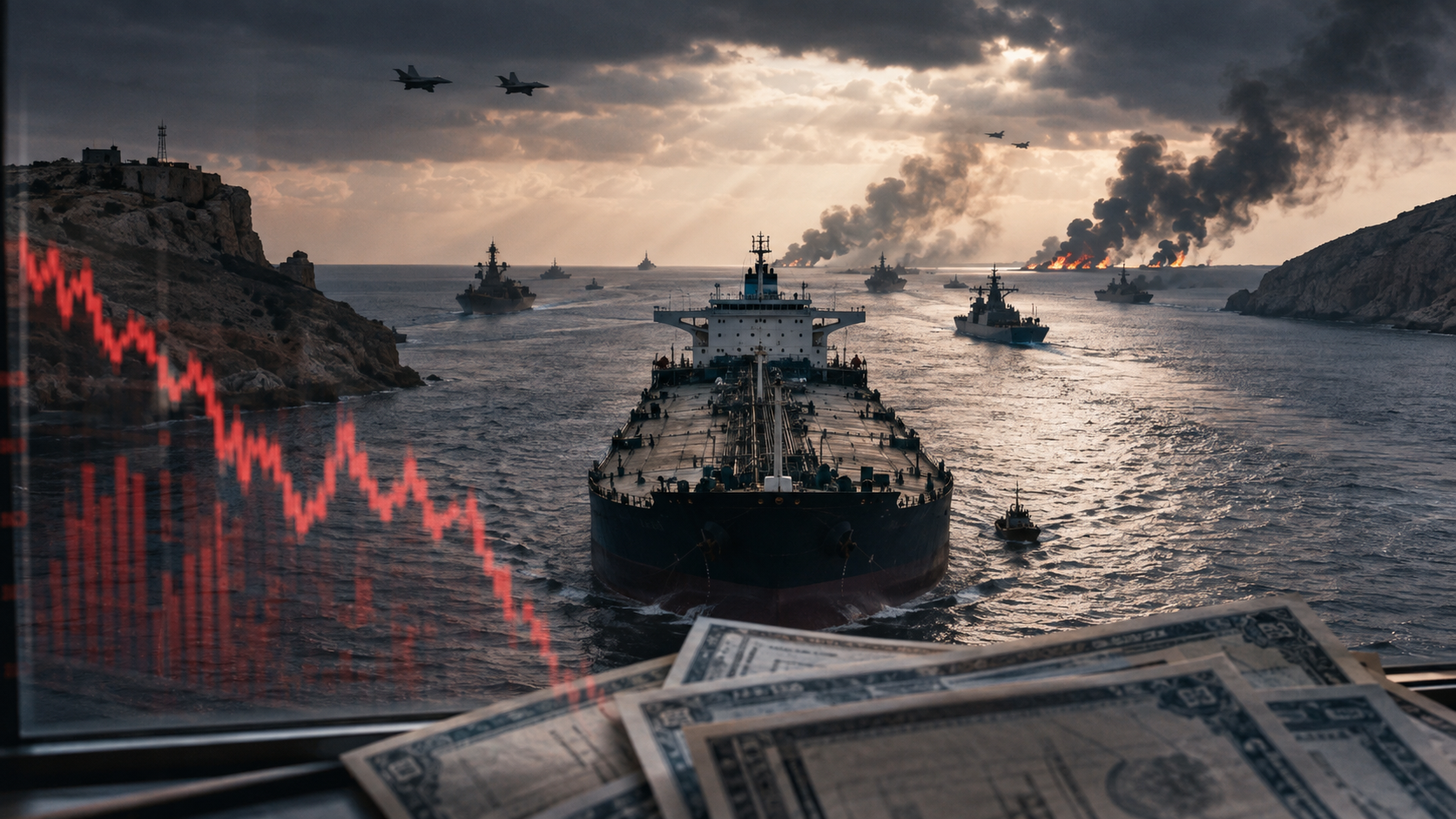
The immediate transmission mechanism is oil. Brent crude traded around $95 a barrel Wednesday after climbing more than $4 in the previous session, while West Texas Intermediate moved above $90. Before the conflict, roughly one-fifth of global oil consumption moved through the Strait of Hormuz. Iran has effectively restricted commercial traffic through the waterway, and recent tanker incidents have further discouraged shipping. Vessel traffic slowed dramatically over the latest weekend, underscoring that the energy shock is no longer merely a theoretical risk premium attached to futures prices.
That distinction matters for the global economy. A temporary oil spike can fade quickly if traders conclude that supply will normalize. Sustained disruption is different. It raises transportation costs, increases fuel and electricity bills, squeezes industrial margins and eventually reaches consumers through higher prices for goods and services. Europe is particularly exposed because natural-gas prices have also risen sharply, while storage levels remain relatively low heading toward winter. European benchmark gas prices have climbed above €75 per megawatt-hour, their highest level since early 2023.
The inflation consequences are already becoming visible. Eurozone consumer prices rose 3.3% in August from a year earlier, accelerating from 2.9% in July and moving further above the European Central Bank’s 2% target. Energy prices increased 14.3%, even as core inflation eased slightly to 2.4%. The divergence is important. It suggests underlying inflation has not yet become broadly entrenched, but policymakers cannot safely ignore an energy shock that could eventually spread into wages, transportation and services.
Bond markets are responding faster than central banks. The U.S. 10-year Treasury yield climbed to roughly 4.8%, its highest level since 2023, while Germany’s benchmark yield reached levels not seen since 2011. British borrowing costs also surged, with the 10-year gilt yield approaching levels last recorded around the global financial crisis. Japan’s government bond market has joined the selloff as investors weigh both inflation and rising fiscal spending. Higher sovereign yields increase financing costs throughout the economy, from corporate debt to mortgages, and reduce the relative appeal of richly valued equities.
The move is particularly uncomfortable because investors had spent much of the previous economic cycle anticipating gradual normalization in interest rates. Instead, markets are again considering synchronized tightening. Expectations for another European Central Bank increase at its September meeting have strengthened, while traders have sharply raised the probability that the Federal Reserve will also raise rates this month. The Bank of Japan is confronting similar pressure as domestic yields and inflation rise. An oil-driven inflation shock therefore threatens to convert what had been a relatively controlled monetary adjustment into a broader global tightening cycle.
Equity markets are reflecting that risk. South Korea’s Kospi fell nearly 4% Wednesday, while Japan’s Nikkei 225 dropped almost 3%. Technology shares have been particularly vulnerable because higher long-term interest rates reduce the present value investors assign to distant earnings. U.S. equity futures also weakened following Tuesday’s declines, extending pressure on growth-sensitive sectors.
Energy producers represent the other side of the trade. Exxon Mobil (XOM) and other integrated oil companies stand to benefit from higher crude prices through stronger upstream earnings and cash generation, assuming production and refining operations remain stable. Yet even energy stocks are not insulated from the broader consequences of a prolonged geopolitical shock. Sustained oil prices near or above current levels could weaken global demand, increase recession risks and eventually reduce fuel consumption. Investors therefore face a trade-off between near-term commodity pricing power and longer-term macroeconomic deterioration.
The pressure extends well beyond oil producers. Airlines, chemical manufacturers, transportation companies and energy-intensive industrial businesses face rising input costs. European manufacturers are especially vulnerable because the region combines expensive imported energy with already elevated financing costs. Consumers could also feel renewed pressure through gasoline, utility and borrowing expenses, potentially slowing discretionary spending just as many economies were beginning to adapt to the previous inflation cycle.
Foreign-exchange markets provide another indication of how investors are positioning. The dollar has strengthened as geopolitical uncertainty and higher Treasury yields reinforce demand for U.S. assets, although the Japanese yen has gained at times as traders anticipate tighter Bank of Japan policy. For energy-importing economies, weaker currencies would compound the oil shock by making dollar-denominated commodities more expensive domestically.
The key question is now duration rather than the initial size of the market reaction. If shipping through Hormuz normalizes and military exchanges diminish, some of the inflation premium embedded in oil and bonds could reverse quickly. If the conflict expands or commercial traffic remains constrained, investors may need to price a materially different economic environment, one characterized by higher nominal growth, higher inflation and persistently restrictive interest rates.
That scenario would challenge both governments and markets. Sovereign debt loads are larger than during previous tightening cycles, meaning every additional increase in benchmark yields carries greater fiscal consequences. At the same time, equity valuations in several markets still assume resilient earnings and eventual monetary relief. The renewed U.S.-Iran confrontation is testing both assumptions simultaneously, making the Strait of Hormuz not only a geopolitical flashpoint but one of the most consequential variables for global asset prices heading into the final months of 2026.