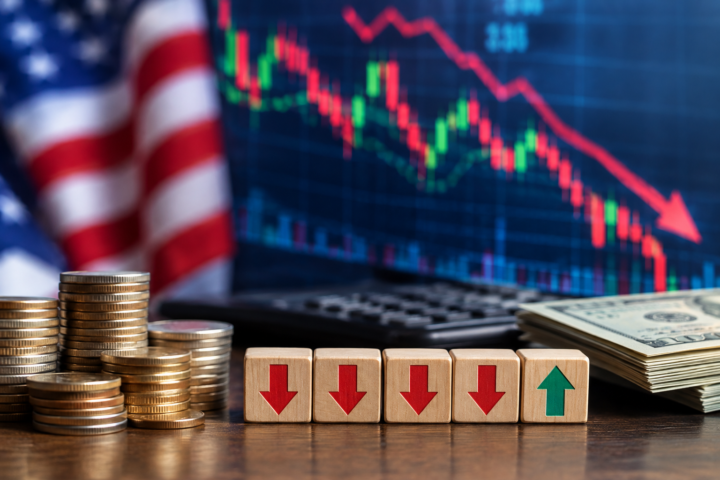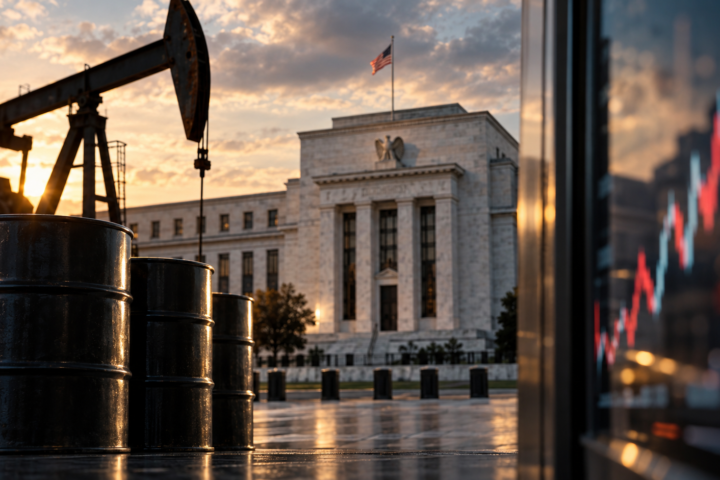
The bond market has delivered a fresh warning to equity investors: the yield on the benchmark U.S. 10-year Treasury note has moved above 5% for the first time in years, raising the cost of money across the economy and putting pressure on stock valuations.
The 10-year yield climbed to approximately 5.0328% on Tuesday, reaching its highest level since 2007, according to Reuters. The move comes as investors contend with renewed inflation concerns, oil prices above $100 a barrel, heavy government borrowing and uncertainty over the future path of Federal Reserve policy.
For investors, the significance extends far beyond the bond market. A Treasury yield above 5% changes the relative attractiveness of stocks, increases borrowing costs for companies and consumers, and raises the hurdle that risk assets must overcome to justify elevated valuations.
Why the 5% Treasury Yield Matters
The 10-year Treasury is one of the most important reference rates in global finance. It influences everything from corporate borrowing costs and mortgages to equity valuation models.
When Treasury yields rise, the future cash flows of companies become less valuable when discounted back to today’s dollars. That effect can be particularly pronounced for high-growth companies whose expected profits lie far into the future.
Reuters reported Tuesday that the latest bond selloff has pushed the U.S. benchmark to a nearly two-decade high, while government bond yields in several other major economies have also moved sharply higher.
The result is a potentially difficult environment for investors who have become accustomed to relatively low long-term borrowing costs.
At a 5% yield, investors can obtain a significantly higher return from a relatively low-risk U.S. government security than they could during much of the post-financial-crisis era. That creates competition for equities, particularly stocks trading at high earnings multiples.
What Is Driving the Bond Selloff?
Several forces are converging in the Treasury market.
Inflation and Energy Prices
Oil has become an important part of the latest inflation story. Brent crude has moved above $100 a barrel as Middle East supply disruptions raise concerns about energy availability.
Higher oil prices can feed directly into gasoline and transportation costs while increasing production expenses for businesses. More importantly for bond investors, persistent energy inflation can make central-bank policy more difficult to ease.
Reuters reported Tuesday that Brent crude was above $107 a barrel, while the rise in energy prices has intensified concerns that the latest inflation shock could prove more persistent.
Expectations for Federal Reserve Policy
The timing of the Treasury move is particularly significant because the Federal Reserve began its scheduled two-day policy meeting on September 15.
The Federal Reserve’s official calendar confirms that the Federal Open Market Committee is meeting September 15–16, with the policy announcement and press conference scheduled for September 16.
Markets have been increasingly focused on whether inflation and energy prices could require a higher-for-longer interest-rate environment.
That uncertainty has helped push Treasury yields higher. Reuters reported that expectations for additional rate increases have become an important factor behind the latest selloff.
For investors, the critical issue may not be the immediate policy decision but what Federal Reserve officials signal about the months ahead.
Fiscal Concerns Add Another Layer of Risk
The Treasury market is also confronting a supply problem.
The U.S. government continues to issue substantial amounts of debt to finance federal spending. Heavy issuance requires the market to absorb more government securities, and investors may demand higher yields when they perceive greater fiscal or inflation risk.
Reuters identified heavy debt issuance and concerns about the U.S. government’s long-term fiscal outlook among the factors contributing to the rise in yields.
Higher yields, in turn, increase the government’s interest expense, creating a feedback loop that investors will increasingly watch.
The issue is therefore bigger than a single Treasury auction or one Federal Reserve meeting. Markets are reassessing the longer-term cost of capital in the world’s largest economy.
Why Stock Investors Should Pay Attention
Equities have not collapsed despite the Treasury selloff. Reuters reported that U.S. stocks have shown resilience even as bond-market volatility has increased.
But resilience should not be confused with immunity.
Higher yields create pressure through several channels.
First, they increase the discount rate used to value future corporate earnings. Second, they raise financing costs for businesses. Third, they make bonds more competitive with equities. Finally, higher borrowing costs can eventually weaken consumer spending and corporate investment.
The impact is likely to be uneven.
Technology and AI stocks deserve particular attention because many high-growth companies trade on expectations of substantial future earnings. When the risk-free rate rises sharply, investors can become less willing to pay premium valuations for those future profits.
That pressure is already visible in market sentiment. Reuters reported Tuesday that rising Treasury yields, oil prices and uncertainty surrounding the AI sector were combining to weigh on U.S. stock futures, with Alphabet and Microsoft falling more than 1% in premarket trading.
Not Every Sector Faces the Same Risk
A Treasury yield above 5% does not automatically mean investors should abandon stocks.
Instead, it increases the importance of sector selection and valuation discipline.
Financial companies can sometimes benefit from higher interest rates, although the effect depends heavily on the yield curve, credit conditions and deposit costs.
Energy companies may also receive support from elevated crude prices. If oil remains above $100 for an extended period, producers could benefit from stronger commodity revenues.
Conversely, highly leveraged businesses, rate-sensitive real estate companies and expensive long-duration growth stocks may face greater pressure if yields continue climbing.
Defensive companies with stable cash flows and relatively strong balance sheets could also become more attractive if market volatility increases.
The Next Test: Can the 10-Year Hold Above 5%?
The immediate question for investors is whether the move above 5% represents a temporary spike or the beginning of a sustained repricing of long-term interest rates.
A short-lived move could be absorbed by equity markets.
A prolonged period above 5%, however, would be more consequential.
If Treasury yields remain elevated while oil stays above $100, investors could face a combination of higher inflation expectations, tighter financial conditions and lower equity valuations.
That would represent a significantly more challenging environment for speculative and high-multiple assets.
Investors should therefore monitor three indicators closely: the 10-year Treasury yield, crude oil prices and Federal Reserve guidance.
The interaction between these three markets may determine whether the current bond selloff remains contained or becomes a broader risk-off event.
Key Investment Insight
For investors, the move above 5% is a signal to reassess—not necessarily to panic.
The most important question is whether individual investments can continue generating sufficient earnings growth to justify their valuations in a higher-rate environment.
Investors may want to prioritize companies with strong balance sheets, reliable free cash flow, manageable debt and sustainable earnings, while exercising greater caution with highly valued businesses whose investment case depends heavily on distant future growth.
The energy sector also deserves attention while crude prices remain elevated, although commodity prices can reverse quickly if geopolitical risks ease.
For technology and AI investors, the focus should shift toward companies demonstrating actual revenue growth, cash generation and defensible competitive advantages rather than relying solely on optimistic long-term projections.
What Investors Should Watch Next
The Federal Reserve’s September 16 decision and accompanying economic projections will be crucial for determining whether the bond-market selloff has further room to run.
Investors should also watch whether the 10-year yield consolidates above 5%, whether oil remains above $100 and whether higher borrowing costs begin to produce weaker economic data.
A combination of falling growth and rising yields would be particularly concerning because it could create a more difficult environment for both equities and corporate credit.
For now, the message from the bond market is clear: capital is no longer cheap, and investors must demand more from risk assets to justify owning them.
The 5% Treasury yield is therefore more than a headline number. It is a potential turning point in the relationship between bonds, stocks, inflation and monetary policy.
Stay with Stockmarket-news for daily market-moving developments, investor-focused analysis and the trends shaping the next move in global financial markets.