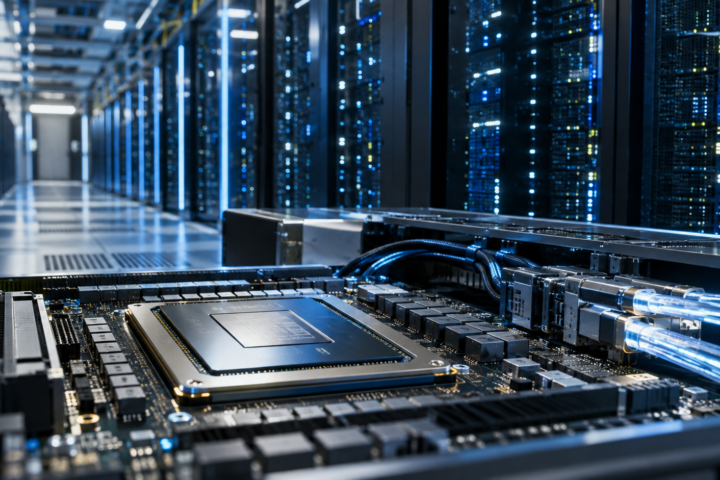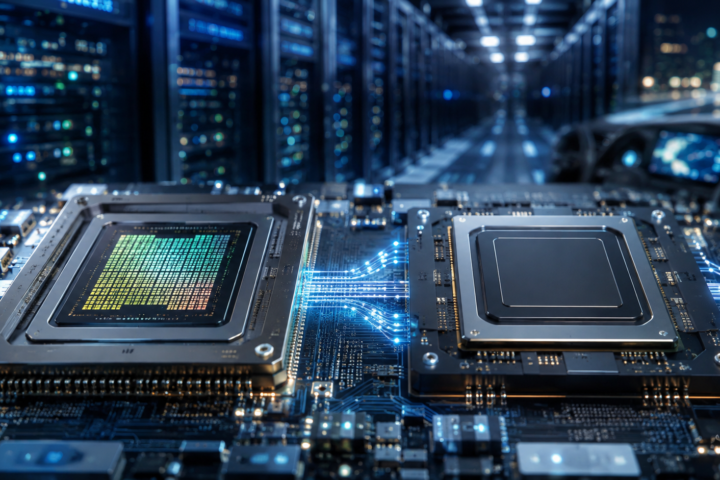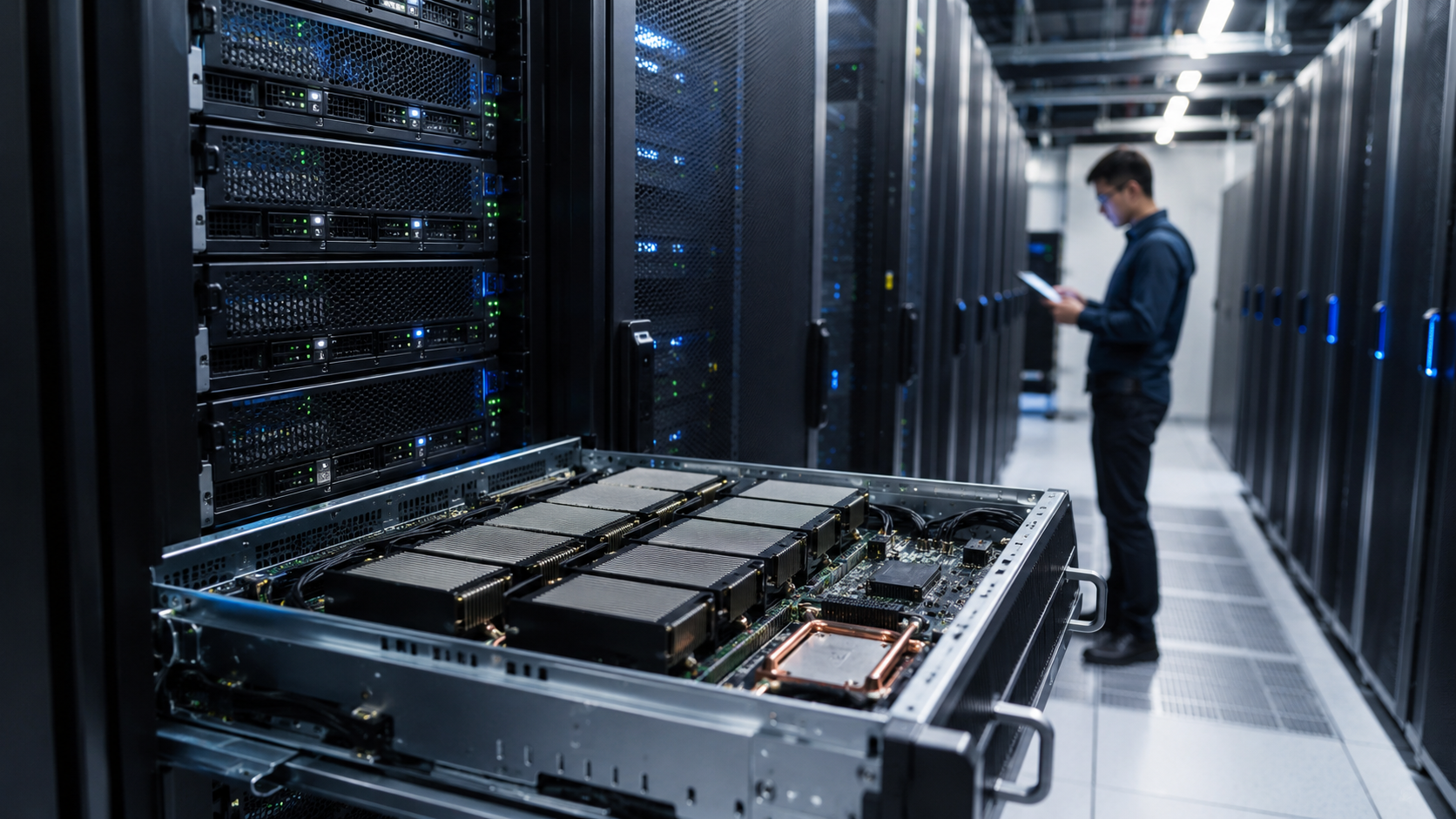
Nvidia’s latest results reinforced that artificial-intelligence infrastructure remains the dominant force in technology markets, even as investors grow more selective about valuations and capital spending.
Nvidia Corporation (NVDA) has again turned the technology sector’s broad artificial-intelligence narrative into a hard financial event. The chipmaker’s latest quarterly results showed revenue of about $81.6 billion, up 85% from a year earlier, with data-center sales contributing roughly $75 billion, or more than 90% of total revenue. The company also guided for about $91 billion in revenue for the current quarter and announced an $80 billion share-repurchase program, underscoring both the scale of demand and management’s confidence in cash generation.
For investors, the message is less that AI demand is strong, which has been clear for several quarters, and more that spending on AI infrastructure remains concentrated, urgent and unusually resilient. Nvidia’s results suggest that the largest cloud platforms and enterprise technology buyers are still prioritizing compute capacity despite concerns about power availability, supply-chain bottlenecks and the eventual return on massive capital outlays. That keeps Nvidia at the center of the market’s most important growth trade, but it also raises the bar for every company tied to the AI supply chain.
The market reaction has been more nuanced than the earnings headline. U.S. index futures were little changed after the report, with Nasdaq futures struggling to extend the rally even as Nvidia’s numbers exceeded expectations. That hesitation matters. It indicates investors are no longer rewarding AI exposure indiscriminately. Instead, they are separating companies with immediate revenue conversion from those still trading mainly on promise. Nvidia remains in the first camp, but the broader technology sector must now prove that AI investment can translate into productivity gains, software revenue, cloud margins and sustainable enterprise adoption.
The competitive landscape is also shifting. Advanced Micro Devices (AMD) is investing more than $10 billion in Taiwan’s semiconductor ecosystem, including advanced packaging and next-generation data-center chips, as it tries to capture a larger share of AI infrastructure spending. The move reflects a broader industry reality: demand for AI compute is expanding fast enough to create opportunities beyond Nvidia, but the technological and supply-chain requirements are becoming more demanding. Packaging, memory bandwidth and foundry access are now as strategically important as chip design itself.
That is why the AI trade is no longer just about graphics processors. Analog Devices (ADI), a major supplier of power and signal-processing components, reported sharply higher revenue and pointed to strong data-center demand, while also announcing a $1.5 billion acquisition aimed at strengthening its power-management portfolio for AI systems. The result illustrates how the buildout is spreading into less glamorous but essential parts of the technology stack. Servers need accelerators, but they also need power delivery, optical links, thermal management and advanced components that can operate reliably at enormous scale.
The global dimension is equally important. Asian technology shares rallied as investors responded to the continuation of the AI cycle, with South Korean chip names such as Samsung Electronics and SK Hynix benefiting from renewed demand for memory and high-bandwidth components. AI infrastructure has become a cross-border capital-spending cycle involving U.S. designers, Taiwanese foundries, Korean memory suppliers, Japanese equipment makers and European industrial technology companies. Any interruption, whether from export controls, labor disputes, energy constraints or geopolitical tension, can affect valuations across the chain.
Nvidia’s scale also brings policy risk into sharper focus. The company remains exposed to U.S. export restrictions on advanced chips sold to China, while Chinese technology firms are accelerating efforts to develop domestic alternatives. That does not immediately undermine Nvidia’s leadership, but it does complicate the long-term revenue mix. Investors are effectively paying for a company that dominates the most profitable segment of AI hardware while accepting that some addressable markets may be constrained by national-security policy.
The larger question is whether AI capital expenditure is becoming self-reinforcing or cyclical. The bullish case is straightforward: more AI applications require more compute, more compute enables better models, and better models justify further spending by cloud providers and enterprises. The cautious case is that the industry is front-loading infrastructure before end-user monetization is fully visible. If software companies, advertisers, banks, manufacturers and governments fail to generate sufficient returns from AI tools, the current investment pace could slow.
For now, Nvidia’s results support the bullish interpretation. Revenue growth, forward guidance and buybacks all point to demand that remains stronger than most traditional semiconductor cycles would imply. Yet the market’s muted response suggests that investors are increasingly aware of the valuation risk embedded in the trade. Great companies can still produce uneven stock returns when expectations are extreme.
The clearest takeaway for technology investors is that AI remains the sector’s central earnings engine, but leadership is narrowing around companies that can deliver revenue today. Nvidia has done that at extraordinary scale. The next phase will test whether the rest of the technology ecosystem can convert infrastructure spending into durable profits rather than simply larger capital budgets.