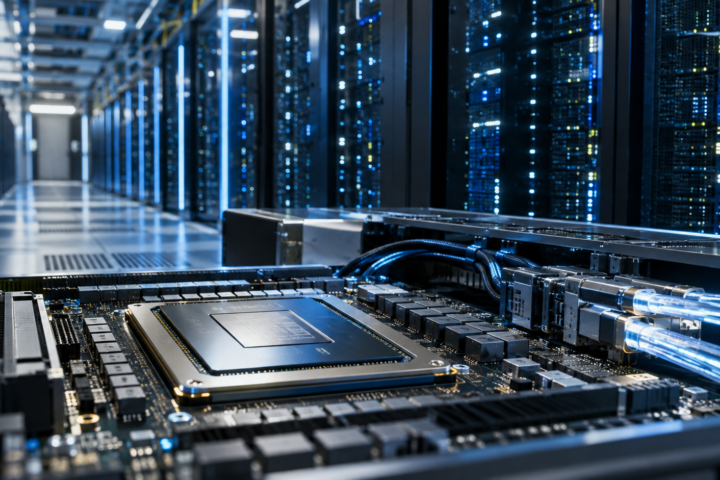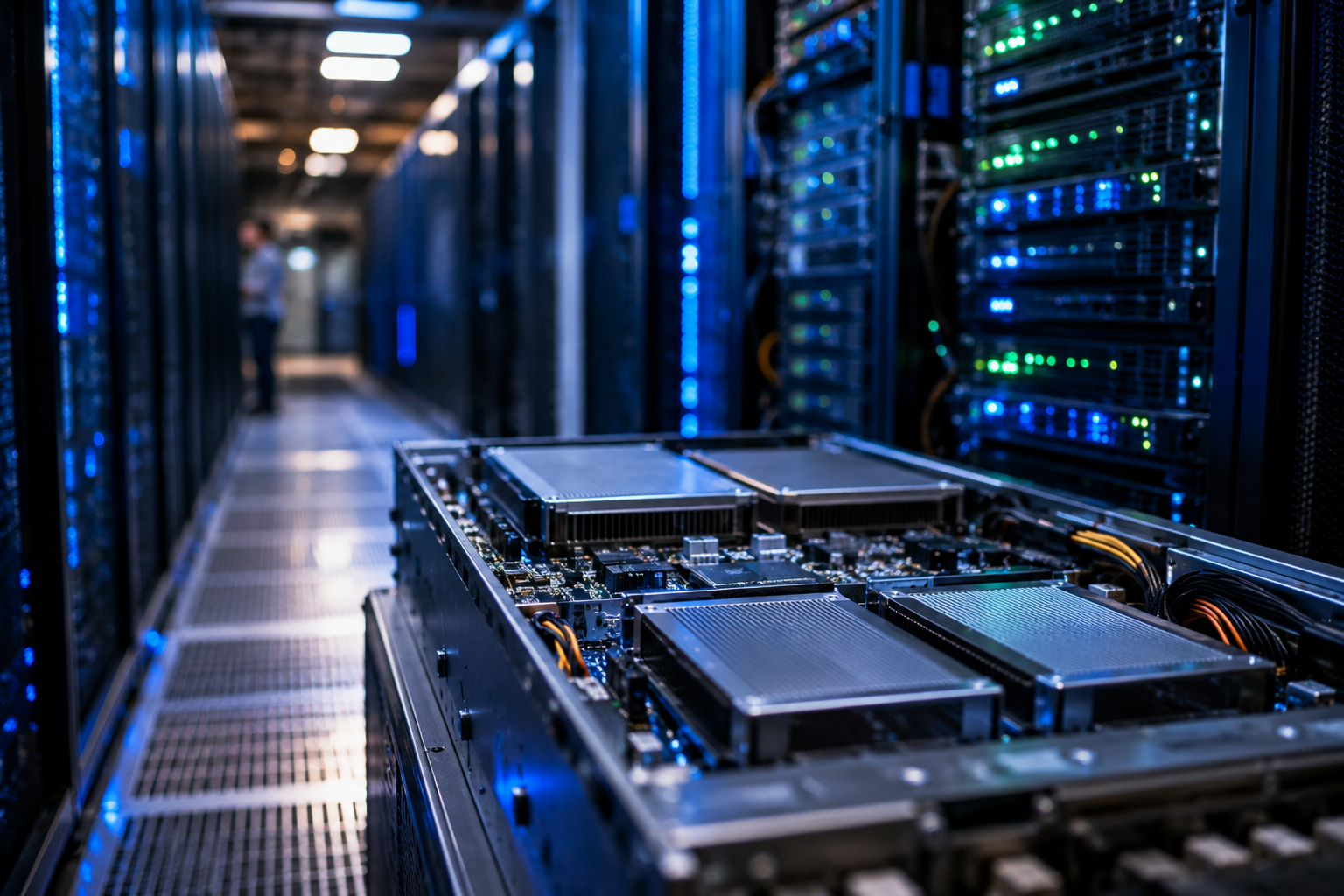
A fresh AMD data-center deal and renewed semiconductor momentum show investors are still willing to fund the AI buildout, even after a volatile stretch for tech valuations.
Advanced Micro Devices (AMD) gave the technology sector a timely reminder Tuesday that the artificial-intelligence trade is not only about the largest chipmaker in the room. The company announced a definitive agreement with Rackspace Technology (RXT) for a phased deployment of 30 megawatts of AMD-powered AI compute capacity, aimed at regulated and sovereign-cloud customers. The partnership places AMD Instinct GPUs and EPYC CPUs at the center of Rackspace’s planned AI infrastructure expansion, with deployment expected to begin later this year and continue toward 2028. For investors, the deal matters less as a single contract than as evidence that demand for AI computing is broadening beyond the hyperscale cloud giants and into specialized enterprise environments where data control, compliance and local infrastructure are becoming selling points.
The announcement landed into a market already leaning back toward risk. Semiconductor shares rallied sharply to start the holiday-shortened week, helped by easing geopolitical anxiety and a renewed willingness to price in multi-year AI capital spending. The PHLX Semiconductor Index reached a record close after a broad advance that included gains in Nvidia (NVDA), Broadcom (AVGO), Intel (INTC), Qualcomm (QCOM), Marvell Technology (MRVL), Micron Technology (MU), Western Digital (WDC) and Seagate Technology (STX). That breadth is important. Earlier phases of the AI rally were concentrated in a handful of mega-cap winners. The latest move suggests investors are once again searching across the hardware stack, from graphics processors to memory, storage and networking, for companies that can convert the AI infrastructure cycle into revenue growth.
AMD’s role in that shift is particularly notable. The company has spent several years trying to turn its data-center franchise into a stronger counterweight to Nvidia’s dominance in accelerated computing. A Rackspace deployment will not by itself close that gap, but it reinforces the idea that enterprise AI buyers want more than one supplier, especially as demand strains power availability, chip supply and memory capacity. For Rackspace, the deal is more transformative. Its shares surged after the announcement, reflecting investor enthusiasm for a company attempting to reposition itself from a traditional managed-cloud provider into an AI infrastructure platform. The stock’s sharp rise also highlights the speculative edge of the current market: companies that can credibly attach themselves to AI capacity, sovereign-cloud demand or regulated-industry use cases are being rewarded quickly, even when execution risks remain high.
The broader technology tape shows why the market is willing to look past those risks. Nasdaq futures were slightly higher Tuesday as investors awaited the Federal Reserve’s June policy decision, while technology shares provided support to the broader market. Lower oil prices after geopolitical tensions eased also helped restore appetite for growth stocks, whose valuations remain sensitive to both inflation expectations and long-term interest rates. A supportive macro backdrop does not eliminate the pressure on tech companies to justify elevated multiples, but it can extend the runway for capital-intensive themes such as AI infrastructure. When rates appear stable and energy costs retreat, investors tend to give longer-duration growth stories more room.
Still, the latest chip rally should not be mistaken for a clean all-clear. The same forces powering the advance also make the sector vulnerable to disappointment. AI infrastructure requires enormous capital spending, dense power usage and rapid hardware turnover. That creates opportunities for chip designers, memory suppliers and data-center operators, but it also raises the bar for returns. If cloud customers slow orders, if enterprise adoption proves more gradual than expected, or if supply shortages push costs higher, the market could quickly reassess how much future profit is already embedded in today’s stock prices. The recent strength in memory and storage stocks, including Western Digital and Seagate, reflects real demand for AI data workloads, but it also shows how quickly investors are extrapolating current bottlenecks into durable pricing power.
That is where AMD’s latest agreement offers a more nuanced signal. The deal is not simply about building more generic compute. It is framed around governed enterprise AI infrastructure for regulated and sovereign environments, areas where customers may prioritize compliance, data residency and operational control over raw model-training scale. This could become one of the next competitive fronts in technology spending. Banks, health-care companies, governments and defense-adjacent enterprises are unlikely to move all AI workloads into public cloud environments without safeguards. Vendors that can package chips, servers, cloud operations and compliance features into a credible offering may find demand that is less cyclical than consumer-facing AI applications and more tied to long-term digital modernization budgets.
For AMD, the investor question is whether such deployments can become repeatable enough to support a stronger AI revenue trajectory. Nvidia remains the benchmark for accelerated computing, with an ecosystem advantage built around hardware, software and developer adoption. AMD’s opportunity lies in offering credible alternatives where customers want cost competition, supply diversity or workload-specific flexibility. That is a narrower path, but not a small one. As the AI market matures, buyers may increasingly separate training, inference, regulated workloads and edge deployment into different procurement categories. A diversified market would benefit companies that can win targeted use cases even without displacing the leader across the entire stack.
The technology sector’s current strength therefore rests on a delicate balance. On one side, AI infrastructure spending continues to move from promise to purchase orders, pushing capital toward chips, memory, storage and specialized cloud services. On the other, valuations assume that this spending cycle will be large, durable and profitable enough to offset competitive pressure and rising infrastructure costs. Tuesday’s AMD-Rackspace agreement supports the bullish case by showing another path for AI compute demand outside the largest hyperscalers. It also reminds investors that the second phase of the AI trade may be less about a single dominant winner and more about which companies can attach themselves to real deployment, power access and enterprise use cases.
The market is again treating AI infrastructure as the technology sector’s central growth engine. That judgment may prove right, but the winners are likely to be determined by execution rather than announcement value. For now, AMD has given investors another reason to believe the AI buildout is widening, and Rackspace has given them a more speculative way to bet that specialized cloud capacity will matter. In a market still willing to pay for credible AI exposure, that was enough to put chips back near the center of the rally.