Stocks advanced and oil retreated as investors weighed signs of progress in U.S.-Iran talks against still-elevated energy prices and a cautious global rate outlook.
Global markets moved higher Friday as investors embraced the possibility that a diplomatic opening in the Middle East could ease one of the most disruptive macro risks hanging over equities, bonds and commodities. The rally was broad enough to suggest more than a short-covering move, but fragile enough to leave portfolio managers focused on whether lower oil prices can persist long enough to change the inflation and interest-rate narrative.
The immediate catalyst was a sharp reversal in crude, with Brent and U.S. oil benchmarks falling more than 4% after President Donald Trump said there had been a breakthrough in talks aimed at ending the Iran war. The prospect that any agreement could reopen or stabilize transit through the Strait of Hormuz helped release pressure that had been building across energy-sensitive assets. Brent was still trading well above levels seen before the conflict escalated earlier this year, underscoring that markets were pricing relief rather than a full return to normal.
Equities responded in classic risk-on fashion. Asian indexes led the advance, with South Korea’s Kospi and Japan’s Nikkei 225 posting strong gains, while European benchmarks including Germany’s DAX and France’s CAC 40 also climbed. U.S. futures pointed higher, extending the previous Wall Street rally. The move favored cyclical shares, technology and companies exposed to lower input costs, while energy producers faced a more complicated backdrop as crude prices gave back part of their geopolitical premium.
For the SPDR S&P 500 ETF Trust (SPY), the broader question is whether the market can convert geopolitical relief into a more durable advance. Lower oil prices can help equities through several channels: they reduce headline inflation pressure, support consumer purchasing power and ease margin stress for transportation, manufacturing and retail companies. But those benefits depend on the decline being sustained. If crude remains volatile or reverses quickly, investors may be reluctant to price in a cleaner disinflation path.
Bond markets are sending a more restrained signal. U.S. Treasury yields remain high by post-pandemic standards, with market data showing the U.S. 10-year yield around 4.45% and the two-year near 4.05%. That configuration reflects a market still balancing slower growth risks against inflation that has not fully returned to central-bank comfort zones.
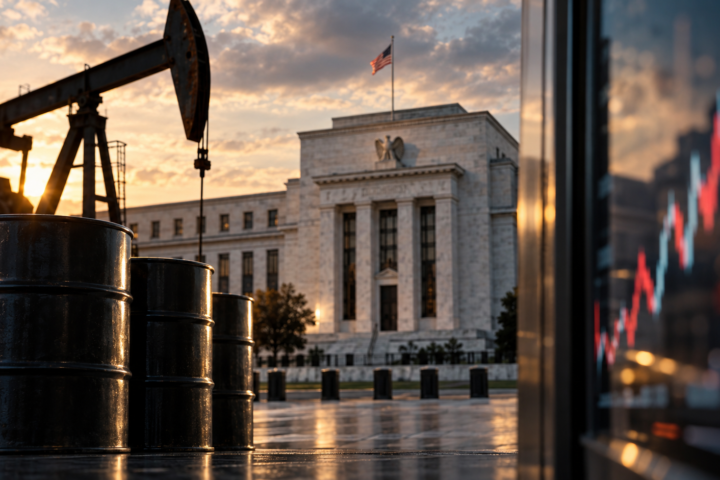
The Federal Reserve’s policy stance remains central to the equity outlook. Recent commentary from major asset managers and banks has emphasized that higher energy prices have complicated the path back to lower inflation, helping justify the Fed’s decision to hold rates steady in the 3.50% to 3.75% range at its April meeting. Even with oil falling on Friday, one session does not erase months of price pressure or the risk that energy volatility bleeds into expectations, wages and business costs.
That is why the rally looked more like a repricing of tail risk than a wholesale reassessment of monetary policy. Investors can accept higher equity prices when geopolitical risk falls, but valuation expansion becomes harder if real yields stay elevated. Large technology companies, including Nvidia (NVDA), Microsoft (MSFT) and Apple (AAPL), remain sensitive to that balance because a significant portion of their market value depends on long-term earnings expectations. Lower oil can help sentiment, but lower discount rates would be a more powerful tailwind.
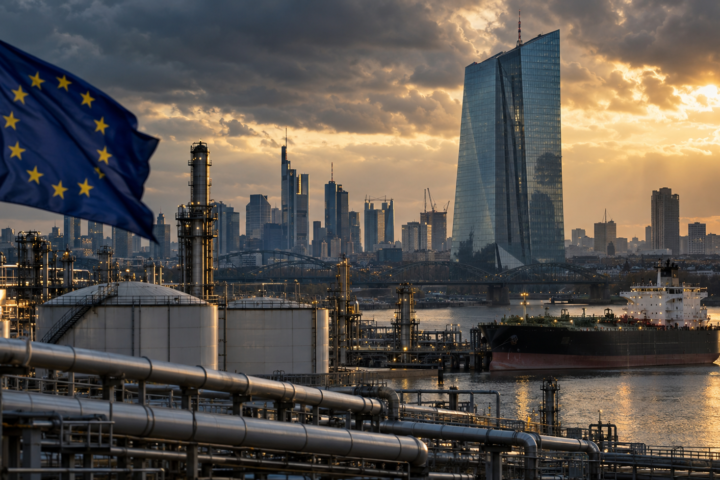
Europe’s move was similarly encouraging but conditional. Exporters, banks and industrials benefit from any improvement in global demand expectations, yet the region remains exposed to energy swings and policy uncertainty. The European Central Bank’s recent rate posture, combined with higher sovereign yields, has kept investors selective. Markets can rally on geopolitical relief, but earnings revisions will matter if the move is to continue beyond a few sessions.
Currency markets offered a more nuanced message. The dollar and euro both showed modest strength in the immediate aftermath of the oil reversal, suggesting investors were not making a single large macro bet. A softer oil market can reduce demand for traditional safe havens, but the dollar remains supported by relatively high U.S. yields. For emerging markets, the key issue is whether lower crude reduces pressure on importers such as India and Turkey, where energy costs feed quickly into inflation, current-account balances and central-bank decisions.
The commodity channel may be the most important one to watch into next week. Crude’s decline gives investors a cleaner way to express optimism about diplomacy, but the level of oil remains elevated enough to keep inflation risks alive. The Strait of Hormuz remains central because even partial disruption affects shipping, insurance costs and the behavior of refiners and strategic buyers. A stable reopening would likely support airline, logistics and consumer discretionary shares, while a renewed threat could quickly reverse Friday’s equity gains.
Market breadth will determine whether the rally has staying power. A durable advance would require leadership beyond mega-cap technology, with participation from financials, industrials, small-cap shares and consumer sectors. That would signal investors see a genuine improvement in the growth and inflation mix. A narrow rally concentrated in the largest companies would suggest defensive positioning dressed up as risk appetite.
The day’s moves also come as investors prepare for the potential SpaceX initial public offering, which could test the market’s appetite for large growth listings in a high-rate environment. While SpaceX is not yet publicly traded, enthusiasm around the deal may influence sentiment toward listed aerospace, defense and technology names, including Tesla (TSLA), whose investor base overlaps heavily with risk-seeking growth buyers.
For now, Friday’s rally gives markets breathing room. It reduces the immediate fear that oil will keep climbing unchecked and allows investors to revisit the case for equities after weeks of geopolitical pressure. But the rebound rests on two assumptions: that diplomacy can contain the Middle East shock and that lower energy prices can help central banks avoid another inflation setback. Until both assumptions are tested by hard data and sustained price action, the rally should be read as constructive but not conclusive.