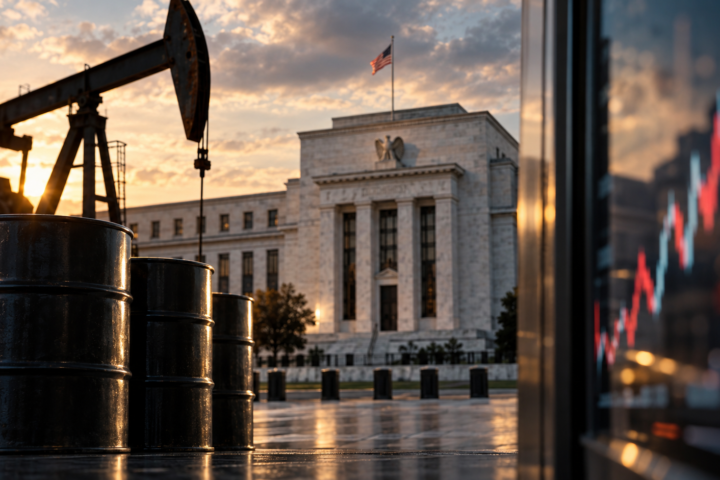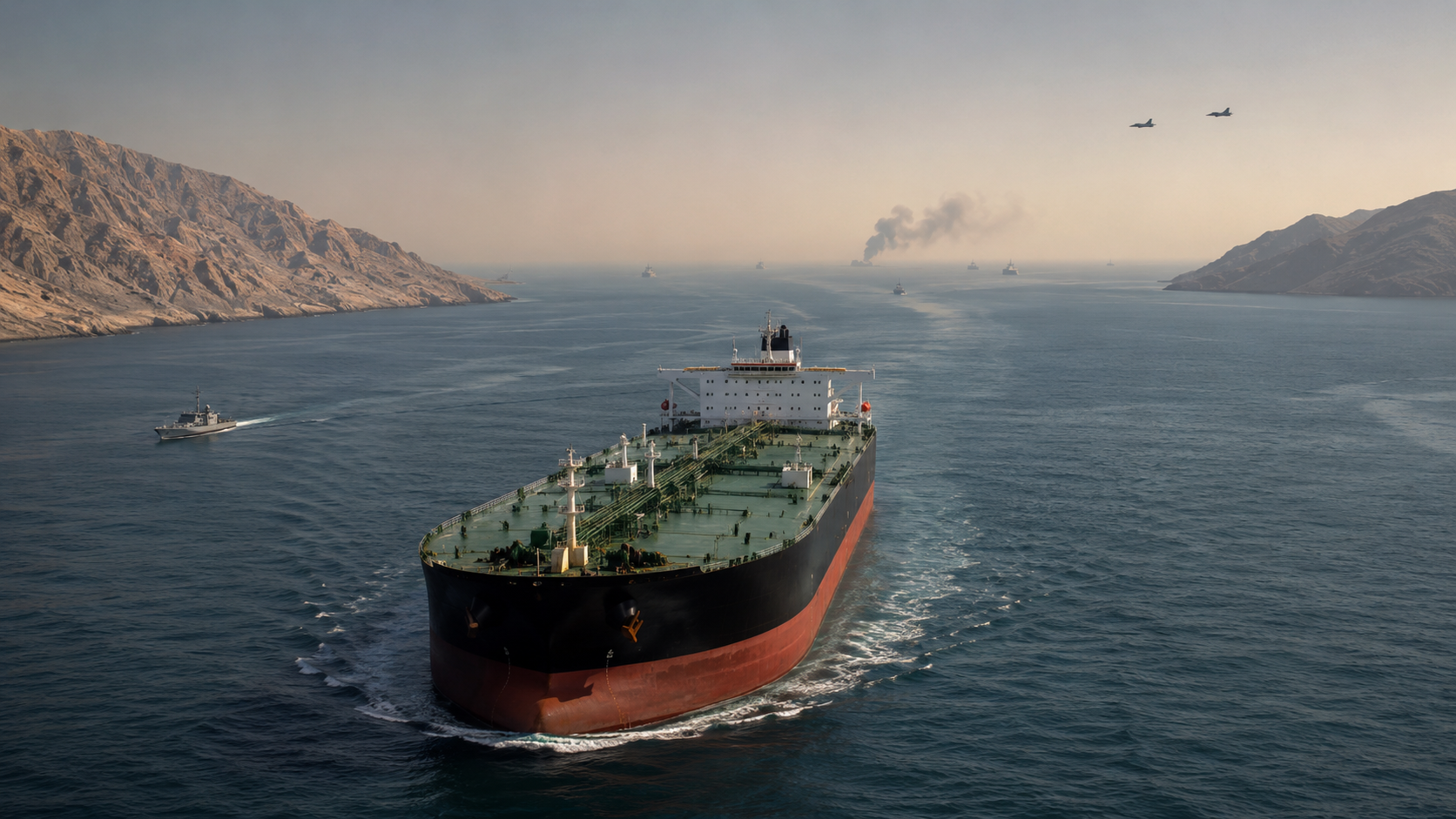
Renewed fighting around the Strait of Hormuz is lifting oil prices, pressuring global equities and reviving inflation concerns across energy-importing economies.
A fresh escalation between the United States and Iran has returned the Strait of Hormuz to the center of the global economic outlook, forcing investors, governments and businesses to confront the possibility that one of the world’s most important energy corridors could become less reliable.
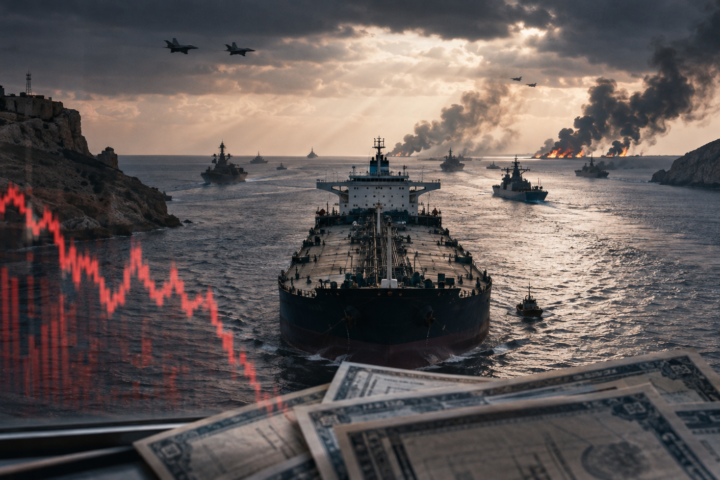
Oil prices rose sharply on Monday after new U.S. strikes on Iranian forces and retaliatory action by Tehran disrupted commercial shipping near the strait. Brent crude climbed close to $80 a barrel during the session, while tanker activity through the waterway fell to unusually low levels. Global equities weakened as traders moved away from airlines, semiconductor manufacturers and other industries exposed to higher fuel costs or fragile international supply chains.
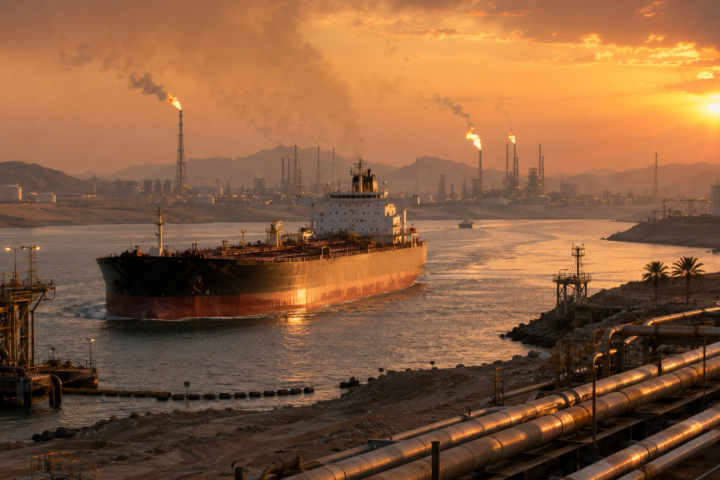
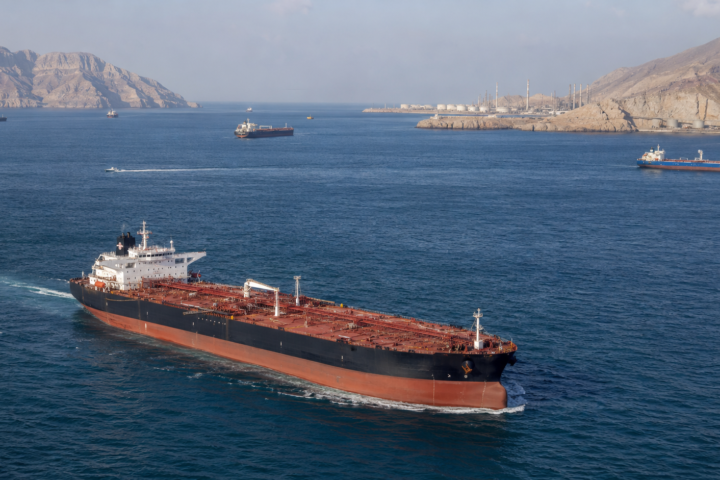
The market reaction reflects more than concern about a short-term military exchange. The Strait of Hormuz connects the Persian Gulf with the Arabian Sea and serves as a critical transit point for crude oil and liquefied natural gas exports from major regional producers. Even limited disruption can increase shipping costs, insurance premiums and delivery times. A prolonged confrontation could force buyers to compete for alternative supplies, raising energy costs across Europe and Asia.
That risk is especially serious for economies already facing stubborn inflation. The International Monetary Fund expects global growth of 3% in 2026 and has warned that the economic outlook is being pulled in opposite directions by conflict-related energy pressure and strong technology investment. The fund has also said that global disinflation has stalled, leaving central banks with less flexibility to respond to weaker growth.
Higher oil prices affect inflation through several channels. The most immediate impact appears in gasoline, diesel, aviation fuel and household energy bills. The secondary effects emerge more gradually as transportation, manufacturing, agriculture and logistics companies pass increased costs to customers. Those pressures can become embedded in consumer prices even when the original commodity shock proves temporary.
For central banks, the resulting policy choice is uncomfortable. Raising interest rates may help contain inflation expectations but would also weaken investment and consumer spending. Holding rates steady could support economic activity but increase the risk that energy-driven price pressure becomes persistent. Bond markets are already reflecting those concerns, with government yields remaining elevated in several advanced economies despite expectations earlier in the year that monetary policy would become more supportive.
Equity markets showed the uneven consequences of the crisis. Energy producers benefited from rising crude prices, helping support shares of BP plc (BP) and other European oil companies. Airlines moved in the opposite direction as investors anticipated higher fuel expenses and weaker travel demand. The divergence illustrates how geopolitical shocks often redistribute earnings expectations across industries rather than simply lowering the value of the entire market.
Asian technology stocks were among the hardest hit. South Korea’s Kospi suffered a severe decline, while memory-chip producers SK Hynix and Samsung Electronics posted double-digit losses. The selloff followed an extended rally in artificial intelligence-related semiconductor stocks, leaving highly valued companies vulnerable when investors reduced risk. Japanese memory-chip producer Kioxia also fell sharply.
The technology selloff highlights the link between geopolitical instability and the global electronics supply chain. Semiconductor manufacturing depends on a complex network of energy-intensive fabrication plants, specialized materials, shipping routes and multinational customers. Higher fuel costs can raise logistics expenses, while broader uncertainty can delay capital spending or lead investors to demand lower valuations for companies whose growth assumptions depend on uninterrupted global trade.
The immediate economic impact will depend on whether shipping disruption remains limited. Energy markets can absorb brief interruptions through inventories, spare production capacity and changes in export routes. The consequences become more severe when uncertainty persists, because refiners, utilities and industrial buyers begin paying premiums to secure supplies in advance.
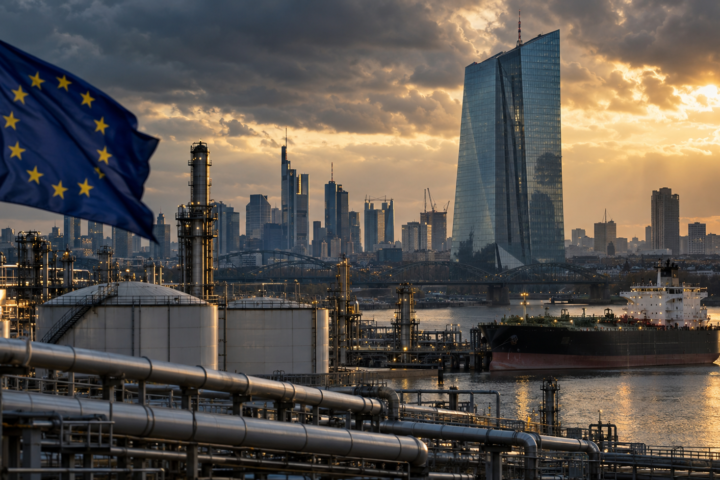
Europe remains particularly exposed because it continues to rely on imported energy and has limited tolerance for another sustained price shock. Higher natural gas and oil costs would weaken household purchasing power, pressure energy-intensive manufacturers and complicate efforts by the European Central Bank to balance inflation control with sluggish regional growth.
Emerging markets could face even greater strain. Countries that import most of their fuel often have less fiscal capacity to subsidize energy prices or protect consumers. A stronger U.S. dollar, another common response to geopolitical uncertainty, can further increase the local-currency cost of oil. Governments may then be forced to choose between allowing prices to rise, increasing subsidies or widening budget deficits.
Oil-exporting countries would benefit from stronger revenue, but the advantage would not be uniform. Producers located near the conflict face operational and security risks that can offset the gains from higher prices. Exporters outside the region, including the United States, Brazil, Canada and Norway, could gain market share if buyers seek more geographically diversified supply.
The crisis also challenges the assumption that financial markets can quickly look past geopolitical events. Investors had recently become more willing to treat military tensions as temporary, particularly when energy infrastructure and commercial shipping remained largely intact. The latest escalation tests that confidence because it directly involves the transport network connecting major producers to the global economy.
For businesses, the rational response is likely to include larger inventories, diversified suppliers and longer-term energy contracts. Those measures can reduce operational risk, but they also increase costs and tie up capital. The result may be a more resilient global trading system that is also less efficient and more inflationary.
The central question is whether the confrontation remains contained. A rapid decline in hostilities could reverse part of the oil rally and restore demand for riskier assets. Continued attacks on vessels or energy infrastructure would create a more serious economic shock, particularly if shipping companies avoid the strait or insurers sharply raise coverage costs.
The global economy has so far shown an ability to withstand repeated trade, political and military disruptions. That resilience should not be mistaken for immunity. With inflation still elevated, debt burdens high and financial markets priced for continued earnings growth, a sustained energy shock could expose vulnerabilities that have remained manageable under calmer conditions.