Crude prices rose as escalating U.S.-Iran tensions threatened Middle East energy flows, sharpening concerns that a prolonged supply shock could spread from fuel markets into inflation, interest rates and global growth.
Oil markets moved higher Wednesday as the conflict surrounding the Strait of Hormuz returned to the center of investor attention, reinforcing a geopolitical risk premium that has already pushed crude sharply above its early-summer range.
Brent crude traded near $85.60 a barrel, while West Texas Intermediate hovered around $80, with both benchmarks gaining as traders assessed threats to shipping through one of the world’s most important energy corridors. The advance followed a volatile stretch in which Middle East hostilities, restrictions on Iranian ports and attacks near regional infrastructure drove crude prices rapidly higher.
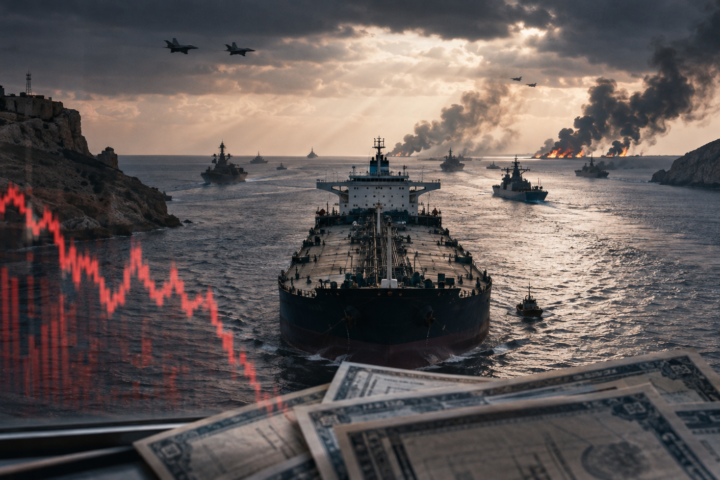
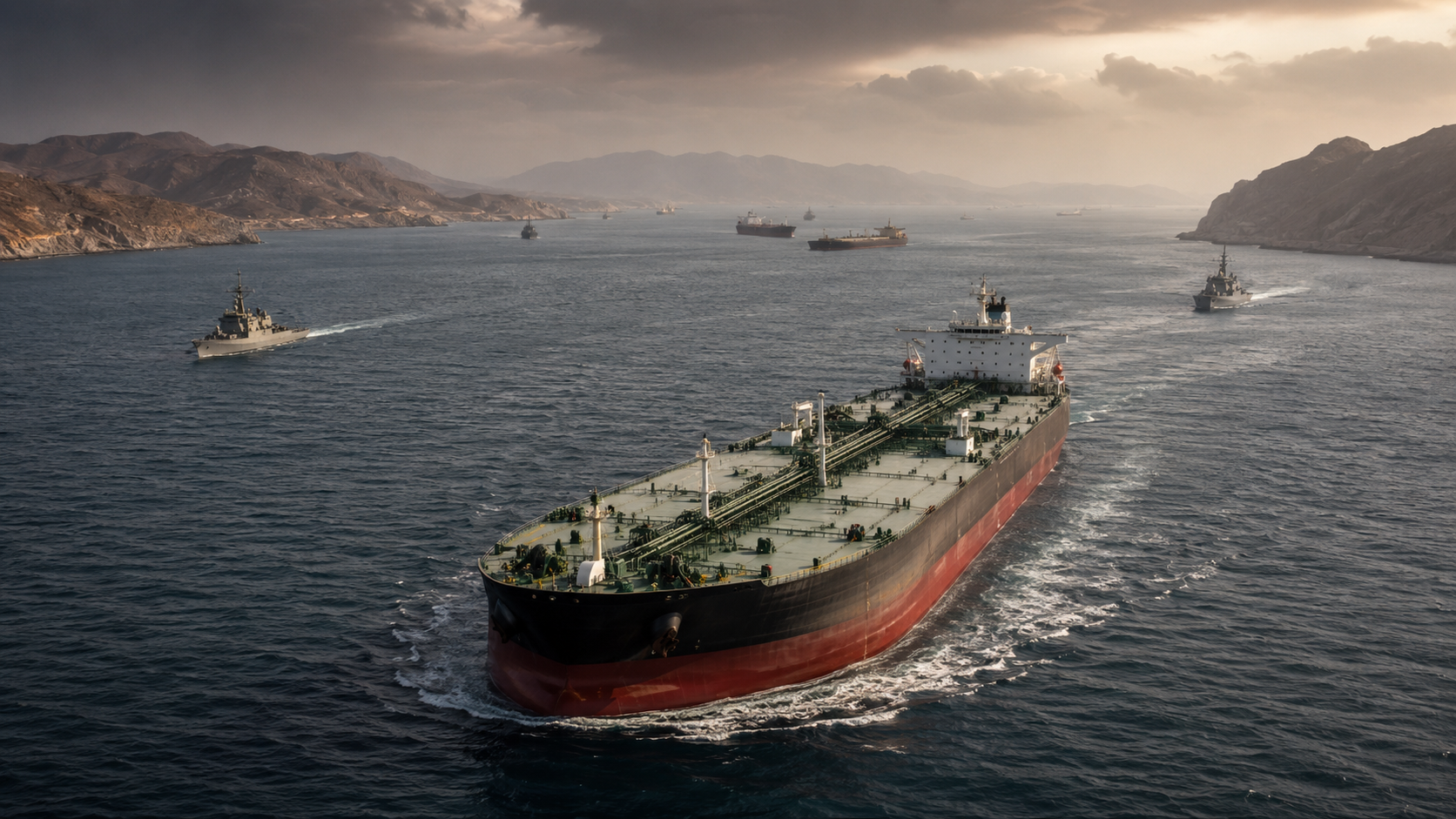
The immediate market concern is not simply the loss of Iranian exports. Investors are attempting to price the much larger risk that military escalation could reduce traffic through the Strait of Hormuz, the narrow passage connecting Persian Gulf producers with global customers. Even limited disruption would force refiners and trading companies to compete more aggressively for available barrels, while higher insurance, freight and security expenses would raise the delivered cost of crude.
That possibility has changed the character of the oil market. Earlier in the year, traders were focused heavily on demand, rising non-OPEC production and the ability of major producers to manage supply. The latest confrontation has pushed logistical risk and physical availability back to the forefront. Crude can therefore remain supported even when economic indicators point to softer consumption.
China’s economy expanded at a slower pace in the second quarter, adding to concerns that high energy costs could compound weakness in manufacturing and consumer demand. Copper, often treated as a gauge of global industrial momentum, slipped to about $6.32 a pound, though it remained roughly 15% above its level a year earlier. The contrast between firm oil prices and softer copper illustrates the unusual combination now confronting investors: geopolitical pressure on supply alongside caution about future demand.
Energy producers are among the clearest equity beneficiaries. Exxon Mobil (XOM), Chevron (CVX), BP (BP) and Shell (SHEL) generally generate stronger upstream cash flow when crude prices rise, particularly when the increase is not immediately accompanied by higher operating costs. European oil majors may also attract renewed attention because many entered the latest price surge with relatively conservative market valuations and established shareholder-return programs.
BP has already benefited from the broader oil rally as higher prices improved the outlook for cash generation and debt reduction. Still, the sector’s gains are unlikely to be uniform. Companies with production concentrated in geopolitically exposed regions may face operational risk, while refiners could struggle if crude input costs rise faster than gasoline and diesel prices. Shipping constraints can also create large regional price differences that reward some operators while hurting others.
The larger question is whether the oil shock becomes an inflation shock. Higher crude prices filter into transportation, aviation, petrochemicals and agricultural production. If sustained, they can slow the decline in consumer inflation and complicate the task facing central banks. Bond markets have already shown sensitivity to the possibility that energy-driven price pressures could keep monetary policy restrictive for longer.
That transmission mechanism helps explain why gold has not responded to the conflict with an uninterrupted rally. Gold traded around $4,028 an ounce Wednesday, down roughly 0.6% on the session and about 7% over the past month, despite the worsening geopolitical backdrop. Ordinarily, military confrontation supports safe-haven demand. In this case, however, oil-driven inflation fears have also lifted expectations for interest rates and supported the dollar, both of which can weigh on non-yielding precious metals.
Silver and platinum also declined, suggesting that investors were distinguishing between immediate energy scarcity and the broader metals complex. Silver faces the added complication of its dual role as both a financial asset and an industrial input. A weaker global growth outlook can offset some of the safe-haven demand generated by political uncertainty.
For households, the most visible impact will be at fuel stations and in transport-intensive goods. Retail gasoline prices do not move in lockstep with crude, but a sustained rise in oil typically reaches consumers through higher driving costs, airline fares and distribution expenses. That would be particularly unwelcome in economies where wage growth is moderating and borrowing costs remain elevated.
The current move is still smaller than the most severe historical oil shocks, and global producers retain several possible responses. OPEC members with spare capacity could increase output, strategic reserves could be released, and weaker demand could eventually restrain prices. U.S. shale producers may also respond to improved economics, though new supply usually arrives more slowly than financial markets react.
Investors should therefore distinguish between a temporary geopolitical premium and a lasting physical shortage. A de-escalation that restores confidence in Gulf shipping could remove several dollars from crude quickly. A prolonged disruption, by contrast, would likely push prices higher, widen inflation expectations and place greater pressure on transportation, consumer and technology stocks whose valuations depend on lower interest rates.
The balance of risks remains unusually wide. Oil is signaling concern about immediate supply, copper is reflecting uncertainty about growth, and gold is being pulled between geopolitical demand and tighter monetary expectations. That combination makes the commodity market less a unified trade than a collection of competing signals.
For now, energy remains the dominant force. As long as shipping through the Strait of Hormuz appears vulnerable, crude prices are likely to retain a substantial risk premium. The next decisive move will depend less on routine inventory data than on whether the conflict threatens sustained disruption to the physical flow of oil.