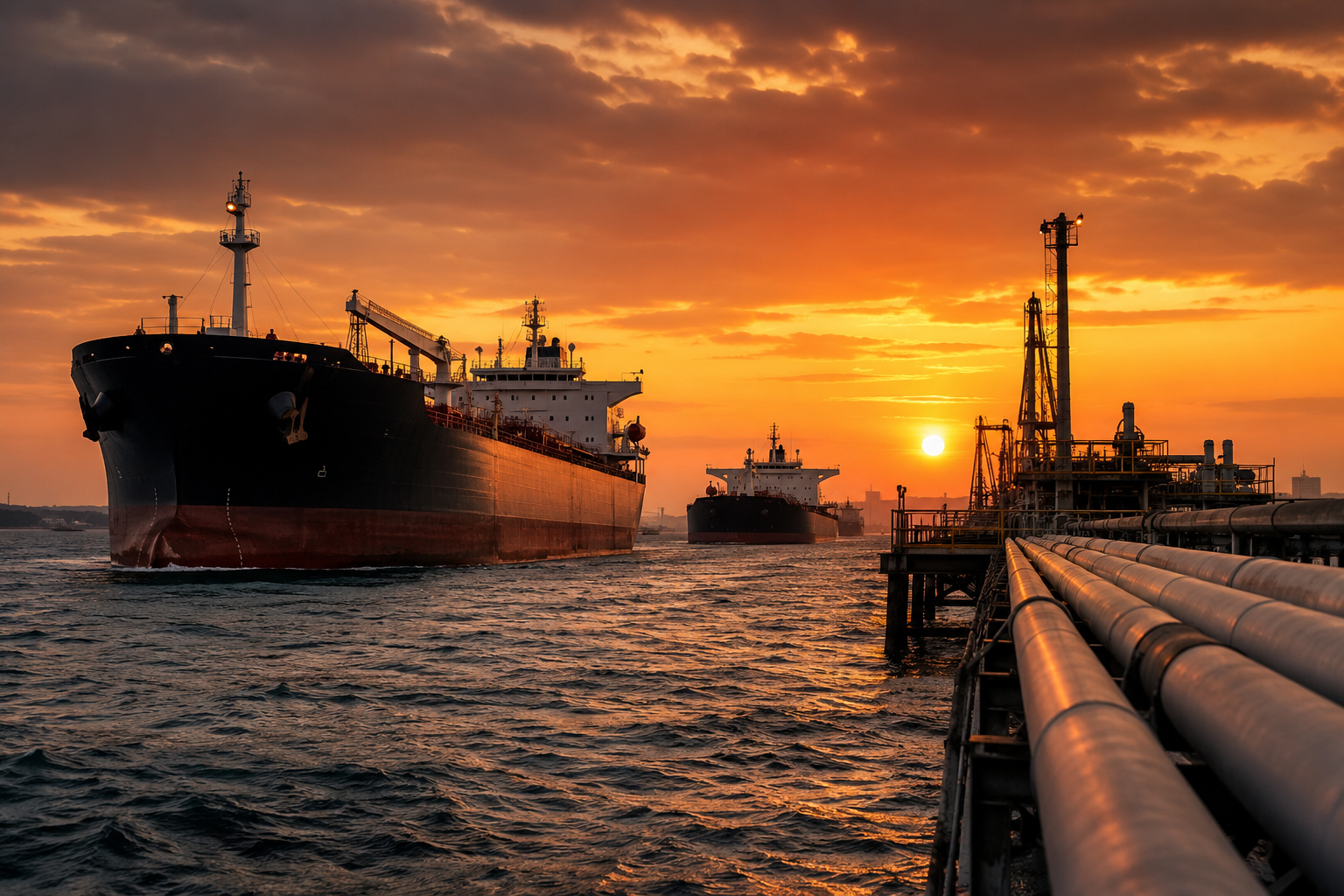
Brent crude approached $100 a barrel as attacks near vital maritime routes revived inflation concerns and forced investors to reconsider the durability of global energy supplies.
Oil prices surged Thursday as escalating conflict around the Middle East’s most important shipping corridors restored a geopolitical premium that traders had begun to discount only weeks earlier. Brent crude climbed more than 4% to above $98 a barrel, while West Texas Intermediate advanced toward $91, its highest level in roughly six weeks.
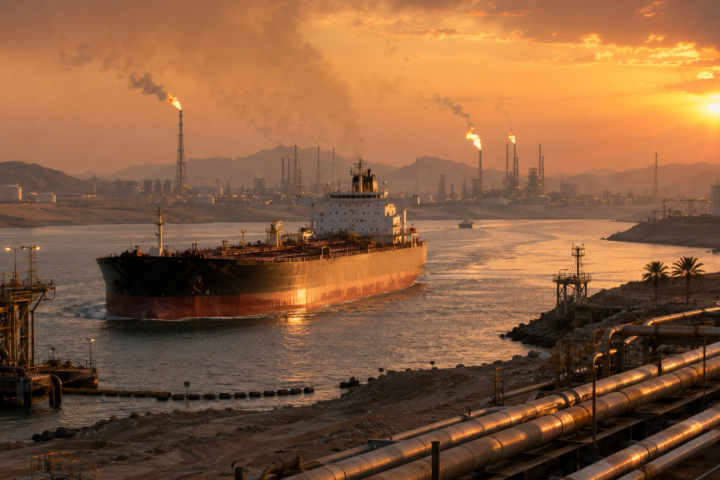
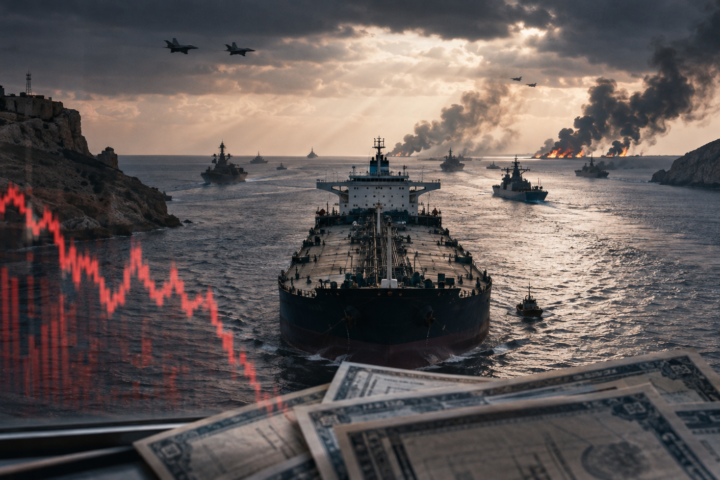
The latest advance followed reports of attacks on Saudi-linked tankers in the Red Sea, adding another layer of risk to an energy market already contending with restricted traffic through the Strait of Hormuz. The combination of insecurity around Hormuz and the Bab el-Mandeb Strait raises the possibility that disruptions could affect two separate gateways connecting Middle Eastern producers with customers in Europe, Asia and North America.
The immediate issue for the market is not simply whether physical production declines. Oil prices also reflect the cost and reliability of moving crude. Higher insurance premiums, fewer available tankers, longer routes around southern Africa and cautious shipping schedules can tighten effective supply even when wells continue operating.
That distinction helps explain the scale of Thursday’s move. Crude markets are reacting to the risk that barrels may become stranded, delayed or significantly more expensive to transport. Brent, the primary international benchmark, is especially sensitive to maritime conditions because it prices much of the oil flowing between regions.
The rally also marks a sharp reversal from early July, when Brent traded near $72 after an interim easing of tensions encouraged expectations that Gulf exports would gradually normalize. OPEC+ simultaneously agreed to raise August production by 188,000 barrels a day, extending a series of modest monthly increases. Those additions now look less consequential if shipping constraints prevent available supply from reaching refiners on schedule.
Energy producers were among the clearest potential beneficiaries. Exxon Mobil (XOM), Chevron (CVX), Shell (SHEL) and TotalEnergies (TTE) typically generate stronger cash flow when benchmark prices rise, particularly when production costs remain stable. The benefit, however, is uneven. Companies with heavy exposure to vulnerable shipping lanes can face logistical delays and higher operating expenses even as the value of their output increases.
Refiners face a more complicated calculation. Elevated crude prices can improve the value of inventories already on hand, but they also raise feedstock costs. Profitability depends on whether refiners can pass those costs to buyers through higher gasoline, diesel and jet-fuel prices. Valero Energy (VLO) and Marathon Petroleum (MPC) may therefore be influenced as much by refining margins as by the direction of crude itself.
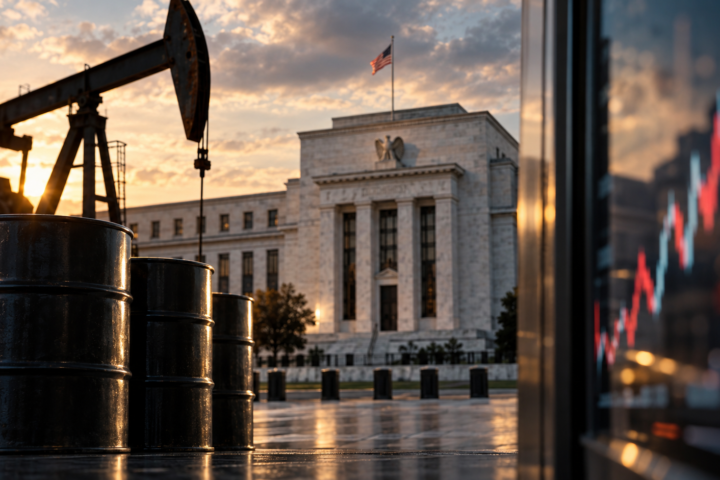
The broader consequences extend beyond the energy sector. Oil near $100 threatens to slow the disinflation process that has supported hopes for easier monetary policy in the United States and Europe. Transportation, plastics, chemicals, agriculture and manufacturing all depend directly or indirectly on petroleum products. A prolonged increase can work through supply chains and eventually reach consumers through higher fuel, freight and goods prices.
That risk is already appearing in financial markets. Government bond yields have moved higher as investors consider whether central banks may need to keep interest rates elevated for longer. A renewed energy shock would be particularly difficult for policymakers because it can raise inflation while simultaneously weakening household spending and business confidence.
Airlines are among the most exposed companies because fuel represents one of their largest variable expenses. Carriers such as Delta Air Lines (DAL), United Airlines Holdings (UAL) and American Airlines Group (AAL) can hedge part of their fuel exposure or raise fares, but neither response fully eliminates the pressure. Higher ticket prices may also weaken demand, particularly among leisure travelers.
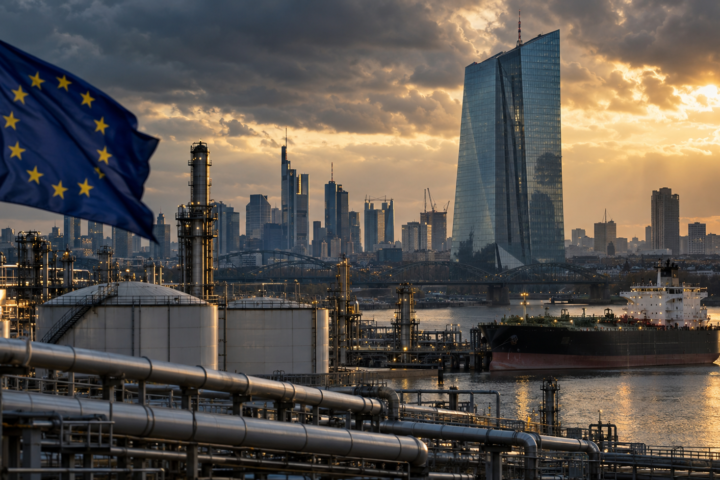
European economies may feel the impact more quickly because of their dependence on imported energy and their proximity to disrupted trade routes. Higher crude and natural-gas costs could challenge industrial companies already dealing with weak manufacturing demand. Utilities and chemical producers would also face renewed pressure if energy markets remain elevated into the autumn.
The strength in oil contrasted with a decline in gold, which fell about 1.7% during the session despite heightened geopolitical uncertainty. That divergence suggests investors were focusing more heavily on inflation and interest-rate implications than on traditional demand for defensive assets. Gold can struggle when bond yields rise because the metal provides no income, increasing the opportunity cost of holding it.
The next phase of the oil rally will depend on whether the disruption remains a risk premium or becomes a measurable supply shortage. A temporary shipping scare could fade quickly if vessels resume normal routes and diplomatic efforts gain traction. A sustained closure, repeated attacks or meaningful production losses would create a more severe imbalance.
OPEC’s latest market report showed Brent averaging about $84 a barrel in June, underscoring how rapidly conditions have shifted. The move toward $100 therefore represents more than a routine fluctuation. It reflects a market attempting to price a wider range of outcomes, including the possibility that Gulf infrastructure and shipping capacity could take much longer to normalize than investors previously assumed.
For consumers, the most visible effect would be at the fuel pump. Retail gasoline prices generally adjust with a lag, meaning a short-lived rally may have a limited impact. A sustained move above $95, however, would likely translate into higher transportation costs and reduced discretionary spending. Lower-income households would feel the pressure most acutely because fuel and food account for a larger portion of their budgets.
Investors must also distinguish between the headline price and the durability of the move. Energy stocks can rally sharply during geopolitical shocks, but valuations depend on how long elevated prices persist. Producers may hesitate to expand capital spending if they believe the increase is temporary, while shareholders may prefer additional dividends and buybacks.
Thursday’s rally shows that the oil market remains vulnerable even when reported supply appears adequate. Spare production capacity offers limited protection when transportation corridors themselves are threatened. Until shipping conditions stabilize, the geopolitical premium embedded in crude prices is likely to remain volatile, leaving equities, bonds and household finances increasingly sensitive to each new development around the region’s maritime chokepoints.