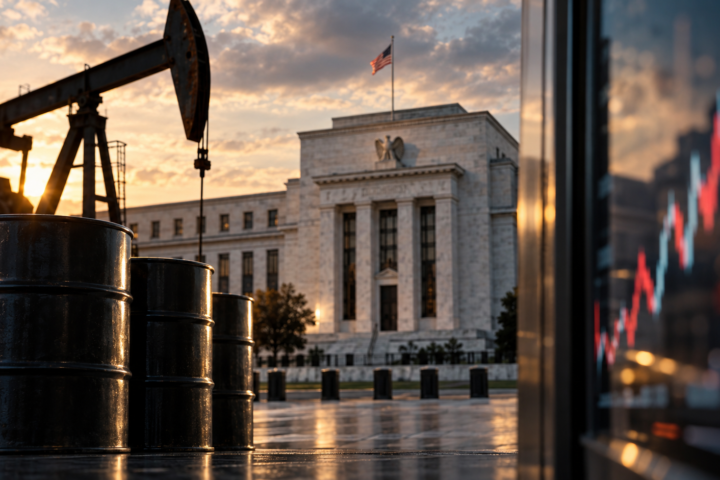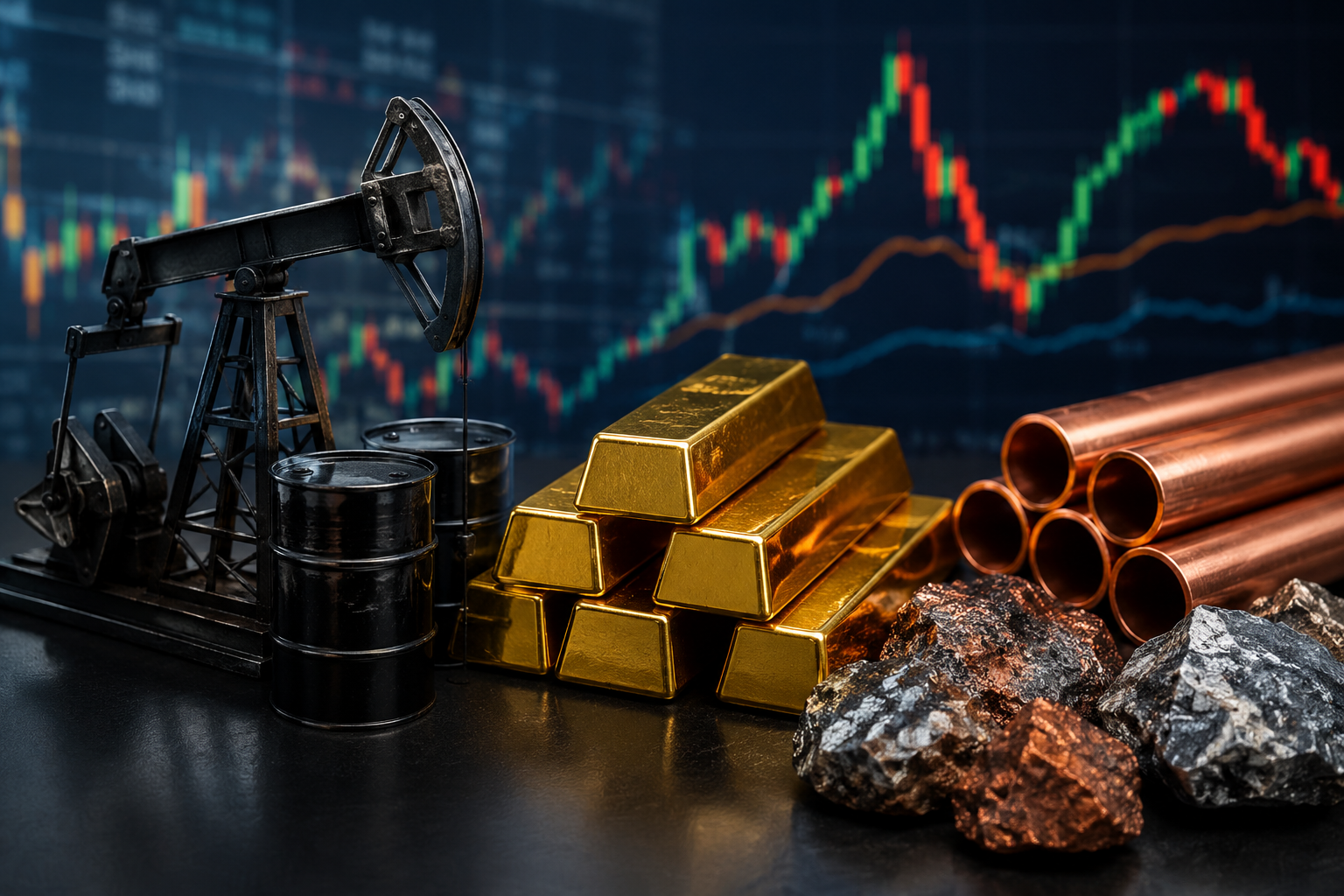
The reopening of Gulf shipping routes has shifted commodity markets from shortage pricing back toward interest-rate and demand fundamentals.
Oil’s sharp reversal this week has reminded investors that geopolitical risk can leave commodity markets as quickly as it arrives. After weeks in which energy traders focused on disrupted flows through the Strait of Hormuz, crude prices fell as shipping activity began normalizing and supply fears eased. West Texas Intermediate was on course for a steep weekly decline, with market reports pointing to losses of roughly 9% to 10% as traders unwound the war premium built into barrels during the Iran crisis.
The move has broad implications beyond the oil patch. Lower crude prices can soften inflation expectations, ease pressure on consumers and reduce input costs for transportation, chemicals and manufacturing. That is why the decline has been welcomed by equity investors even as it weighs on producers and energy-linked funds such as United States Oil Fund (USO), which traded near $114.87 in the latest U.S. session. The retreat does not necessarily signal a lasting bear market in energy, but it does show that the immediate fear of a sustained Gulf supply shock has faded.
Brent and WTI had surged earlier in the month as traders priced the risk that a prolonged closure of the Strait of Hormuz would disrupt one of the world’s most important energy corridors. That anxiety began to reverse after a U.S.-Iran peace framework raised expectations that shipping could resume more normally. The Guardian reported earlier this week that Brent had dropped toward a three-month low after the deal announcement, while follow-up commodity commentary indicated that flows were beginning to normalize.
For oil producers, the question is now whether prices settle into a range supported by OPEC discipline and steady emerging-market demand, or whether the unwind of geopolitical risk exposes softer consumption trends. The answer matters for integrated majors, shale drillers and refiners alike. A lower crude price can compress upstream earnings, but it may also improve refining margins and fuel demand if end-user prices fall. For now, the market appears to be repricing from a crisis scenario to a more conventional balance of supply, demand and inventories.
Gold has followed a similar path, though for different reasons. The metal fell as the fading Gulf risk premium collided with a more hawkish Federal Reserve backdrop. New York gold futures dropped to about $4,170 per troy ounce, while spot gold traded near $4,185 in recent market reports, pressured by expectations that interest rates may remain higher for longer.
That dynamic is important because gold offers no yield. When real interest rates rise or investors expect central banks to remain restrictive, the opportunity cost of holding bullion increases. SPDR Gold Shares (GLD), the largest U.S.-listed gold ETF, traded around $387.12, reflecting the broader pullback in precious metals. Yet gold’s decline should be kept in perspective. Even after recent losses, Trading Economics data showed gold still materially higher than a year earlier, underscoring how inflation concerns, central-bank buying and fiscal anxiety continue to support the long-term investment case.
The shift in rate expectations has already reached Wall Street forecasts. Goldman Sachs reportedly cut its year-end 2026 gold forecast by $500, citing delayed expectations for Federal Reserve rate cuts and a more restrictive policy outlook. That downgrade captures the market’s central tension: gold remains structurally supported by geopolitical uncertainty and central-bank demand, but its near-term path has become more vulnerable to higher yields and a stronger dollar.
Copper, meanwhile, is caught between cyclical pressure and structural optimism. Prices slipped in recent trading as the stronger dollar and tighter-rate narrative weighed on industrial metals. Trading Economics showed copper lower on June 19, though still up substantially from a year earlier, while market reports cited softer sentiment after the Fed’s hawkish turn.
That pullback hit sentiment around miners such as Freeport-McMoRan (FCX), which traded near $68.68 in the latest U.S. session. Freeport remains one of the most direct large-cap U.S. equity proxies for copper prices, making its shares sensitive to shifts in both global growth expectations and long-term electrification demand.
The bullish argument for copper has not disappeared. Data-center buildouts, grid upgrades, electric vehicles and power infrastructure remain copper-intensive. Artificial-intelligence infrastructure, in particular, is creating a new source of demand for electrical equipment, cabling and power systems. But copper is also a macro-sensitive commodity. When investors see a higher-for-longer rate environment, they often reassess construction activity, industrial demand and China-linked consumption before paying up for future scarcity.
Agricultural and soft commodities added another layer of weakness. Cocoa prices came under pressure, with New York futures reportedly falling as much as 4%, suggesting that some of the speculative heat in the broader commodity complex is easing.
Taken together, the message from commodities is no longer one of uniform scarcity. Energy is losing its geopolitical premium, gold is losing some of its safe-haven bid, and copper is being pulled between long-term demand optimism and short-term macro restraint. That combination is favorable for inflation-sensitive sectors, but it creates a more selective environment for commodity investors.
The clearest near-term winners are consumers, airlines, freight operators and manufacturers that benefit from lower energy costs. The losers are producers whose earnings assumptions were lifted by crisis pricing. For portfolio managers, the challenge is deciding whether this week’s commodity selloff is simply a relief rally in reverse or the start of a broader rotation away from inflation hedges.
The answer may depend less on the Strait of Hormuz than on the Federal Reserve. If policymakers keep rates restrictive, precious and industrial metals could remain under pressure even as oil stabilizes. If lower energy prices feed into cooler inflation data, rate-cut expectations may eventually return, giving gold and copper a fresh bid. For now, commodities are trading less like a war hedge and more like a macro asset class again.