A pullback in crude prices offered investors a pause from Middle East-driven inflation fears, but global markets remain exposed to energy shocks, policy uncertainty, and uneven growth.
Global markets found temporary relief Tuesday as oil prices retreated and risk appetite improved, but the broader investment backdrop remained shaped by a familiar and uncomfortable mix: geopolitical tension, sticky inflation risk, and central banks with limited room to reassure investors.
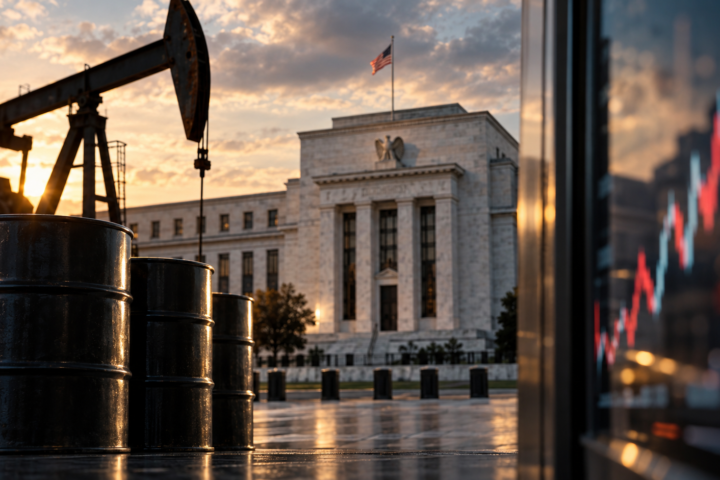
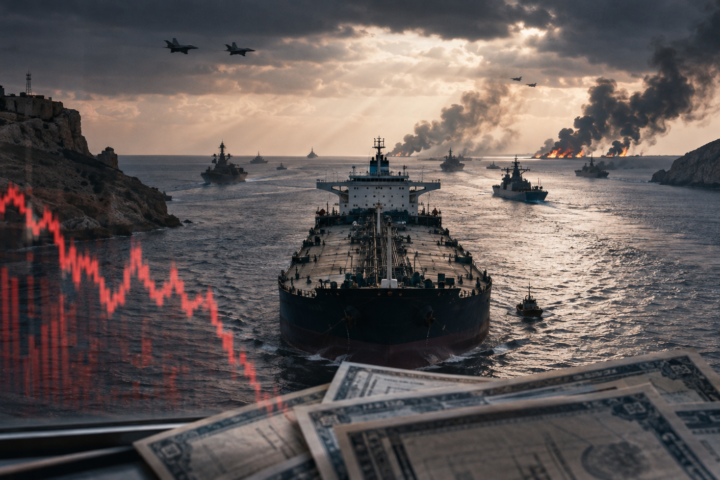
The immediate catalyst was a decline in crude prices after recent Middle East tensions had lifted energy markets and unsettled bonds. Brent crude fell back toward the low $90s a barrel, easing pressure on equities that had been hit by fears of a renewed oil shock. U.S. equity futures pointed higher, Asian technology shares advanced, and most European bourses gained ground, although the tone was more cautious than celebratory. Investors were not pricing in a clean resolution so much as a pause in a damaging feedback loop between oil, inflation expectations, and bond yields.
The central issue for markets is that energy prices have again become a macroeconomic variable with global reach. A sustained rise in fuel costs would act as a tax on consumers, compress margins for transport and industrial companies, and complicate the work of central banks still trying to return inflation to target. For airlines, logistics operators, chemical producers, and retailers, crude’s latest swings are not abstract market noise. They affect ticket prices, freight costs, inventory decisions, and profit guidance. Delta Air Lines (DAL), which is highly sensitive to jet fuel prices and consumer demand, has become one of the clearer listed proxies for how investors are judging the real-economy cost of geopolitical risk.
The rebound in risk assets also reflected hopes that diplomacy could keep the region’s energy infrastructure from becoming a deeper market shock. Yet investors have learned to treat such optimism carefully. Even when crude prices fall for a session, the risk premium embedded in energy markets can persist if shipping lanes, refinery capacity, or regional alliances remain uncertain. That matters because a volatile oil market can restrain equity valuations even when corporate earnings remain solid. It also limits the extent to which government bonds can play their traditional role as a portfolio hedge, since higher oil prices tend to lift inflation expectations and push yields upward rather than downward.
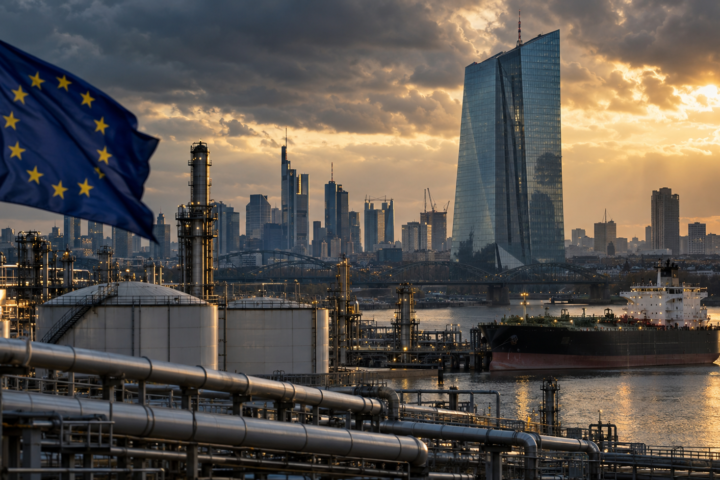
Europe is especially exposed to that trade-off. The region entered the latest bout of uncertainty with weak industrial momentum, fragile household confidence, and ongoing pressure on energy-intensive manufacturers. Tuesday’s stronger-than-expected German industrial output reading offered a welcome sign that activity may be stabilizing, but it did not fully change the narrative. Europe remains more vulnerable than the U.S. to imported energy inflation, and that vulnerability affects both company earnings and fiscal policy. For investors in Volkswagen (VWAGY), BASF (BASFY), and other cyclically exposed European names, the question is whether lower energy prices can last long enough to support a more durable recovery in margins.
The U.S. is better insulated by domestic energy production, but not immune. Higher gasoline and diesel prices still influence consumer behavior, inflation expectations, and the Federal Reserve’s policy calculus. With Treasury yields already elevated, the market’s tolerance for additional inflation surprises is limited. That is why the retreat in crude helped equities, but did not produce a decisive broad-market breakout. Investors remain aware that the same forces supporting energy producers such as Exxon Mobil (XOM) can weigh on airlines, retailers, small businesses, and households.
Asia’s reaction showed a different side of the global story. Technology-heavy markets benefited from renewed appetite for chip shares and artificial-intelligence-linked demand, with South Korean and Taiwanese equities drawing support from semiconductor optimism. That helped offset some of the pressure from energy-import exposure. Still, for countries dependent on imported crude, a sustained oil spike would weaken trade balances, pressure currencies, and potentially force policymakers to defend price stability at the expense of growth. The rally in technology shares therefore sits beside, rather than replaces, the macro concern around energy.
The broader economic backdrop remains subdued. The United Nations’ midyear outlook points to global growth of 2.5% in 2026, below earlier expectations and well under the pace that prevailed before the pandemic era. That forecast reflects a world economy still absorbing repeated shocks, including the latest Middle East crisis, higher uncertainty, and renewed inflation pressure. For markets, the significance is not simply that growth is slower. It is that slower growth gives companies less room to absorb cost increases and gives policymakers fewer easy choices.
That leaves investors in a market that can rally on relief but remains hard to trust. Lower oil prices can lift airlines, consumer stocks, and broad equity benchmarks such as SPDR S&P 500 ETF Trust (SPY). But the same rally can fade quickly if energy markets reverse, bond yields climb, or central banks signal less willingness to cut rates. The result is a world market increasingly driven by short bursts of optimism followed by renewed scrutiny of inflation, growth, and geopolitical risk.
The clearest takeaway from Tuesday’s trading is that investors are not abandoning risk. They are repricing it more frequently. Equity markets still have support from corporate earnings, technology investment, and resilient labor markets in several major economies. But the margin for disappointment has narrowed. In a calmer environment, a decline in oil would be treated as an outright positive for growth. In the current environment, it is better understood as a reprieve from a threat that has not disappeared.
For global portfolios, that argues for balance rather than retreat. Energy producers may still provide a hedge against geopolitical shocks, while quality industrials and consumer companies could benefit if crude stabilizes. Technology remains supported by structural spending, but high valuations make the sector vulnerable to any rise in real yields. Bonds offer income, yet their defensive role is complicated when inflation risk comes from supply shocks rather than weak demand.
The world economy is not in crisis, but it is operating with less protection against new shocks. Tuesday’s oil-led relief rally showed that markets are still willing to look through geopolitical stress when prices move in the right direction. It also showed how dependent that confidence has become on conditions that can change quickly: stable energy flows, contained inflation expectations, and central banks that can hold policy steady without losing credibility.