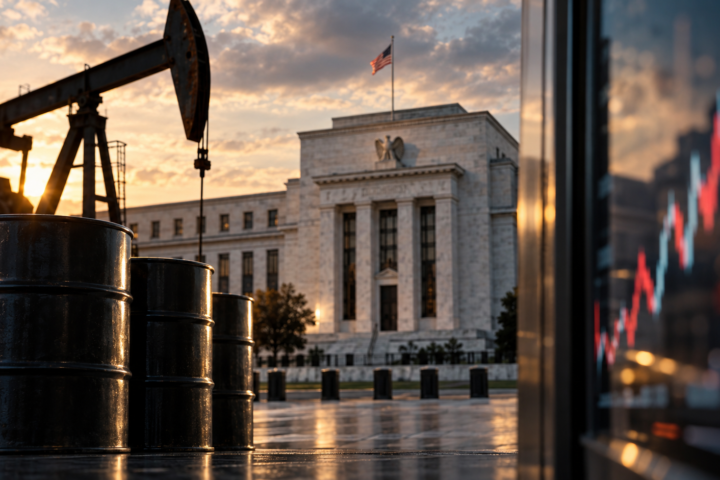
A fresh jump in crude prices and bond yields put global equities under pressure, testing investor confidence in the rally led by technology shares.
Global markets moved back into defensive mode Wednesday as renewed Middle East tensions pushed oil prices higher, lifted government bond yields and challenged the assumption that investors could look through geopolitical risk. The shift was broad rather than isolated: U.S. equity futures weakened, European stocks fell, energy benchmarks climbed and long-duration bonds sold off, leaving investors to weigh whether a short-term shock could become a more durable inflation problem. SPDR S&P 500 ETF Trust (SPY), the broad U.S. equity proxy, was lower in premarket trading, while Invesco QQQ Trust Series 1 (QQQ) fell more sharply as the pressure again landed hardest on richly valued technology shares.
The immediate catalyst was a renewed surge in oil prices after fears intensified that a cease-fire involving the U.S. and Iran had broken down. Brent crude was reported up more than 5%, with energy markets reacting to fresh concerns around the Strait of Hormuz, a critical route for global petroleum shipments. That move revived a familiar and uncomfortable market sequence: higher oil prices raise inflation expectations, inflation anxiety pushes yields higher, and higher yields compress equity valuations, especially in growth sectors where expected profits are weighted further into the future.
The U.S. equity market had already shown signs of fatigue on Tuesday, when the S&P 500 fell 0.4%, the Nasdaq Composite dropped 1.2% and the Dow Jones Industrial Average slipped 0.2%. The weakness was concentrated in artificial-intelligence and semiconductor-linked shares, a group that has carried a large share of the market’s gains this year. That concentration matters because it leaves the broader index more vulnerable when investors reassess valuations in the most crowded trades. The S&P 500 remained up strongly for the year, but the latest decline suggested the market’s tolerance for bad news had narrowed.
By Wednesday morning, the pressure had extended into futures, with contracts tied to the S&P 500 and Dow Jones Industrial Average down more than 1% and Nasdaq 100 futures off about 1.6%. The move was not simply a reaction to the headline risk of conflict. It also reflected a repricing of macroeconomic assumptions that had underpinned the recent rally, including the idea that inflation would continue to cool, central banks would retain room to ease policy, and corporate margins could remain resilient even as economic growth slowed. Higher energy costs complicate each part of that thesis.
The bond market reinforced the message. iShares 20+ Year Treasury Bond ETF (TLT), a proxy for long-duration U.S. government bonds, declined as yields rose, showing that investors were not treating the episode as a simple flight-to-safety event. In a classic geopolitical scare, Treasurys often rally as investors seek shelter. This time, the inflationary nature of an oil shock appeared to offset that impulse. Rising yields can become a direct headwind for equities because they increase the discount rate applied to future earnings and give investors a more competitive alternative to stocks.
Europe faced the same squeeze. Eurozone equities fell, with the EU50 index down nearly 1.9%, while bond yields in the region moved toward one-month highs as higher oil prices fed expectations that the European Central Bank could face renewed inflation pressure. That response is particularly important for European investors because the region is more exposed to imported energy costs than the U.S. A sustained rise in crude and gas prices can weaken consumer purchasing power, raise industrial costs and limit the ability of policymakers to support growth.
The market’s challenge is that the oil shock arrived at a moment when equity valuations already reflected considerable optimism. Technology and AI-linked stocks had been priced for continued earnings strength, capital spending growth and stable financing conditions. Those assumptions may still hold over the medium term, but they are harder to defend when yields rise abruptly and investors start to question whether margins can absorb higher input costs. The drop in QQQ, steeper than the move in SPY, showed the market distinguishing between broad risk exposure and the more rate-sensitive parts of the equity universe.
For investors, the key question is whether the move in oil becomes a short-lived geopolitical premium or the start of a broader inflation repricing. If crude stabilizes and shipping risks ease, the equity market could regain its footing quickly, particularly if earnings remain solid and central-bank communication stays measured. But if energy prices continue to rise, the market may need to adjust to a less favorable mix of slower growth, stickier inflation and higher nominal yields. That would likely favor energy producers, defensive cash-flow businesses and companies with pricing power, while pressuring speculative growth stocks and highly leveraged balance sheets.
The coming test will be whether corporate earnings can redirect attention back to fundamentals. A market led by a narrow group of technology giants can withstand periodic pullbacks, but it becomes more fragile when macro shocks challenge the valuation framework for those same leaders. The latest session did not signal a collapse in risk appetite, but it did mark a shift in tone. Investors are again being reminded that geopolitics can matter most when it changes the path of inflation, interest rates and liquidity.