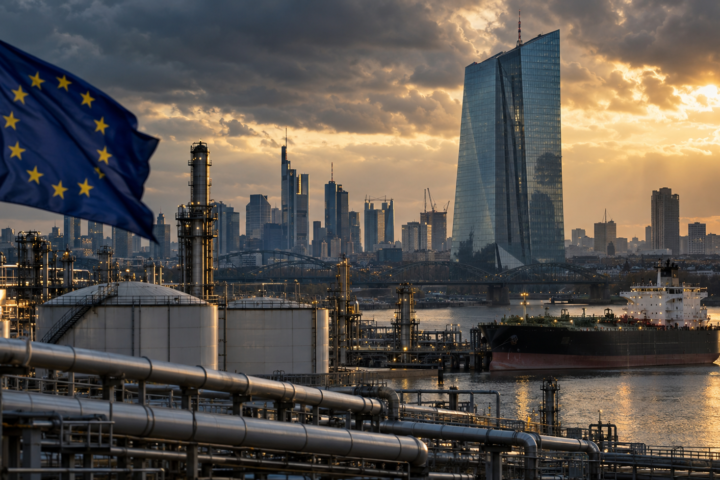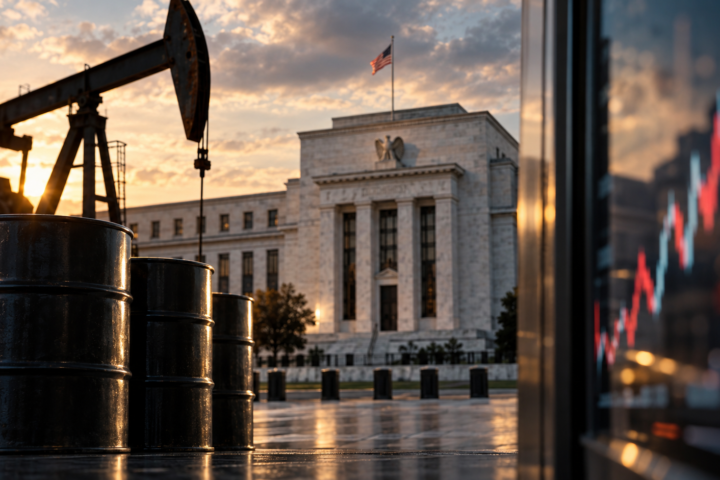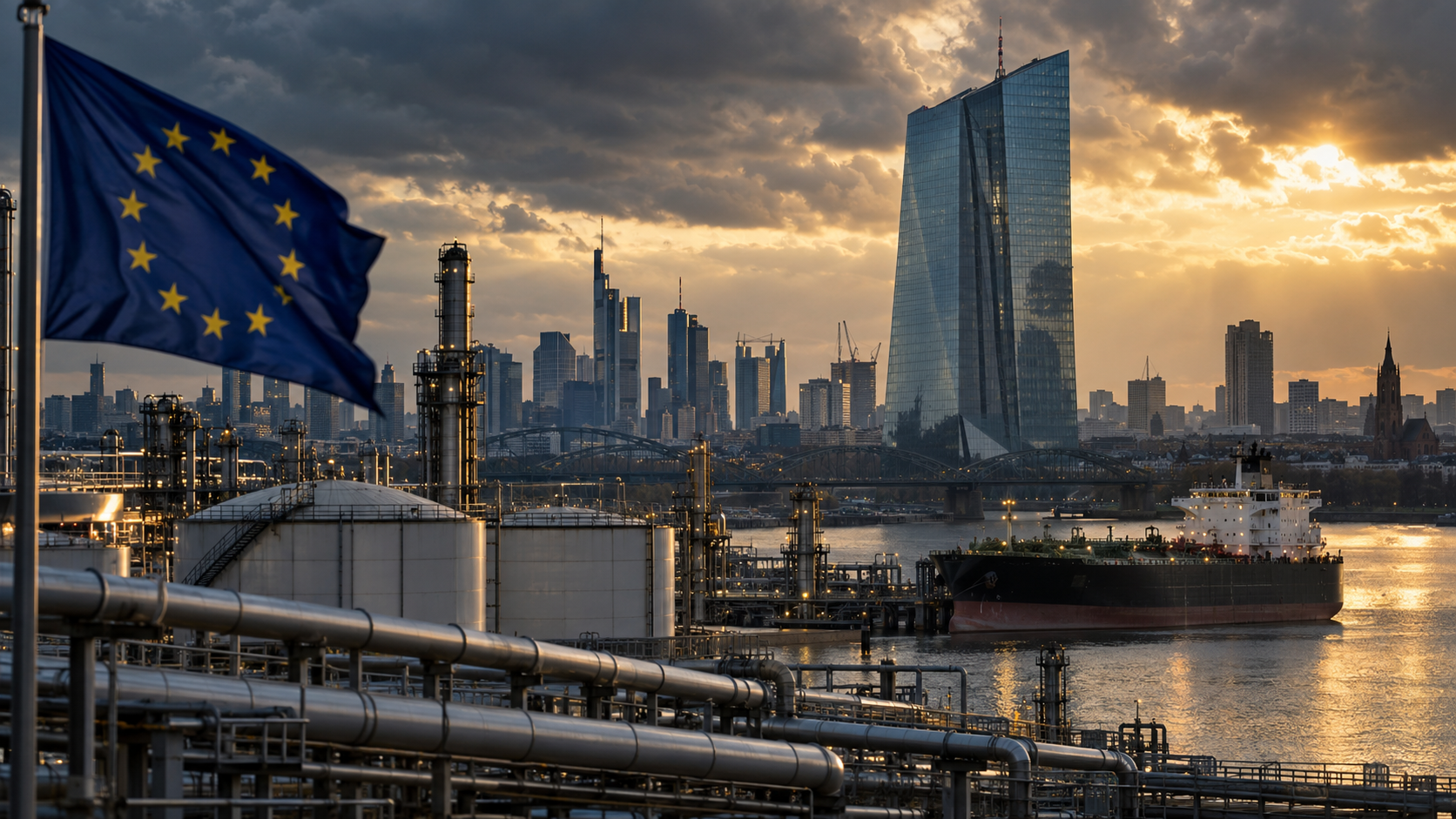
The European Central Bank’s quarter-point increase underscores how renewed Middle East energy disruption is forcing policymakers to confront inflation even as higher borrowing costs threaten global growth.
The European Central Bank raised its benchmark deposit rate by 25 basis points to 2.5% on Thursday, responding to an inflation shock increasingly shaped by the renewed surge in energy prices. The move, the ECB’s second rate increase since June, came as Brent crude traded above $100 a barrel and conflict involving the United States and Iran threatened further disruption to shipping and energy supplies around the Strait of Hormuz. Euro-area inflation reached 3.3% in August, well above the central bank’s 2% target.
The combination represents an uncomfortable return of a problem policymakers had hoped was receding: inflation caused by a supply shock rather than excessive domestic demand. Higher interest rates can restrain consumer spending, credit creation and business investment, but they cannot restore tanker traffic or produce additional barrels of crude. That leaves the ECB attempting to prevent an external energy shock from spreading into wages, services and broader inflation expectations without inflicting unnecessary damage on an economy that has so far remained comparatively resilient.
The distinction matters because underlying inflation has been moving in a more favorable direction. Core euro-area inflation, excluding volatile food and energy components, eased to 2.4% in August from 2.5%, while services inflation slowed to 3% from 3.3%. Energy inflation, by contrast, accelerated sharply. The data suggest the immediate inflation problem remains concentrated rather than broadly embedded, making Thursday’s rate increase partly an attempt to insure against future second-round effects rather than a response to an overheated European economy.
Oil is complicating that calculation. Brent crude was trading around $101 to $102 a barrel Thursday after closing above $100 for the first time since July. The benchmark has risen sharply as renewed attacks on shipping and energy infrastructure revived fears that Middle Eastern exports could remain restricted. Traffic through the Strait of Hormuz, which before the conflict handled roughly one-fifth of global oil and gas supplies, remains well below normal levels.
The consequences extend far beyond Europe. Energy-importing countries across Asia face higher transportation, manufacturing and electricity costs, while central banks that had expected inflation to moderate are being forced to reconsider how quickly monetary policy can return to easier settings. Higher oil prices also redistribute income toward energy exporters while reducing household purchasing power in importing economies, acting simultaneously as an inflationary force and a potential drag on consumption.
Financial markets have already begun reflecting that tension. Stocks across Europe and Asia broadly retreated Thursday following losses on Wall Street, where the S&P 500 fell about 0.5% in the previous session, the Dow Jones Industrial Average dropped about 0.8%, and the Nasdaq Composite declined roughly 0.6%. Energy shares were among the relative beneficiaries, while sectors sensitive to household spending and borrowing costs came under greater pressure.
Oil producers illustrate the increasingly uneven investment landscape. Exxon Mobil (XOM) and other major energy companies can benefit from stronger crude prices and wider upstream margins, particularly if Middle Eastern supply disruptions persist. For airlines, chemical producers, manufacturers and transportation companies, however, sustained oil above $100 raises operating costs and can squeeze margins unless those expenses can be passed to customers. The same shock can therefore support energy-sector earnings while weakening the broader corporate profit outlook.
Bond markets face an equally difficult adjustment. The renewed energy shock has pushed inflation concerns back into long-term yields at a time when governments in the United States and Europe are already financing large fiscal requirements. U.S. 10-year Treasury yields recently moved toward their highest levels since 2023, illustrating how investors are demanding greater compensation for inflation and duration risk. Persistent high yields would tighten financial conditions even without additional central-bank action, increasing mortgage rates, corporate borrowing costs and governments’ debt-service burdens.
That dynamic raises the possibility that monetary policy becomes synchronized in the wrong direction for growth. The Federal Reserve meets next week with U.S. inflation data under intense scrutiny, while investors have also been assessing the possibility of additional tightening from other major central banks. The oil shock means policymakers are no longer simply deciding how quickly to normalize rates after the inflation surge of the early 2020s. They must determine whether another supply-driven increase in prices is temporary enough to tolerate or persistent enough to require tighter policy.
For Europe, the next stage will depend heavily on how long oil remains elevated. If shipping conditions improve and crude prices retreat, the ECB could argue that Thursday’s increase was an insurance measure designed to protect inflation expectations. If energy prices remain above $100 or climb further, policymakers may face pressure to tighten again even as households and companies absorb rising fuel and financing costs.
The broader global risk is therefore not simply expensive oil. It is the interaction between geopolitical disruption, inflation and restrictive financial conditions. A prolonged energy shock could weaken growth while preventing central banks from cutting rates, creating a difficult environment for equities, bonds and consumers simultaneously. Conversely, any durable reduction in Middle Eastern tensions could quickly remove one of the strongest forces currently pushing global inflation expectations higher.
For investors, the ECB’s decision is an early indication of how policymakers may respond if that relief fails to arrive. The world economy has demonstrated resilience through repeated geopolitical and monetary shocks, but $100 oil is again testing the boundary between manageable inflation volatility and a more persistent challenge to price stability.