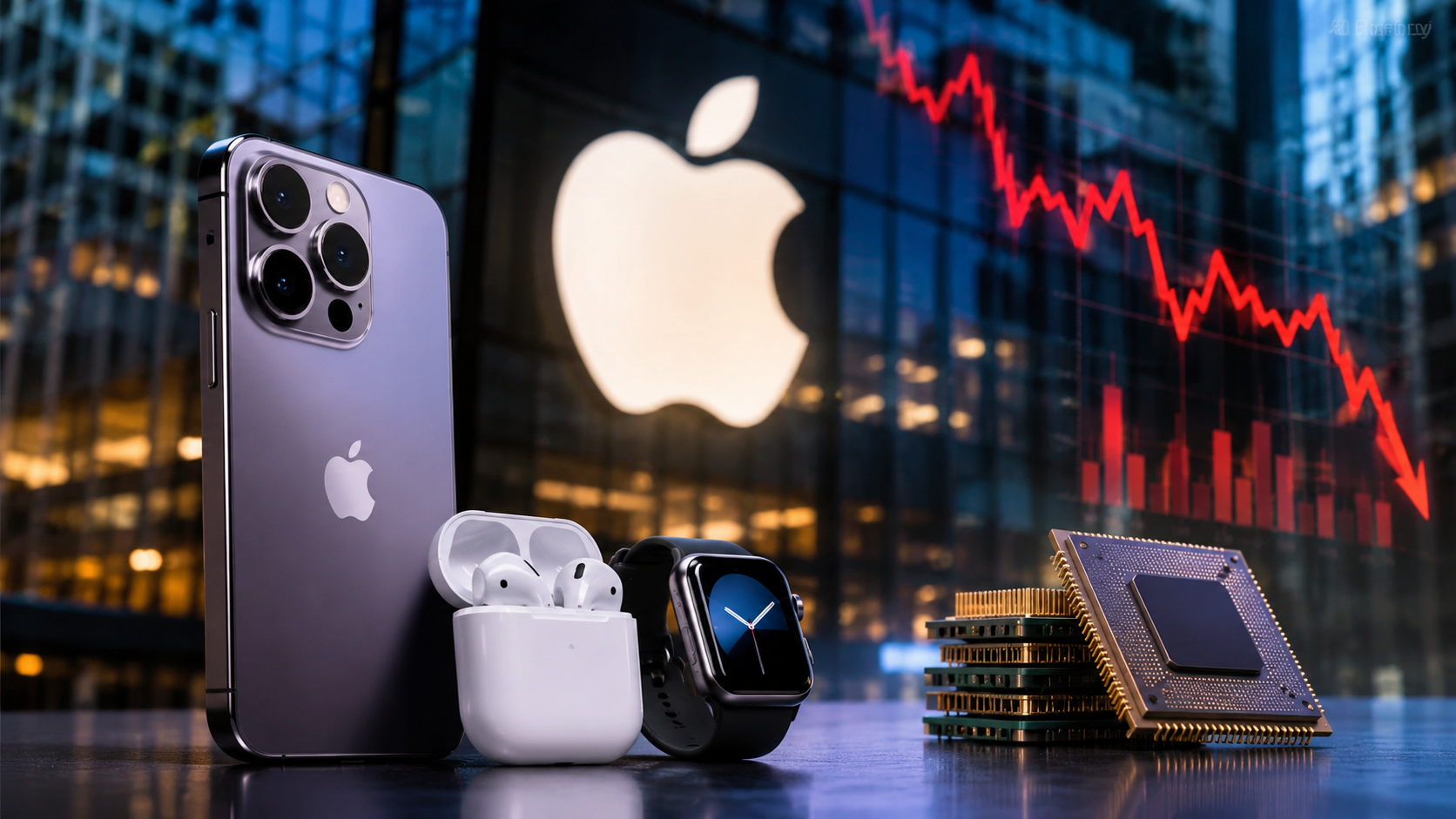
Apple’s latest earnings report delivered a familiar message with an increasingly important twist: demand for its products remains strong, but the cost of producing them is rising. The technology giant exceeded Wall Street’s expectations for its September quarter, supported by strong iPhone 18 Pro sales. Yet its warning about higher memory-chip prices has raised fresh concerns about profitability during the crucial holiday shopping season.
For investors, the development highlights a growing tension across the technology industry. Artificial intelligence is creating enormous opportunities for semiconductor manufacturers, cloud providers and technology companies, but the infrastructure required to support AI is also increasing demand for essential computing components. As memory prices climb, manufacturers of consumer electronics could face a more difficult balancing act between maintaining competitive prices and protecting profit margins.
Apple’s guidance therefore offers a useful indication of how the AI investment boom may affect companies beyond the semiconductor industry.
Strong Quarterly Results Provide a Positive Starting Point
Apple reported fiscal fourth-quarter revenue of $114.48 billion, representing approximately 12% growth compared with the same period a year earlier. The result exceeded analysts’ expectations of approximately $113.39 billion, according to Reuters, demonstrating continued demand for the company’s flagship products.
Earnings performance was similarly encouraging. Apple reported diluted earnings per share of $2.10, above the analyst estimate of $1.99. Net income reached approximately $30.71 billion, compared with $27.47 billion in the year-earlier quarter.
The iPhone business remained a major contributor. Revenue from iPhone sales reached approximately $57.58 billion, exceeding market expectations as early demand for the iPhone 18 Pro lineup supported performance.
Apple also reported quarterly Mac revenue of approximately $10.79 billion, while its Services business generated $31.57 billion. Services revenue reached another record, reinforcing the importance of Apple’s expanding digital ecosystem.
However, not every business segment performed equally well. iPad and wearable-device revenue fell short of analysts’ expectations, suggesting that growth remains concentrated in particular product categories.
The results demonstrate that Apple’s brand strength, customer loyalty and product ecosystem continue to support its financial performance. Nevertheless, the company’s forward guidance has become the more important consideration for investors.
Rising Memory Costs Threaten Holiday-Quarter Profitability
The central concern emerged when Apple outlined its expectations for the December quarter, traditionally one of its most important periods because of holiday shopping and seasonal demand.
Management expects gross margin to fall to approximately 45%–46%, compared with 47.9% in the September quarter.
Gross margin measures the percentage of revenue remaining after accounting for the direct costs associated with producing goods and delivering services. A decline means that Apple could retain a smaller share of each sales dollar before operating expenses and other costs.
The company specifically identified rising memory-chip prices as a major contributor to the expected decline.
According to Reuters, Apple CEO John Ternus described current memory pricing conditions as unprecedented. Management indicated that memory costs are expected to increase further during the December quarter and could remain a challenge beyond the holiday season.
Apple has already taken steps to reduce the impact. The company increased prices on certain Mac and iPad products earlier in the year and adjusted iPhone pricing in September. These changes provide some protection against higher component expenses.
It is also benefiting from previously purchased inventory, which allows some products to incorporate components acquired at lower prices.
However, these advantages may become less significant over time as older inventory is replaced with more expensive supplies.
This creates a potential profitability challenge even if consumer demand remains healthy.
How the AI Boom Is Affecting Consumer Electronics
The pressure on Apple’s margins reflects a broader development within the global technology supply chain.
Artificial intelligence requires substantial computing resources. AI data centers depend on advanced processors, high-bandwidth memory and other specialized semiconductor components to train and operate increasingly sophisticated systems.
As technology companies expand their AI infrastructure, competition for certain memory products has intensified. This can create supply constraints and pricing pressure for manufacturers that depend on memory components across smartphones, laptops, tablets and other electronic devices.
The situation creates different outcomes for different parts of the technology industry.
Companies supplying memory chips may benefit from stronger demand and improved pricing conditions. On the other hand, consumer electronics manufacturers could experience higher production expenses if component prices increase faster than their ability to adjust retail prices.
Apple is particularly important in this context because of its enormous purchasing scale. Its experience suggests that even financially powerful companies with established supplier relationships are not entirely protected from changes in semiconductor market conditions.
For investors, the key question is whether AI-related demand will continue to push component costs higher and how quickly the consumer electronics industry can adapt.
Why This Matters for Investors
Apple’s latest guidance matters because the company is one of the most influential businesses in the global stock market. Its financial performance can influence investor sentiment toward consumer technology, semiconductor suppliers and the broader technology sector.
There are three important considerations.
1. Revenue growth does not automatically translate into higher profitability.
Apple’s September-quarter results demonstrated strong sales growth. However, the expected decline in gross margin shows that higher production costs can reduce the financial benefits of increased revenue.
Investors should therefore examine gross margin alongside revenue growth and earnings per share when evaluating technology companies.
2. Semiconductor suppliers could benefit from pricing strength.
The rising demand for memory components creates opportunities for companies positioned to supply the expanding AI infrastructure market.
However, investors should distinguish between memory manufacturers benefiting from favorable pricing and electronics companies facing higher purchasing expenses. Their financial exposure to the same market trend can be very different.
3. Consumer demand and pricing power will become increasingly important.
Apple’s ability to increase selected product prices has helped offset rising costs. However, repeatedly passing expenses to customers may become difficult if consumers become more price-sensitive.
The company’s ability to maintain sales volumes while protecting margins will be an important indicator of its competitive strength.
Apple’s Strategy: Protecting Margins While Securing Supply
Apple is not simply accepting higher component costs. Management has been working to secure supplies and manage purchasing commitments to reduce the risk of shortages.
Reuters reported that Apple’s manufacturing purchase obligations increased by approximately $33 billion between June and September, reflecting efforts to improve supply availability.
The company is also benefiting from its large installed base of active devices and the recurring revenue generated through services. These businesses provide additional sources of financial strength beyond hardware sales.
Nevertheless, the strategy carries its own challenges. Securing larger quantities of components can require substantial financial commitments, while holding additional inventory can increase working-capital requirements.
Investors should monitor whether these purchasing decisions translate into more reliable product availability and improved long-term profitability.
The rollout of Apple’s AI-enhanced Siri also introduces another consideration. AI capabilities require computing resources and infrastructure, meaning that the company’s investment in new software experiences could create additional expenses.
Apple must therefore balance three priorities: maintaining product innovation, securing component supplies and protecting its historically strong profitability.
Future Trends Investors Should Watch
Several developments could determine whether the current margin pressure becomes a temporary challenge or a longer-term issue.
- Memory-chip pricing: Continued increases could put additional pressure on consumer electronics manufacturers throughout 2027.
- Holiday-quarter demand: Strong iPhone and Mac sales could help offset higher component expenses through increased revenue.
- Gross-margin recovery: Investors should watch whether Apple’s margins stabilize once supply costs and product pricing become more favorable.
- AI infrastructure spending: Further investment by major technology companies could sustain demand for memory and advanced semiconductor products.
- Consumer purchasing behavior: Higher device prices could affect upgrade cycles and demand, particularly in more price-sensitive markets.
The next few earnings reports from Apple and other major electronics manufacturers should provide important evidence about how widespread these pressures have become.
Key Investment Insight: Look Beyond Apple’s Revenue Growth
Apple’s latest results reinforce the importance of separating business growth from profitability. Strong iPhone demand and higher quarterly revenue are encouraging, but the projected reduction in gross margin suggests that rising component costs could limit earnings potential.
For investors following the technology sector, memory-chip manufacturers and semiconductor suppliers deserve attention because they may benefit from sustained AI-related demand. Consumer electronics manufacturers, meanwhile, should be assessed according to their pricing power, supplier relationships, inventory management and ability to maintain margins.
Apple remains a financially powerful company with a substantial customer base, a diversified ecosystem and significant cash-generating capabilities. However, its latest guidance demonstrates that even market-leading businesses must adapt when supply-chain economics change.
Rather than treating the margin warning as an isolated Apple issue, investors should view it as an important signal about the changing economics of the technology industry.
As the AI investment cycle continues to reshape semiconductor demand and manufacturing costs, understanding which companies benefit from higher component prices—and which ones absorb them—will become increasingly important.
Stay informed with Stockmarket-news for the latest business developments, technology industry analysis and investor-focused insights shaping global financial markets.