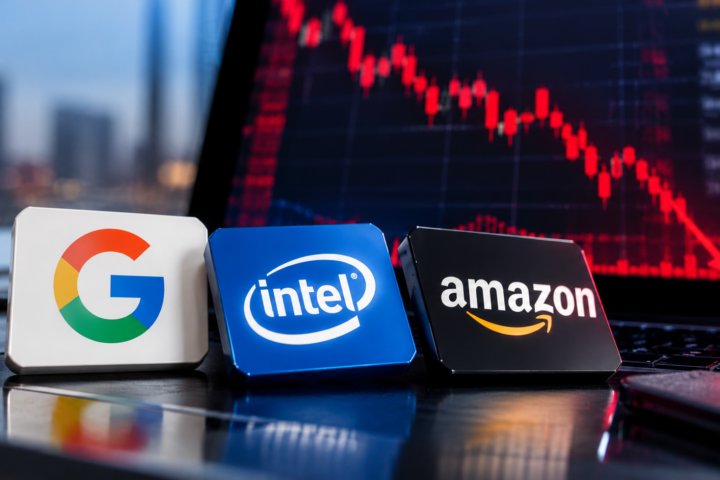
Technology stocks face renewed selling pressure as Qualcomm disappoints on smartphone-chip sales and investors reassess the risks surrounding America’s artificial intelligence infrastructure boom.
The artificial intelligence investment boom is facing another reality check on Wall Street. Just one day after U.S. equities rallied following the country’s midterm elections, semiconductor manufacturers and AI infrastructure companies found themselves under renewed pressure, exposing a growing divide between technology companies benefiting from AI and those supplying the infrastructure needed to support it.
On Thursday, November 5, U.S. stock futures pointed toward a mixed trading session. Nasdaq 100 futures declined approximately 0.78%, while Dow futures advanced 0.61% and S&P 500 futures edged up 0.1%. The contrasting movements highlighted how investors were becoming more selective about technology exposure rather than treating the entire AI industry as a single growth opportunity.
The immediate pressure came from two directions: Qualcomm’s weaker-than-expected smartphone-chip outlook and growing concerns that political and regulatory developments could complicate the expansion of data centers across the United States.
For investors, the latest developments raise an important question: Is Wall Street beginning to distinguish between companies generating sustainable returns from artificial intelligence and businesses whose valuations depend heavily on continued infrastructure expansion?Reuters+2
Wall Street’s Post-Election Optimism Meets Technology-Sector Reality
Wednesday’s market rally initially suggested that investors were welcoming the outcome of the U.S. midterm elections. However, Thursday’s futures movements demonstrated that improved political sentiment does not automatically resolve the challenges facing individual industries.
According to Reuters, Nasdaq 100 futures declined 0.78% before the market opened on Thursday, while Dow futures gained 0.61%. S&P 500 futures remained comparatively stable, increasing approximately 0.1%.
The difference is significant because the Nasdaq has substantial exposure to technology and semiconductor companies, making it particularly sensitive to changes in expectations surrounding AI investment, corporate earnings and future growth.
The weakness extended beyond one company. Semiconductor manufacturers and businesses connected to the AI infrastructure supply chain also faced selling pressure. Nvidia, Intel and Broadcom were among the chipmakers experiencing declines in premarket trading.
Meanwhile, large technology companies including Amazon and Alphabet demonstrated comparatively stronger performance, suggesting that investors were reassessing which businesses might benefit most from changes in the pace of AI infrastructure investment.
This divergence indicates that the market’s enthusiasm for artificial intelligence is increasingly being tested against earnings quality, infrastructure costs and realistic expectations for future profitability.Reuters+2
Qualcomm’s Weak Smartphone Business Raises Fresh Concerns
One of Thursday’s most significant developments involved Qualcomm, whose shares plunged approximately 10% in premarket trading after the semiconductor company reported weaker-than-expected smartphone-chip sales.
The company’s results highlighted the challenges facing semiconductor manufacturers that depend on traditional consumer electronics markets while attempting to expand into faster-growing AI-related businesses.
According to Reuters, Qualcomm’s handset division, its largest business segment, generated approximately $5.14 billion in quarterly revenue, representing a 26% decline. Revenue from its overall chip segment also declined 8% to approximately $9.02 billion.
The disappointing performance raised concerns that slowing smartphone demand and declining Apple-related revenue could offset the potential benefits of Qualcomm’s expansion into automotive and data-center technologies.
The broader industry is also dealing with rising memory costs as demand from AI data centers absorbs an increasing share of semiconductor supply.
Qualcomm’s situation illustrates an important investment consideration: exposure to artificial intelligence does not necessarily protect a semiconductor company from weakness in its established businesses.
Investors must therefore examine revenue composition, operating margins, customer concentration and the company’s ability to translate emerging AI opportunities into sustainable earnings.Investing.com+1
AI Data Centers Face a New Political and Regulatory Challenge
Beyond Qualcomm’s earnings disappointment, the second major concern for investors is the political environment surrounding America’s rapidly expanding data-center industry.
The November 4 midterm elections produced significant Democratic victories, including control of both chambers of Congress. The results have increased attention on the possibility of tougher oversight of large-scale data-center developments, particularly in communities where residents have raised concerns about electricity consumption, water usage, environmental impacts and pressure on local infrastructure.
This matters because data centers are essential to the expansion of generative AI, cloud computing and advanced machine-learning services. Their construction requires substantial investment in land, buildings, electricity infrastructure, cooling systems and semiconductor equipment.
According to Reuters, UBS analysts estimated that approximately 30% of expected U.S. data-center capacity additions in 2028 could face risks from potential construction pauses.
The implications could extend across several industries:
- Data-center operators: Companies such as CoreWeave, Nebius, Applied Digital and IREN could face delays, higher development costs and uncertainty surrounding future capacity.
- Semiconductor manufacturers: Nvidia, Intel and Broadcom could experience changes in demand expectations if infrastructure expansion slows.
- Energy and utility companies: Businesses supplying electricity and grid infrastructure to data centers could face uncertainty around future project requirements.
- Cloud computing providers: Amazon, Microsoft and Alphabet could potentially benefit from a more measured expansion cycle if slower construction reduces infrastructure spending pressures.
The important distinction is that these concerns do not necessarily indicate declining long-term demand for artificial intelligence. Instead, they highlight the possibility that the pace, location and cost of AI infrastructure development could change.Investing.com+2
Why Big Tech Could Benefit While Infrastructure Stocks Struggle
One of the most interesting developments in Thursday’s trading was the difference between companies building AI infrastructure and companies using that infrastructure to generate revenue.
Reuters reported that Amazon gained nearly 1% in premarket trading, while Microsoft remained relatively flat. Alphabet and Meta also demonstrated comparatively stronger performance.
This suggests that investors may be considering whether slower infrastructure expansion could actually benefit established technology companies.
Large technology platforms have the financial resources, customer relationships and existing infrastructure to develop AI services without depending entirely on the construction of new facilities. If infrastructure investment becomes more expensive or faces regulatory delays, these businesses may have greater flexibility to adjust their spending.
For infrastructure suppliers, however, the situation is different. Their growth expectations often depend on continued construction, equipment orders and long-term capacity expansion.
Consequently, a slowdown in new data-center projects could affect their expected revenue even if demand for AI applications remains strong.
The emerging market distinction is between companies monetizing AI and companies investing heavily to support its development.
For investors, this distinction deserves close attention when evaluating technology stocks. Revenue growth alone is not sufficient; companies must also demonstrate that their investments generate sustainable cash flow and attractive returns.Reuters+2
Future Market Trends Investors Should Watch
Several developments could determine whether Thursday’s technology-sector weakness becomes a temporary correction or develops into a more sustained market trend.
1. AI infrastructure spending and project approvals
Investors should monitor new data-center construction announcements, regulatory decisions and electricity availability. Any significant delays could affect companies supplying chips, cooling systems, power equipment and data-center services.
2. Semiconductor earnings and demand forecasts
The performance of Nvidia, Intel, Broadcom and Qualcomm will remain important indicators of semiconductor industry health. Investors should examine whether companies are experiencing genuine demand growth or simply benefiting from elevated expectations surrounding AI investment.
3. Profitability of AI investments
The financial performance of major cloud providers will be particularly important. Revenue generated from AI services, operating margins and capital expenditure levels can help investors determine whether infrastructure spending is producing meaningful commercial returns.
4. Interest rates and economic conditions
Higher borrowing costs can make capital-intensive infrastructure projects less attractive. Investors should monitor Federal Reserve communications, Treasury yields and upcoming U.S. economic reports for signs that financing conditions may become more restrictive.
5. Energy infrastructure and electricity demand
Data centers require substantial and reliable electricity supplies. Companies involved in power generation, grid modernization and energy infrastructure could remain important parts of the long-term AI investment landscape, although individual projects may face regulatory and execution risks.
These developments could create opportunities across technology, utilities and energy infrastructure, but investors should distinguish between long-term industry potential and near-term stock-market valuations.Investing.com+2
Key Investment Insight: Focus on Earnings, Not Just AI Exposure
Thursday’s market movements provide an important lesson: being associated with artificial intelligence does not automatically make a company an attractive investment.
Investors should prioritize businesses with strong balance sheets, manageable capital expenditure requirements, diversified revenue streams and demonstrable demand for their products.
Semiconductor companies with exposure to multiple end markets may offer a different risk profile from businesses that depend heavily on uninterrupted data-center construction. Similarly, established cloud providers could offer greater financial flexibility if infrastructure spending becomes more selective.
Qualcomm deserves particular attention because its latest results demonstrate how weakness in an established business can outweigh optimism surrounding emerging growth opportunities. Its data-center expansion and automotive business remain important developments, but investors should watch whether these segments can compensate for declining handset revenue.
For those following the broader technology sector, useful indicators include:
- Quarterly capital expenditure guidance from major cloud providers.
- Data-center construction approvals and infrastructure spending.
- Semiconductor order growth and inventory levels.
- AI-related revenue growth and operating margins.
- Changes in regulatory requirements and financing costs.
Rather than reacting to short-term price movements, investors should assess whether current valuations reflect realistic expectations for future earnings.
The central investment question is no longer simply how much companies are spending on AI, but how effectively they can convert that spending into sustainable profits.
What Comes Next for Wall Street?
The coming trading sessions will provide a clearer indication of whether Thursday’s weakness represents a short-term reaction to earnings and political developments or the beginning of a broader reassessment of AI-related investments.
Friday’s October U.S. employment report will be another important event for investors, particularly as economic conditions and interest-rate expectations continue influencing equity valuations.
Meanwhile, upcoming earnings announcements, semiconductor demand forecasts and developments surrounding data-center regulation will help determine which companies are best positioned to benefit from the next phase of AI adoption.
The technology sector’s long-term growth story remains significant, but the latest market movements demonstrate that investors are becoming increasingly selective about where they allocate capital.
For investors, the next phase of the AI boom may reward companies that can demonstrate consistent earnings growth, disciplined spending and sustainable profitability rather than those relying primarily on optimistic expansion forecasts.
Stay connected with Stockmarket-news for the latest U.S. and Canadian market developments, expert investment insights and daily financial news to help you understand the trends shaping global markets.