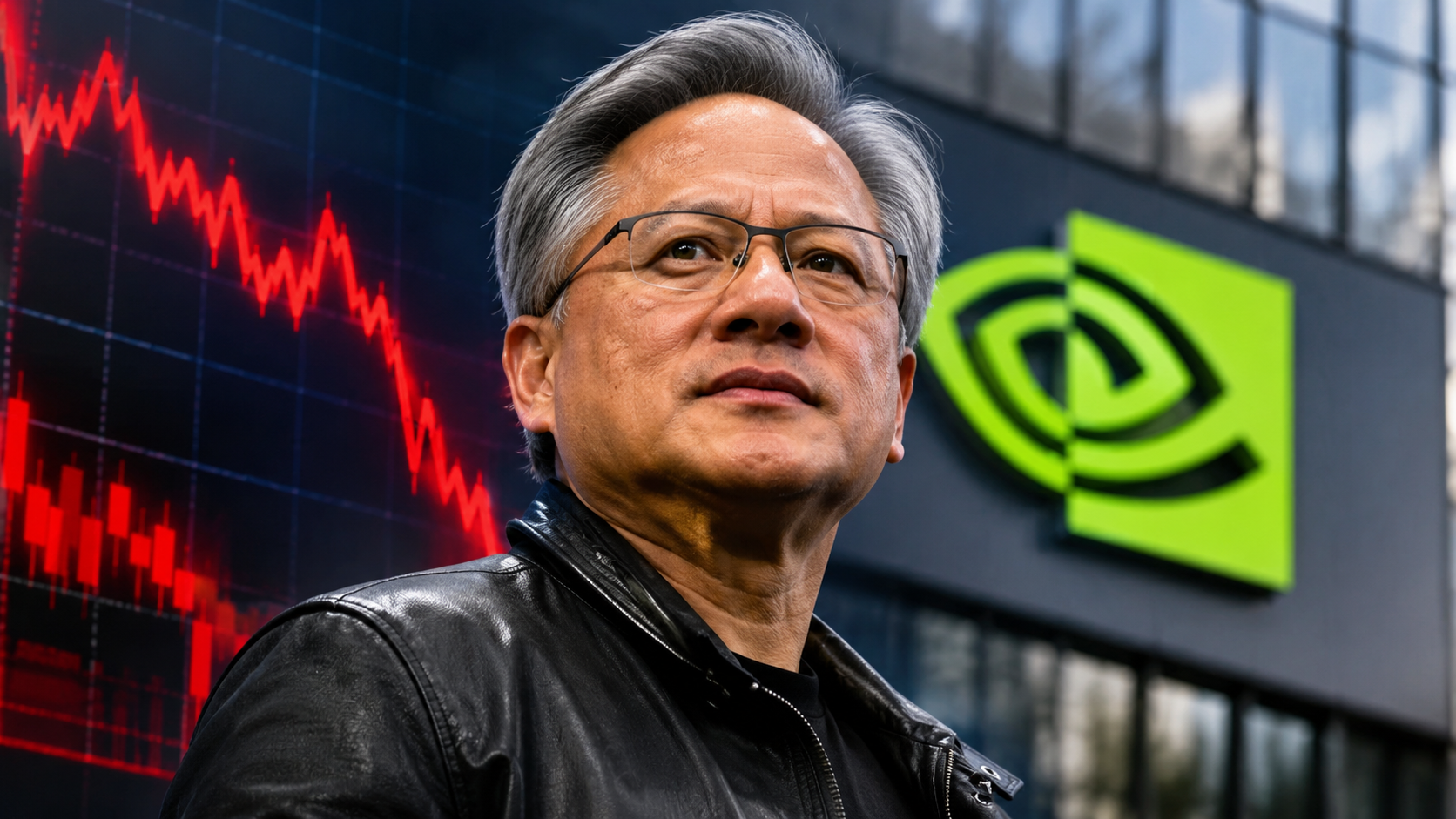
Nvidia’s sudden leadership shake-up has introduced a new source of uncertainty into an artificial intelligence market already facing questions about valuations, infrastructure spending, and the sustainability of the technology boom. The resignation of co-founder and longtime CEO Jensen Huang, announced on November 12, has sent investors scrambling to reassess the future of the world’s most influential AI chipmaker.
The development comes at a particularly sensitive moment for Wall Street. Nvidia has become a central driver of the technology rally, with its graphics processing units powering the data centers and advanced computing systems behind the global AI expansion. Its leadership transition therefore carries implications far beyond one company’s executive structure.
With Chief Financial Officer Colette Kress appointed interim CEO and the board beginning its search for a permanent successor, investors are now confronting a critical question: Can Nvidia maintain its extraordinary market position without the executive who helped build its dominance?
A Sudden Leadership Change Puts Nvidia in the Spotlight
Nvidia confirmed that Jensen Huang had resigned as president, CEO, and a member of the board, effective immediately. The company’s November 12 announcement followed a turbulent period involving reports about Huang’s personal relationships and potential corporate-security concerns.
The company appointed Colette Kress, who has served as its executive vice president and CFO since September 2013, as interim CEO. She will retain her financial responsibilities while the board considers internal and external candidates for a permanent replacement. Nvidia also appointed longtime board member Harvey C. Jones as its first-ever board chair.
According to the company’s announcement, the board expects its operations, customer commitments, and product roadmap to continue without interruption.
However, the transition represents a significant departure from Nvidia’s founder-led leadership model. Huang had guided the company for approximately 33 years, overseeing its transformation from a graphics-chip manufacturer into a dominant supplier of accelerated computing and AI infrastructure.
The company’s November 11 regulatory filing with the U.S. Securities and Exchange Commission formally disclosed the executive departure and interim appointment. The filing establishes the leadership change, while the circumstances surrounding it remain subject to reporting and investigation.
Wall Street Reacts as Nvidia Shares Face Selling Pressure
Investors responded quickly to the announcement, highlighting how sensitive the technology market has become to developments involving major AI companies.
According to Reuters, Nvidia shares finished Thursday’s trading session down approximately 4.3%, recovering from deeper intraday losses. Earlier trading reports indicated that the stock had experienced substantially greater selling pressure as uncertainty surrounding Huang’s departure intensified.
The weakness also affected broader market sentiment. On November 12, the Dow Jones Industrial Average declined approximately 0.36%, the S&P 500 fell 0.35%, and the Nasdaq Composite lost 0.39%.
However, not every semiconductor company experienced the same reaction.
Advanced Micro Devices (AMD) gained approximately 5.9%, while Broadcom (AVGO) advanced around 5.5%, according to Reuters market reporting. These gains suggest that some investors may be considering alternatives within the semiconductor industry as Nvidia navigates its leadership transition.
Nevertheless, one trading session does not establish a lasting shift in competitive market share. Nvidia remains a major supplier in the AI computing ecosystem, and competitors still face significant technological and commercial challenges.
Why Jensen Huang’s Departure Matters Beyond Nvidia
Huang’s importance to Nvidia extended beyond his responsibilities as chief executive. He was closely associated with the company’s long-term technology strategy, major customer relationships, product development priorities, and expansion into AI infrastructure.
His departure therefore introduces several potential risks.
First, investors must evaluate whether Nvidia can maintain its strategic direction during the succession process. The company operates in a rapidly evolving industry where product execution, research investment, and relationships with major cloud providers can influence competitive positioning.
Second, the leadership transition could affect customer confidence. Large technology companies and data-center operators make substantial long-term commitments when purchasing AI infrastructure. They need confidence that their suppliers can maintain product development schedules, provide reliable support, and deliver future generations of processors.
Third, the situation could increase scrutiny of Nvidia’s corporate governance and risk-management practices.
Reuters has reported that the leadership crisis emerged amid controversy involving Huang’s personal relationships and allegations that have attracted national-security attention. These reports have also intensified questions surrounding semiconductor exports and the oversight of technology transactions involving China.
For investors, it is important to distinguish reported allegations from established findings. The financial implications will depend on the outcome of investigations, any regulatory developments, and whether these issues affect Nvidia’s commercial operations.
Colette Kress Faces a Major Test as Interim CEO
The appointment of Colette Kress introduces a different leadership profile at a company historically associated with Huang’s technical vision and public presence.
Kress brings extensive financial and corporate experience. Before joining Nvidia in 2013, she held senior finance positions at major technology companies, including Microsoft and Cisco.
Her experience overseeing Nvidia’s financial operations could provide continuity during a period of uncertainty. Investors will particularly want to understand how the company manages capital allocation, customer commitments, infrastructure investments, and its long-term growth strategy.
Reuters reporting has also highlighted Kress’s reputation for taking a disciplined approach to some of the company’s major investment decisions.
Nevertheless, leading Nvidia presents challenges beyond financial management. The next CEO must maintain relationships with technology partners, support engineering innovation, navigate international competition, and communicate a convincing long-term strategy to shareholders.
The board’s decision regarding a permanent successor could therefore become an important catalyst for the stock.
AI Infrastructure Spending Remains the Bigger Market Question
Although Nvidia’s leadership crisis has attracted immediate attention, the broader investment debate concerns the sustainability of AI infrastructure spending.
Technology companies have committed enormous resources to building data centers, purchasing advanced processors, and expanding computing capacity. Nvidia has benefited directly from this investment cycle through strong demand for its AI-focused products.
The company’s fiscal 2026 results illustrate the scale of that expansion. Nvidia reported $215.9 billion in full-year revenue, representing 65% growth from the previous fiscal year. Fourth-quarter revenue reached a record $68.1 billion, while Data Center revenue totaled $62.3 billion.
These figures demonstrate that Nvidia’s business fundamentals were exceptionally strong before the current leadership transition.
However, investors are increasingly examining whether AI infrastructure spending can generate sufficient long-term returns to justify the industry’s substantial capital commitments.
Reuters has also highlighted concerns about interconnected financing arrangements involving Nvidia and companies building infrastructure around its processors. Such arrangements deserve attention because a slowdown in external funding or customer investment could affect demand throughout the AI supply chain.
The leadership crisis adds another layer of uncertainty to an industry already facing questions about profitability, competition, and infrastructure costs.
November 17 Earnings Could Become a Critical Market Catalyst
Investors will not have to wait long for another major development.
Nvidia is scheduled to announce its third-quarter fiscal 2027 financial results on November 17, followed by an earnings conference call. The results could provide important information about whether demand for AI computing remains strong despite the recent disruption.
Several areas deserve particular attention:
- Data Center revenue: Whether demand from cloud providers and large technology companies continues expanding.
- Forward guidance: Management’s expectations for revenue growth and future demand.
- Gross margins: Whether pricing pressures, production costs, and product transitions are affecting profitability.
- Capital allocation: How Nvidia intends to manage infrastructure-related investments and customer commitments.
- Leadership continuity: Whether the interim management team can reassure customers, employees, and shareholders.
The earnings announcement may help investors distinguish between a temporary confidence shock and a more fundamental change in Nvidia’s business outlook.
Key Investment Insight: Look Beyond the Immediate Stock Reaction
Nvidia’s leadership transition creates both uncertainty and potential opportunities across the semiconductor industry. However, investors should avoid assuming that a decline in one company’s share price automatically makes competing stocks attractive.
AMD and Broadcom deserve attention because of their positions in the semiconductor and AI infrastructure markets. Nevertheless, their long-term performance will depend on product competitiveness, customer adoption, profitability, and execution rather than simply Nvidia’s temporary difficulties.
Investors should also monitor other parts of the AI ecosystem, including data-center infrastructure providers, networking companies, cloud computing businesses, and semiconductor equipment manufacturers.
For Nvidia shareholders, the central considerations are whether the company can maintain its technological leadership, preserve customer confidence, and deliver on its financial outlook during the succession process.
A disciplined approach means evaluating earnings, business fundamentals, competitive positioning, and governance developments together rather than reacting solely to daily share-price movements.
Nvidia’s Next Chapter Could Shape the Direction of the AI Market
Nvidia’s leadership crisis represents one of the most significant corporate developments facing the technology sector this November. Huang’s departure marks the end of an extraordinary founder-led period, while Colette Kress inherits the responsibility of guiding the company through a sensitive transition.
The immediate market reaction reflects uncertainty, but Nvidia’s financial performance and the broader demand for AI computing remain essential parts of the investment equation.
The November 17 earnings announcement, the board’s search for a permanent CEO, and developments surrounding corporate governance and regulatory scrutiny will help determine how investors assess the company’s next chapter.
For Wall Street, the bigger question is no longer simply how quickly AI will grow, but which companies can sustain their competitive advantages and translate that growth into durable financial returns.
Stay informed with Stockmarket-news for the latest market developments, semiconductor industry analysis, and investor-focused insights shaping the future of global financial markets.