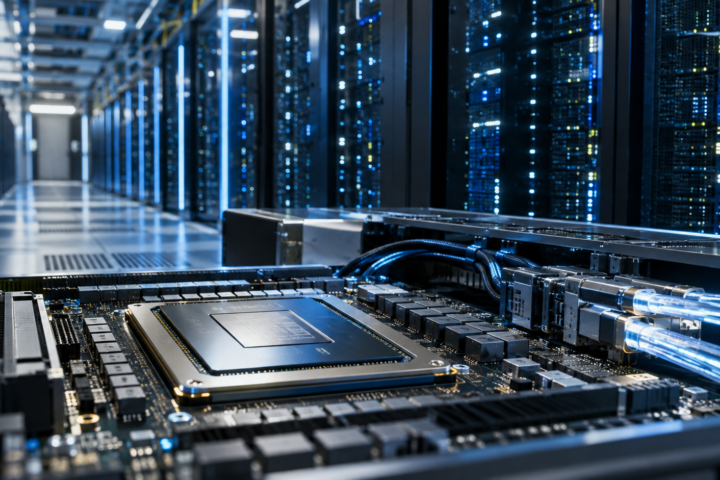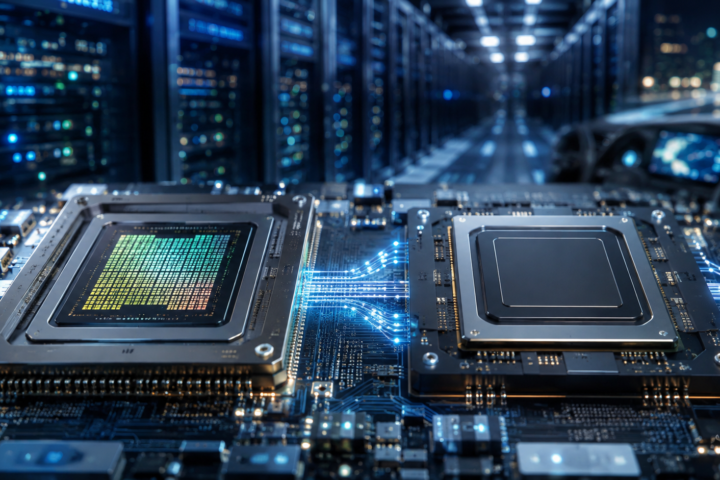
Hewlett Packard Enterprise’s stronger-than-expected results show how artificial-intelligence infrastructure is turning networking and servers into one of the most important battlegrounds in corporate technology spending.
Hewlett Packard Enterprise (HPE) delivered the kind of earnings report that changes how investors think about a business. For years, the company has been viewed as a steadier, lower-profile enterprise hardware supplier, tied to corporate refresh cycles, hybrid cloud demand and the slow modernization of data centers. Its latest results suggest something more forceful is underway: the AI boom is not only benefiting chipmakers and cloud giants, but also the companies supplying the networking, storage and server architecture required to make large-scale computing usable.
The company reported April-quarter revenue of $10.7 billion, up about 40% from a year earlier and ahead of Wall Street expectations, while adjusted earnings also exceeded forecasts. The standout was networking, where revenue rose sharply as demand for data-center connectivity expanded alongside AI workloads. HPE also lifted its full-year outlook, pointing to stronger revenue growth and a much faster expansion in networking than previously expected.
That matters because the AI trade is entering a more complicated phase. Early investor enthusiasm centered on the most visible beneficiaries, especially semiconductor designers and hyperscale cloud providers. But as corporations move from experimentation to deployment, the bottleneck increasingly shifts toward the physical and software-defined infrastructure that connects high-performance servers, manages traffic and keeps data moving efficiently. HPE’s quarter indicates that enterprise customers are beginning to spend in that second layer of the AI buildout.
The market reaction was unusually forceful. HPE shares surged after the earnings release, reflecting both the magnitude of the revenue beat and the perception that the company’s networking portfolio is now more strategically valuable than many investors had assumed. The move also followed a broader rally in AI infrastructure stocks, suggesting that investors are widening the group of companies they believe can convert AI demand into near-term sales and margin growth.
For HPE, the timing is important. The company has spent years repositioning itself around hybrid cloud, edge computing and enterprise data infrastructure. That transition has sometimes been overshadowed by faster-growing software and semiconductor names. The latest results provide evidence that the company’s hardware base may be an advantage rather than a constraint, particularly if AI spending continues to require dense server deployments and advanced networking across corporate and cloud environments.
The networking performance is especially significant because it changes the quality of HPE’s growth story. Server revenue can be cyclical and margin-sensitive, particularly when customers place large orders tied to specific deployment windows. Networking revenue, by contrast, can carry better strategic value when it is tied to architecture decisions, software control layers and long-term data-center design. If customers standardize around a vendor’s networking stack for AI clusters, the relationship can become stickier and more profitable over time.
That does not remove the risks. AI infrastructure spending is capital intensive, and the sector is vulnerable to shifts in customer budgets, supply constraints and changing expectations for returns on investment. Large enterprises are under pressure to show that AI tools can improve productivity or revenue, not simply create experimental projects. If corporate adoption slows, suppliers across the chain could see order growth moderate quickly.
There is also the question of concentration. Much of the AI infrastructure market depends on a relatively narrow group of large buyers, including cloud operators, major technology companies and enterprise customers with enough data and capital to justify large deployments. HPE’s stronger guidance suggests management sees demand broadening, but investors will want proof that growth is not limited to a handful of major projects or temporary order surges.
Competition is another constraint. Dell Technologies (DELL), Arista Networks (ANET), Cisco Systems (CSCO) and other enterprise infrastructure providers are all positioning themselves around AI workloads. Each company is trying to persuade customers that its architecture offers the right balance of speed, reliability, cost and scalability. HPE’s results strengthen its position, but they do not guarantee durable share gains in a market where purchasing decisions can shift quickly as technology standards evolve.
Still, the quarter helps clarify a broader business trend. AI is becoming an infrastructure cycle as much as a software cycle. The public conversation often focuses on consumer-facing tools and model capabilities, but the commercial reality depends on capital equipment, cooling capacity, power availability, networking performance and enterprise integration. That means the winners may include companies that were previously seen as mature industrial-style technology suppliers, not only the most visible AI platform owners.
The implications stretch beyond HPE. Strong demand for AI networking can support suppliers of optical components, power systems, memory, storage and specialized data-center services. It can also intensify pressure on corporate technology budgets, forcing chief information officers to prioritize AI-related investment over older software upgrades or routine hardware replacement. In that sense, HPE’s results are both a company-specific event and a signal about where business spending is moving.
For investors, the key question is whether HPE can translate this demand into sustained earnings growth rather than a short-lived valuation reset. The company’s raised outlook gives the market a reason to reassess expectations, but the next few quarters will test order durability, margins and execution. A single strong report can change sentiment; a series of strong reports can change a company’s market identity.
The more immediate conclusion is that the AI economy is becoming broader, more physical and more expensive. HPE’s surge shows that the enterprise technology race is no longer just about building the most powerful model. It is also about building the infrastructure that lets businesses run those models reliably at scale. That is a less glamorous story than chatbots or consumer apps, but for shareholders, it may prove just as important.