Crude’s rebound near $100 a barrel is forcing investors to reassess energy exposure, inflation expectations and the durability of the broader commodities rally.
Oil markets moved back to the center of global investing on Wednesday as escalating Middle East tensions lifted crude prices and revived concerns that energy costs could again complicate the inflation outlook. Brent crude traded around $98 a barrel, up more than 2% on the day, while U.S. benchmark WTI hovered near $95 after reports of fresh hostilities involving Iran and attacks affecting Gulf states sharpened fears over regional supply routes.
The move was not a simple replay of past oil shocks. Markets are weighing two opposing forces: geopolitical supply risk and signs of softer global demand. The immediate impulse came from renewed concerns around the Strait of Hormuz and related shipping corridors, where any lasting disruption could affect the flow of crude and refined products. Yet the longer-term debate is shifting toward consumption, with some analysts pointing to weaker fuel demand in parts of Asia and Europe as evidence that high prices, electric vehicles and slower industrial activity are starting to restrain oil’s upside.
For integrated energy companies such as Exxon Mobil (XOM), the current setup is supportive but not without complications. Higher crude prices typically lift upstream earnings, strengthen cash flow and improve the economics of large production projects. At the same time, demand uncertainty and political sensitivity around fuel prices could limit how far investors are willing to re-rate the sector. Energy equities have benefited from years of capital discipline, but a sustained move toward triple-digit oil would likely invite renewed scrutiny from governments, central banks and consumers.
The inflation channel is the main market risk. Crude near $100 does not automatically produce a broad inflation resurgence, but it raises the cost floor for transportation, petrochemicals, shipping and several industrial inputs. For central banks still trying to bring inflation expectations fully under control, a fresh energy spike is inconvenient. It can delay rate cuts, steepen yield curves and pressure consumer-facing companies that lack pricing power. That is why oil’s move matters beyond the energy patch: it affects airlines, logistics companies, retailers, automakers and household budgets.
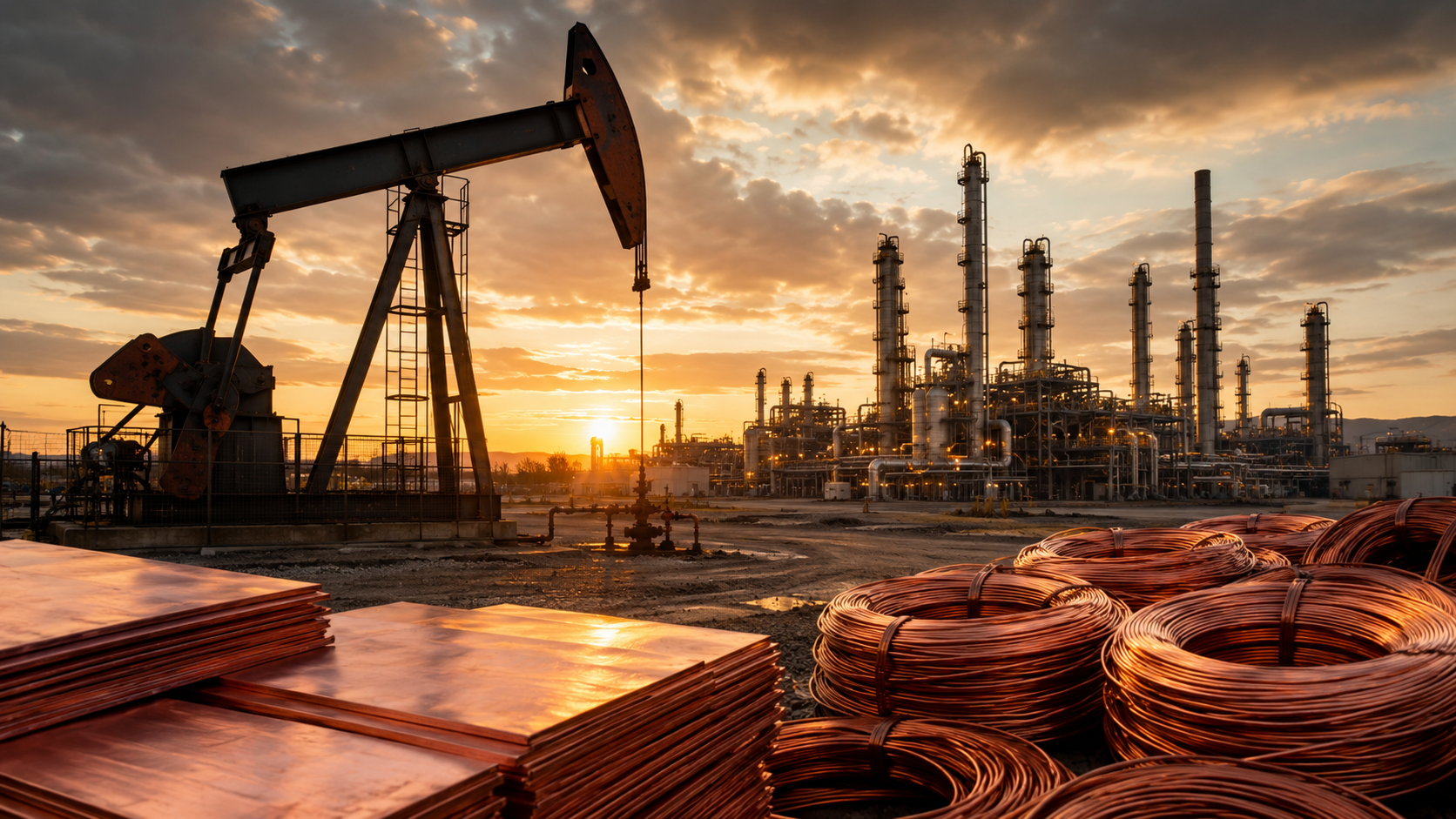
The commodity complex is also being shaped by metals, where copper remains one of the strongest performers of 2026. Copper traded near record territory around $6.60 a pound, up sharply over the past month and more than one-third higher than a year earlier, reflecting tight supply, electrification demand and investor appetite for assets tied to power grids, data centers and industrial modernization.
That strength has helped lift miners including Freeport-McMoRan (FCX), whose exposure to copper gives investors a direct equity link to the metal’s rally. Freeport’s investor materials showed its shares at $71.72 on June 2, up nearly 7% on the day, with copper prices also elevated. The company’s position in major copper districts in the U.S., South America and Indonesia makes it a bellwether for how commodity equity investors are pricing the metal’s long-term scarcity premium.
Still, copper’s rally carries its own warning. Prices that rise too quickly can tighten financial conditions for manufacturers, raise project costs for utilities and slow adoption in price-sensitive areas of construction and infrastructure. The bullish thesis remains clear: electrification, artificial intelligence infrastructure and grid investment require large volumes of copper, while new mine supply is difficult to permit and slow to develop. But cyclical demand from China and global manufacturing remains uneven, meaning copper is trading on both structural optimism and short-term macro risk.
Precious metals offered a different signal. Gold and silver appeared more range-bound, with safe-haven demand supported by geopolitical uncertainty but restrained by a firmer dollar and shifting interest-rate expectations. The lack of a decisive breakout suggests investors are not yet treating the latest energy shock as a systemic crisis. Instead, gold is functioning as insurance, while oil and copper are carrying the more active macro message: supply chains are vulnerable, but demand still matters.
For investors, the main takeaway is that commodities are no longer moving as one trade. Oil is being pushed by geopolitical risk. Copper is being pulled by structural demand and constrained supply. Gold is reflecting caution without panic. Agricultural and bulk materials markets are responding more to local weather, freight and industrial signals than to a single global theme. That fragmentation makes sector selection more important than broad commodity exposure.
Energy stocks may continue to attract investors seeking cash flow and inflation protection, particularly if crude holds above levels that support shareholder returns. But the best performance may require a balance between price upside and capital discipline. Companies that chase production growth too aggressively risk repeating past cycles in which high prices encouraged overspending just before demand softened. The market is likely to reward firms that convert higher prices into dividends, buybacks and balance-sheet strength rather than new supply at any cost.
For metals, the question is whether high prices can coexist with slowing global growth. Freeport-McMoRan and other copper producers stand to benefit if the market continues to price in a long-term shortage. Yet miners also face cost inflation, resource nationalism, permitting delays and operational complexity. Investors buying the copper story are effectively buying a view that electrification and data infrastructure demand will outweigh traditional cyclical weakness.
The broader risk is that commodities again become a source of volatility for financial markets after a period in which investors had grown more comfortable with disinflation. A renewed oil spike can lift headline inflation quickly, even if core measures are slower to react. Higher metals prices can raise capital expenditure costs across power, construction and technology supply chains. Together, they create a less forgiving backdrop for policymakers and corporate margins.
For now, the commodities market is sending a mixed but important message. The world is not short of every raw material at once, and demand is not uniformly strong. But key commodities tied to energy security and industrial transformation remain vulnerable to sudden repricing. That keeps companies such as Exxon Mobil (XOM) and Freeport-McMoRan (FCX) central to the investment debate, not just as commodity plays, but as indicators of how markets are valuing inflation risk, geopolitical stress and the physical constraints behind the global economy.