Alibaba’s discounted share sale underscores a widening divide between surging artificial-intelligence demand and investors’ growing insistence that technology companies prove the returns on massive infrastructure spending.
Alibaba Group Holding (BABA) is asking shareholders to finance another leg of the artificial-intelligence buildout, and the market’s response suggests the era of unquestioned enthusiasm for AI spending is fading. The Chinese technology group is raising HK$80 billion, or about $10.2 billion, through the sale of 710 million new shares at HK$112.70 each, an 8.4% discount to Friday’s Hong Kong close. Alibaba shares fell roughly 9% during Monday trading after dropping as much as 10%, reflecting concern over dilution and the increasing amount of capital required to compete in advanced computing.
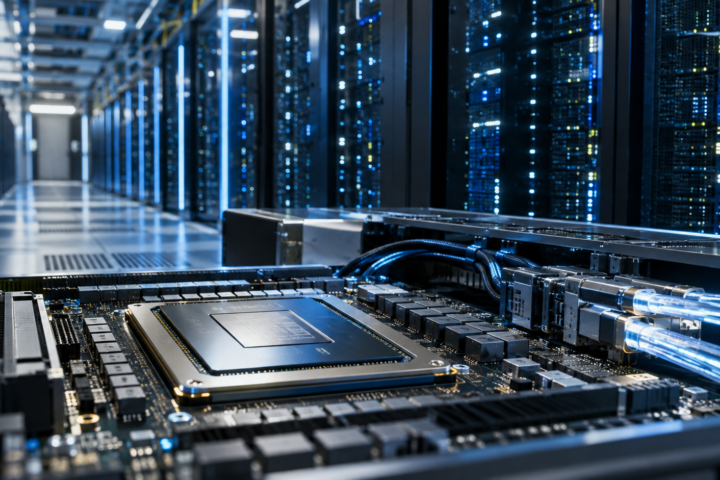
The offering is unusually large even by the standards of the current AI investment cycle. Alibaba plans to direct the proceeds toward chips, computing infrastructure and artificial-intelligence models, effectively doubling down on a strategy that has already transformed its capital spending and cash-flow profile. The company has committed to invest at least 380 billion yuan, approximately $56 billion, in cloud and AI infrastructure over three years. The latest financing gives Alibaba additional capacity to accelerate those investments without placing the entire burden on its existing cash reserves.
There is evidence that the spending is producing growth. Alibaba’s AI Cloud and Compute Services revenue rose 45% from a year earlier to about 48.4 billion yuan in the June quarter, its fastest expansion in 22 quarters. AI-related product revenue has recorded triple-digit growth for 12 consecutive quarters. The company’s cloud division is increasingly becoming the growth engine of a business still heavily exposed to a more mature Chinese e-commerce market.
But that acceleration is expensive. Alibaba’s capital expenditures jumped 75% from a year earlier to 67.7 billion yuan, or roughly $10 billion, during the June quarter. Net profit fell about 75%, while free cash flow turned deeply negative as the company increased computing capacity and absorbed higher component costs. Total revenue still rose 9% to nearly 269 billion yuan, suggesting the central investment debate is no longer whether AI creates demand, but whether revenue can scale quickly enough to justify the capital required to deliver it.
That question extends well beyond China. Microsoft (MSFT), Alphabet (GOOGL), Amazon.com (AMZN) and Meta Platforms (META) have been committing extraordinary sums to data centers, networking equipment, processors and power infrastructure. Investors tolerated those expenditures while cloud growth accelerated and AI valuations expanded. Increasingly, however, markets are distinguishing between companies that can fund AI expansion internally and those that need fresh equity or debt to maintain the pace.
Alibaba’s financing therefore carries significance beyond the immediate dilution. It illustrates how the artificial-intelligence competition is evolving into a capital-allocation contest. Building competitive foundation models is only one component of the investment requirement. Companies must also secure advanced processors, construct data centers, expand energy capacity, develop networking infrastructure and subsidize software platforms until utilization becomes sufficiently high to support attractive margins.
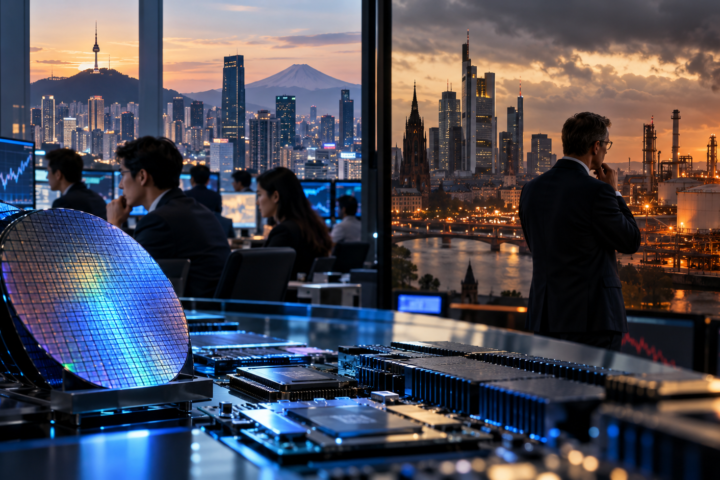
For Alibaba, the potential strategic payoff is considerable. Its Qwen family of models gives the company a position in China’s rapidly expanding AI ecosystem, while its cloud business provides a distribution channel to corporate customers. Combining models, proprietary chips and cloud infrastructure could allow Alibaba to capture spending across several layers of the AI technology stack rather than relying solely on consumer applications or e-commerce advertising. That integration resembles strategies pursued by major U.S. hyperscalers, where control of infrastructure and software can create reinforcing advantages.
The risk is that competition also compresses pricing. Chinese AI developers face pressure to offer increasingly capable models at lower costs, while hardware expenses remain substantial. If computing efficiency improves faster than demand expands, the value created by AI could accrue disproportionately to customers rather than infrastructure providers. Alibaba would then be left supporting enormous fixed investments while competing in a market where software prices continue to decline.
The next major test for the global AI trade arrives Wednesday, when Nvidia (NVDA) reports fiscal second-quarter results. Analysts expect roughly $92 billion in quarterly revenue and adjusted earnings of about $2.09 a share, with data-center sales again accounting for the overwhelming majority of the chipmaker’s business. Options markets have been pricing the possibility of a sizable move in Nvidia shares around the report, demonstrating how heavily investor expectations remain tied to evidence that AI infrastructure demand is still expanding.
Nvidia sits at the opposite side of Alibaba’s spending equation. The semiconductor company sells much of the scarce computing capacity that technology groups are racing to acquire. Strong Nvidia results would reinforce the view that customers remain willing to expand AI budgets aggressively. Yet they could also highlight the growing transfer of cash from cloud providers and application companies toward the hardware and infrastructure suppliers enabling the boom.
For technology investors, Alibaba’s share sale is consequently less a referendum on artificial intelligence than a reminder that growth and shareholder returns are not automatically the same thing. AI adoption can remain strong while individual stocks struggle if financing needs rise faster than expected, margins narrow or equity issuance dilutes existing owners.
The technology sector’s next phase may depend increasingly on that distinction. Investors have already accepted that artificial intelligence will require unprecedented infrastructure. They are now beginning to ask which companies can turn that infrastructure into durable free cash flow. Alibaba’s $10.2 billion capital raise shows that, even for companies reporting rapid AI revenue growth, the answer can remain expensive.