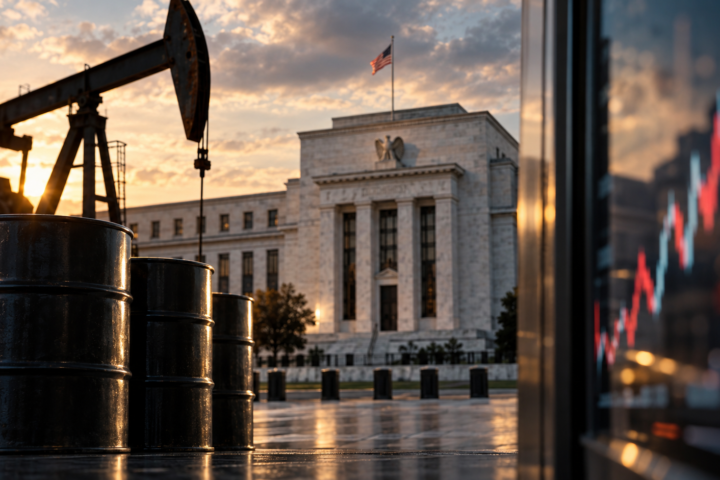
A fresh rise in crude prices and renewed Middle East tensions are forcing investors to weigh inflation risk against a still-powerful global technology rally.
Global markets entered June with an uneasy split screen: oil prices were rising on renewed geopolitical stress, while equity investors continued to reward the companies and countries most exposed to artificial intelligence, semiconductors and resilient corporate earnings. The contrast was clearest in Asia, where Japan and South Korea pushed to record levels even as energy markets priced in a thicker geopolitical risk premium.
Japan’s Nikkei 225 rose to a record 66,934.33, briefly moving above 67,000, while South Korea’s Kospi advanced sharply as investors chased technology exporters and chipmakers. SoftBank Group (SFTBY) jumped on AI enthusiasm, while Samsung Electronics (SSNLF) benefited from optimism around semiconductor demand and South Korea’s export momentum. The rally underscored a recurring theme in 2026: investors remain willing to pay for earnings tied to artificial intelligence infrastructure, even when macroeconomic conditions are less forgiving.
The complication is oil. Brent crude moved back above $94 a barrel in some market pricing after renewed tension involving Iran, the U.S., Israel and regional proxies revived concern about supply routes and the Strait of Hormuz. That matters far beyond energy trading desks. A sustained rise in crude prices would work against the recent disinflation narrative that helped support risk assets, complicate central-bank decisions and squeeze consumers just as borrowing costs remain high in several major economies.
For equity markets, the immediate question is whether investors should treat the oil move as a temporary geopolitical premium or the start of a more durable inflation shock. The answer matters for nearly every asset class. If crude prices stabilize, the AI-led rally may continue to dominate sentiment, particularly in Japan, South Korea and the U.S. If prices keep rising, bond yields could face upward pressure, rate-cut expectations could be delayed, and energy-sensitive sectors from airlines to consumer discretionary companies may lose momentum.
U.S. markets entered the new month with strong recent performance behind them. The Nasdaq Composite had posted a powerful May advance, while S&P 500 futures indicated a modestly positive start as investors looked toward employment data later in the week. That resilience reflects confidence that earnings growth, particularly in technology, can withstand a higher-rate world. Microsoft (MSFT), Broadcom (AVGO) and other AI-linked companies remain central to the market’s leadership, giving global investors a reason to stay exposed to equities even as geopolitical risk rises.
Yet the bond market is sending a more cautious signal. U.S. 10-year yields recently stood near 4.47%, while U.K. 10-year yields were close to 4.85%, levels that keep pressure on housing, credit and government budgets. In Europe and Japan, yields also remain high enough to challenge the assumption that easier monetary policy will arrive quickly or uniformly. Higher oil prices would make that path more difficult, particularly for central banks still trying to prove that inflation is returning sustainably toward target.
Europe’s position is more fragile than Asia’s. The region faces slower growth, heavier exposure to imported energy and political pressure around household costs. In the U.K., house prices fell 0.6% in May, a reminder that higher borrowing costs are still filtering through the real economy. Manufacturing input costs also remain vulnerable to energy and transport disruptions, making Europe more exposed to any escalation that lifts fuel, gas or shipping prices.
The broader global backdrop is one of resilience without much margin for error. The United Nations’ 2026 outlook expects global growth to slow to 2.7%, citing trade tensions, fiscal strains and persistent uncertainty. That kind of growth is not recessionary, but it leaves economies vulnerable to shocks. A sharper rise in oil, a renewed trade dispute, or a disorderly move in bond yields could quickly change the tone from selective optimism to defensive positioning.
For investors, the day’s price action reinforces the importance of distinguishing between market leadership and economic breadth. Asian technology shares are performing as though the next capital-spending cycle is already visible, powered by chips, data centers and AI infrastructure. Energy markets, by contrast, are warning that old-world risks still have the power to reshape inflation and policy. Both signals can be true at once.
The most likely near-term result is a more selective rally. Companies with pricing power, strong balance sheets and exposure to secular growth themes may continue to attract capital. Firms dependent on cheap financing or low energy costs are likely to face greater scrutiny. That could favor global technology leaders, some energy producers and high-quality industrial exporters, while pressuring airlines, smaller retailers and highly leveraged real estate names.
SPDR S&P 500 ETF Trust (SPY) remains a useful proxy for the broader risk appetite now being tested. Its direction will depend not only on U.S. employment data and earnings revisions, but also on whether the oil market calms. A stable crude price would support the view that geopolitical risk is manageable. A further surge would challenge the market’s confidence that inflation is yesterday’s problem.
The message from global markets is therefore not panic, but conditional optimism. Investors are still rewarding growth, especially where it is tied to AI and semiconductors. They are also beginning to pay more attention to the cost of energy, capital and geopolitical insurance. June opens with equities leaning bullish, bonds cautious and commodities alert to danger. That combination can support gains, but it leaves little room for complacency.